What the FCC ID on Your Mystery Box Earbuds Tells You
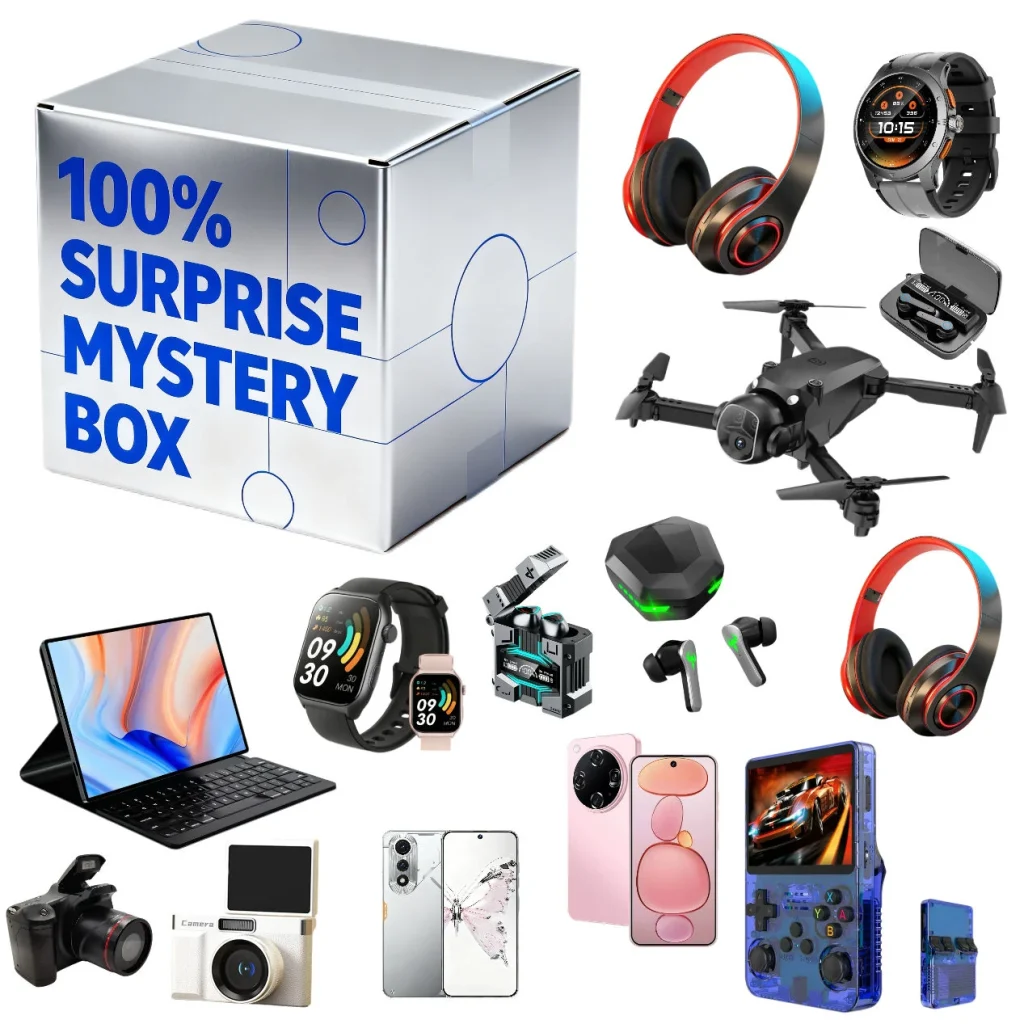
Turn over the earbuds, the speaker or the smartwatch from your mystery box and you will usually find a short code beginning "FCC ID". Most people never read it. You should. For a wireless gadget sold in the United States it is the one mark that proves the device was authorised to transmit here, and a box packed abroad is exactly where it is most likely to be missing. Here is how to check it.
Which Items in Your Box Need One
Anything that transmits a radio signal on purpose is what US rules call an intentional radiator, and the Federal Communications Commission requires those devices to be certified before they are marketed. Walkie-talkies go a step further, because using some of them needs a licence too; see walkie-talkies from a mystery box: FRS, GMRS and the FCC licence question. The regulation is blunt about it: all intentional radiators operating under Part 15 "shall be certified by the Telecommunication Certification Bodies", with narrow exceptions. In your box that means everything Bluetooth, everything Wi-Fi, and anything with its own wireless link. Earbuds, headphones, speakers, smartwatches, fitness bands, wireless mice and keyboards, trackers, wireless chargers with a communicating coil, small drones and remote-controlled items all count.
Cables, cases, stands, wired headphones and a plain USB charger are not radiators, and they do not need an FCC ID. So the first thing you do is sort the box: the wireless pile is the one you read.
Where the Code Has to Be
- Every Bluetooth or Wi-Fi item in your box is an intentional radiator and must be FCC certified to be sold in the US; the FCC ID is the proof.
- The code must be on the device itself, or for tiny items in the manual and on the packaging; you can look any FCC ID up in the FCC's public database in under a minute.
- A missing or unmatched FCC ID tells you the device was not authorised for the US market, which is a question for the seller even if the gadget works.
The rules also say where you should find the code. Certified equipment must carry a label showing the "FCC ID in capital letters on a single line", in a type size "large enough to be legible without the aid of magnification". For a device too small to carry that legibly, the identifier has to be placed in the user manual and either on the packaging or on a removable label on the device. So on a speaker you look at the base. On earbuds you look at the case, then the paper insert and the box. On a smartwatch you look at the back plate, then the settings menu, where many watches show it electronically.
If you have searched all of those and there is no FCC ID at all, you have learned something about the device before you have learned anything about how it sounds.
How to Check It in a Minute
An FCC ID has two parts: a grantee code of three or five characters that identifies the company that holds the authorisation, and a product code that identifies the model. The FCC publishes a free search where you enter the code and see the grant, the test reports and, usually, photographs of the device that was tested. You can do this from your phone while the box is still open.
What you are checking is a match. The photographs on the grant should show the device in your hand, or its obvious twin. The grantee should be a plausible manufacturer rather than a name that appears nowhere else. If the code returns nothing, the device carries a made-up identifier. If it returns a completely different product, the code has been copied from something else. Either way, you now know the item was not put through the process the mark claims. That is worth more to you than any description on the listing.
What the Mark Does and Does Not Promise You
| Question | Does a valid FCC ID answer it? |
|---|---|
| Was this model tested for radio emissions and interference? | Yes, that is what certification is |
| Is it lawful to sell and import into the US? | Yes, for the radio part |
| Will it pair with your phone? | No, that is a protocol question |
| Is the battery safe? | No, batteries are a separate matter |
| Is the charger electrically safe? | No, that is a different mark |
| Is it well made or good value? | No |
| Is the item in your hand the certified one? | Only if the grant photographs match |
Read the table honestly and the FCC ID is narrower than people assume. It tells you the radio was authorised. It does not tell you the earbuds are good, the battery is sound, or the charger is safe. Those are separate questions with separate marks, and the charger one is covered in UL, ETL and the charger in your mystery box. What the FCC ID does give you is a hard, checkable fact in a category where almost everything else on the listing is soft.
Note: "FCC compliant", "FCC approved" or a bare FCC logo printed on the box is not the same as an FCC ID. The logo on its own is used for certain devices that go through a supplier's declaration rather than certification, and it is also freely printed by factories that have done nothing. For a transmitting device, the code is the claim; the logo is decoration. If the packaging shouts about compliance and the device carries no ID, believe the device.
Why a Box From China Is Where This Matters Most
Factories build wireless gadgets for many markets at once, and the same earbuds may be sold with an FCC grant for the US, a CE mark for Europe, and nothing at all for markets that do not check. When a seller sources for a mystery box, they buy whatever stock is cheapest, and the cheapest stock is often the version that was never put through any market's process. It works. It pairs. It is also not authorised for sale where you live, and a seller shipping into the US ought to know that and stock the certified version.
That is why the FCC ID is a useful proxy for the seller's care, not just the device's. A box in which every wireless item carries a real, matching code is a box packed by someone who sourced with the US market in mind. A box in which none of them does is a box packed from the cheapest available lot, and you can expect the rest of the sourcing to match. The wider question of what a seller's pages should tell you before you order is in the pages a mystery box site should have; the FCC ID is the same question asked of the goods themselves.
What to Do If the Code Is Missing
- Check all three places: device, manual, packaging. Small items are allowed to move the label.
- Check the settings menu on anything with a screen. Electronic labelling is permitted and common.
- Look up whatever you find. No match is the same as no code.
- Photograph the device and the absence alongside the packaging, the way you would document any fault; the routine is in how to document a mystery box on arrival.
- Ask the seller, in writing, whether the item is FCC certified and for the ID. A seller who sourced properly answers in one line. A seller who did not will not answer at all.
Whether you then keep the device is your call. It will almost certainly function. What you are deciding is whether you want a seller who ships unauthorised radios into your country to be the one you order from again, and the honest answer is usually no.
What This Means When You Choose a Seller
You cannot check an FCC ID before a mystery box arrives, because you do not know what is inside. What you can do is ask the seller two questions before you order: do the wireless items in your boxes carry FCC IDs, and are they tested before dispatch? A seller who powers every device on before packing, which is what Mewoo describes on its testing page, will say so plainly, and an honest one will also tell you what it does not hold: Mewoo says on its battery and shipping page that it does not yet keep a certification file for each item. A seller who has never thought about it will change the subject. That conversation, before you pay, is the cheapest check in this whole article.
FAQ
What is an FCC ID?
A code the US regulator assigns to a wireless device model once it has passed certification testing for radio emissions. The first three to five characters name the company holding the grant and the rest name the product. Any Bluetooth, Wi-Fi or remote-controlled item sold in the US should carry one, and you can enter it in the FCC's public search to see the grant and photographs of the tested device.
Do earbuds from a mystery box need an FCC ID?
Yes. Bluetooth earbuds transmit on purpose, which makes them an intentional radiator under Part 15, and those devices must be certified before they are marketed in the US. Look on the charging case first, then the paper insert and the outer box, since very small devices are allowed to carry the code there instead of on the buds themselves.
Where is the FCC ID on a smartwatch?
Usually engraved on the back plate. If it is not there, open the watch's settings and look for an about, regulatory or e-label screen, because electronic labelling is allowed and common on devices with displays. Failing both, check the manual and the box. A watch that shows nothing in any of those four places was not labelled for the US market.
The FCC ID search returns nothing. What does that mean?
Nobody was ever granted that code, so the label is invented and the gadget skipped certification, whatever the box says. A result showing some unrelated product is the same story told a different way: somebody borrowed a number. Screenshot the empty search next to a photo of the label, send both to the seller with a request for the genuine ID, and treat silence as confirmation.
Does an FCC ID mean the device is safe?
Not in the way the word usually means. Certification looks at one thing: the radio, and whether its emissions stay inside the limits. The cell inside, the cube that charges it, the plastics, the pairing behaviour with your handset, none of that was examined. So read the code as proof of one specific test, then go on to check the battery and the charger by their own marks.
Is a device without an FCC ID illegal for me to use?
The rules fall on whoever markets and imports the device, not on you as the end user, and the gadget will almost certainly work. What you have learned is that the seller shipped an unauthorised radio into your country, which is a fair reason to report it, to ask for the certified version, and to think hard before ordering from that seller again.
Final Thoughts
Every transmitting gadget in your box should carry an FCC ID, on the device or in its manual and packaging, and you can look it up in a minute while the box is still open. A matching code tells you the radio was authorised for your market and that the seller sourced with the US in mind. A missing or bogus one tells you the opposite, however well the earbuds sound. Check it first.
If you want wireless items that were powered on before dispatch by a seller who tells you plainly what it can and cannot certify, start with the Triple Reveal Electronics Mystery Box (3 items) or the Party Electronics Mystery Box (6 items). Compare every tier side by side on the electronics mystery box category page.
See how devices are tested before dispatch →