
Does Anything in a Mystery Box Come With a Warranty
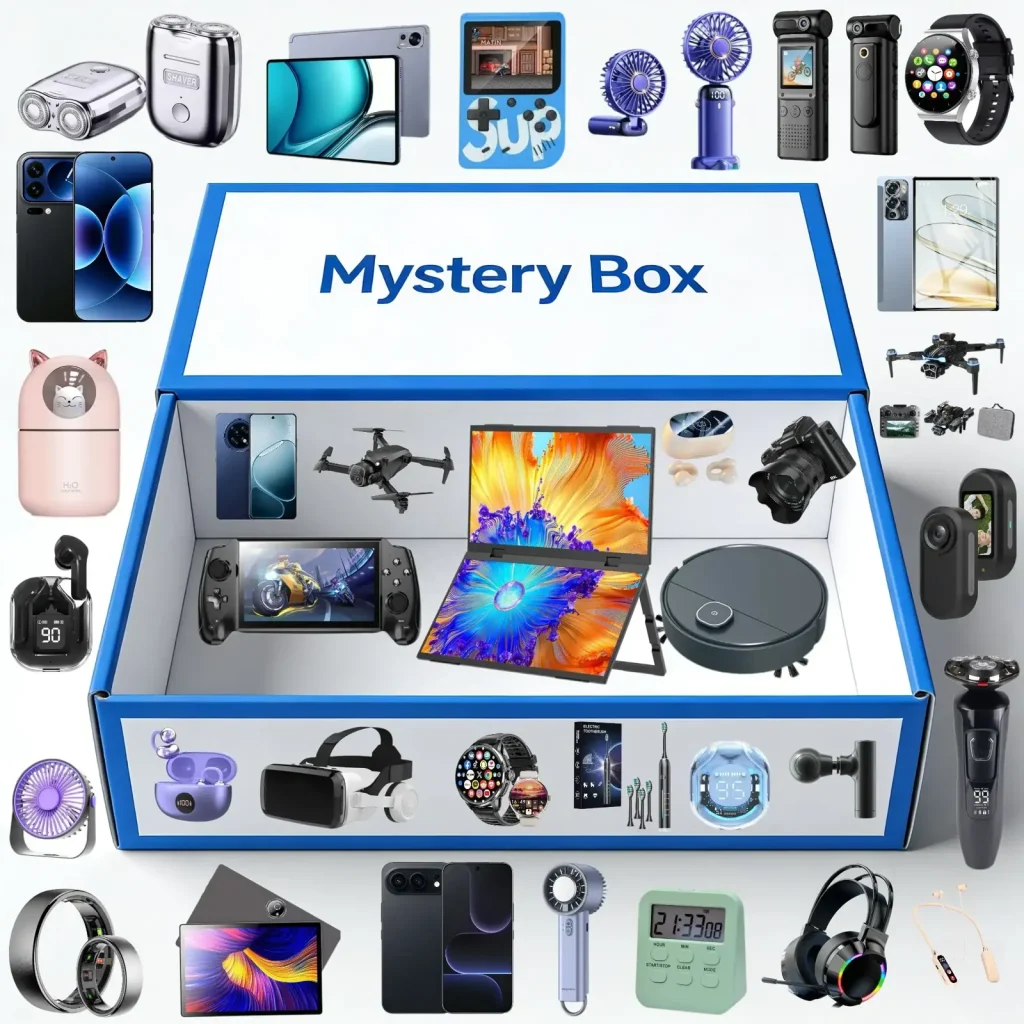
When the earbuds from your mystery box stop working in month three, who owes you anything? Most buyers assume a manufacturer's warranty is sitting behind the product, and for a box of unbranded accessories bought from a reseller that assumption is usually wrong. What you actually have is narrower, and knowing it before you buy saves you an argument later. Here is how warranty works on mystery box electronics and where your protection runs out.
Three Different Things People Call a Warranty
You need to separate three layers, because they come from different people and expire at different times.
The manufacturer's warranty. A written promise from whoever made the item, usually one year on electronics, usually requiring a receipt from an authorised retailer. This is the one you are picturing, and it is the one you are least likely to have.
The seller's faults window. A period after delivery, often seven to thirty days, in which the box seller will replace or refund an item that arrives dead or fails straight away. This is the protection you almost always do have, and it is a returns policy rather than a warranty in the legal sense.
Implied warranty. A default under state law that goods sold are fit for their ordinary purpose, which exists unless the seller has disclaimed it by selling "as is". This is the one most buyers have never heard of and the one that sometimes matters most.
What US Federal Warranty Law Actually Requires
- Federal law does not require any seller to give you a written warranty; it only regulates the ones that are offered.
- A written warranty on a product costing more than $10 must be labelled "full" or "limited", and for products over $15 the terms must be available to you before you buy.
- Your real protection on a mystery box is the seller's stated faults window plus any implied warranty the seller has not disclaimed; a manufacturer's warranty rarely reaches you.
The Magnuson-Moss Warranty Act is the federal law on consumer warranties, and the Federal Trade Commission's guide to it is clear on the point that surprises people: "The Act does not require any business to provide a written warranty." A seller can offer one or not. What the Act does is regulate the ones that are offered. Every written warranty on a consumer product that costs more than $10 must carry a title that says whether it is "full" or "limited", and for products over $15 the seller has to make the warranty terms available to you before the sale, which for an online or mail-order seller means either showing the warranty or telling you how to get a copy.
For you, that turns into two questions to ask of any mystery box listing. Is there a written warranty at all? If there is, you should be able to read it before you pay, and it should say full or limited on its face. If there is not, the seller is within the law, and what you have instead is the faults window and whatever implied warranty applies in your state.
Why the Manufacturer's Warranty Rarely Reaches You
Manufacturers write their warranties to cover goods bought through their own channels. The claim form asks for a receipt from an authorised retailer, a purchase date, and often a serial number registered at purchase. A mystery box gives you none of that. The item may be unbranded, which means there is no manufacturer to write to. If it is branded, the seller bought it from a liquidator, a closeout or an overseas wholesaler, none of which counts as an authorised purchase, and the maker is entitled to decline.
That is not a mark against the box. It is a consequence of how the goods reach a box in the first place, set out in how a mystery box company actually works, and it means you should price the box as if no maker's warranty exists. Occasionally one does, and a branded item with an intact warranty card is a bonus; you should never count on it.

The Faults Window Is Your Real Protection
What you can rely on is the seller's own promise, and a good seller states it plainly: a number of days after delivery, a definition of what counts as a fault, and a process for reporting one. This is the protection that actually pays out, and you should read it the way you would read a warranty, because for practical purposes it is one.
| Manufacturer's warranty | Seller's faults window | Implied warranty | |
|---|---|---|---|
| Who gives it | The maker | The box seller | State law, by default |
| Do you usually have it? | Rarely | Yes, if the seller states one | Yes, unless sold "as is" |
| Typical length | 12 months | 7 to 30 days | Varies by state |
| Covers | Defects in materials and workmanship | Dead on arrival, early failure, short count | Goods not fit for ordinary use |
| Does not cover | Items without authorised proof of purchase | Disliked items; damage after the window | Anything disclaimed in writing |
| How you claim | Maker's form, receipt, serial | Photos and report inside the window | Complaint to seller; card dispute; small claims |
Read the length row honestly. A thirty-day faults window against a twelve-month maker's warranty sounds thin, and it is thinner. But the maker's warranty is a promise you cannot use, and the faults window is one you can, provided you test everything inside it. That is why the arrival routine in what to do when your mystery box arrives insists on testing every powered item on the day: the window is the only clock that matters to you.
Note: "As is" changes everything, and it is legal in most states. If a listing says the goods are sold as is, with all faults, or with no warranty of any kind, the seller has disclaimed the implied warranty, and your protection shrinks to whatever faults window they still choose to honour. The FTC's guide notes that some states do not allow consumer products to be sold as is at all, so the phrase may not stick where you live; but where it does, read it as the seller telling you the faults window is the whole deal.
Where Refurbished and Used Change the Picture
Condition matters here more than in most categories. New items are the ones a maker's warranty might, in rare cases, still cover. Refurbished items carry whatever warranty the refurbisher gave, which for a mystery box seller's stock is usually nothing beyond the faults window. Used and untested items are the ones most often sold as is. So the condition word on the listing is also a warranty statement in disguise, and the vocabulary is set out in reading condition in a mystery box. If you want the best chance of any protection past thirty days, you want new stock and a seller who says so.
The Protection Behind Your Card
One more layer sits outside the seller entirely. Some credit cards extend the manufacturer's warranty on items bought with the card, and most carry a dispute process for goods that arrive dead and are not put right. The extended-warranty benefit generally requires an underlying maker's warranty to extend, which a mystery box rarely has, so do not count on it. The dispute process is different: if an item arrives faulty, you report it inside the window, and the seller does nothing, that is a billing-error dispute with a 60-day clock from your statement, described in which payment methods actually protect you. It is the backstop to the faults window, not a substitute for it.
What to Do, in Order
- Before buying, find the faults window on the seller's page. Days, definition, process. No window stated means no protection promised.
- Look for the words "as is". If present, that is the whole deal; decide accordingly.
- If a written warranty is offered, read it before paying. It should be available to you and say full or limited.
- On arrival, test every powered item inside the window. A fault found on day forty of a thirty-day window is your loss.
- Report faults in writing with photographs and model numbers. The evidence routine is in how to document a mystery box on arrival.
- If the seller does not act, use the card dispute inside its own 60 days.
What This Means When You Order
You are not buying a warranty when you buy a mystery box; you are buying a faults window and, unless disclaimed, an implied promise that the goods work. So judge sellers on how clearly they state that window and what they say about condition. A seller who tests every item before dispatch and gives you a stated number of days to report problems, which is how Mewoo describes its own process, has told you where your protection begins and ends. A seller who says nothing has told you the same thing in a different way.
FAQ
Do mystery box electronics come with a warranty?
Almost never a maker's warranty, because you cannot show an authorised purchase and many items are unbranded. What you normally get instead is the seller's faults window, a stated number of days to report anything that arrives dead or fails at once, plus the implied warranty your state gives by default unless the seller sold the goods as is. Read the listing for both before you pay.
Is a seller legally required to offer a warranty?
No, and the FTC says so in plain words. What the federal statute polices is the wording and timing of warranties a seller volunteers: a heading that reads full or limited once the item costs over $10, and terms you can read ahead of purchase once it costs over $15. A seller who offers nothing in writing has broken no rule; your safety net is then the faults window plus your state's default rules.
What does "sold as is" mean for me?
That the seller has switched off the implied warranty, so the goods carry no default promise of working, and your only recourse is whatever faults window the seller still honours. It is lawful in most states, though the FTC notes some states do not permit consumer goods to be sold that way. Treat the phrase as a signal to test everything on day one and to expect nothing after the window closes.
Can I claim on the manufacturer's warranty for a branded item?
You can try, and occasionally it works, but expect a refusal. Makers ask for a receipt from an authorised retailer and often a registered serial number, and a box seller's stock came through liquidators or wholesalers that do not qualify. A branded item that happens to carry an intact warranty card is a bonus you found, not a feature you bought, and the box should be priced without it.
How long is a typical faults window?
Seven to thirty days from delivery is common, and some sellers give fourteen. Whatever the number, it is the only clock that pays out for you, so every powered item needs charging and testing well inside it. A fault discovered after the window has closed is normally yours to absorb, which is why the arrival routine matters more for electronics than for any other kind of box.
Will my credit card's extended warranty help?
Rarely. The extended-warranty perk on a card adds months to a maker's guarantee that already exists, and with mystery box goods there is usually nothing underneath to add to. Where the card earns its keep is the dispute process: report a dead item to the seller inside their window, and if they go quiet, raise a billing-error dispute within 60 days of the statement date. Think of it as the second step, never the first.
Final Thoughts
You are not buying a maker's warranty with a mystery box; you are buying the seller's faults window and, unless the goods are sold as is, your state's implied promise that they work. Find the window before you pay, read any written warranty before you pay, test every powered item inside the window, and keep the card dispute as your backstop. Judge sellers by how plainly they tell you where that protection begins and ends.
If you want a box where every item is powered on before dispatch and the faults window is stated on the product page, start with the Triple Reveal Electronics Mystery Box (3 items) or the Party Electronics Mystery Box (6 items). Compare every tier side by side on the electronics mystery box category page.
See how devices are tested before dispatch →