A Phone or Tablet in Your Mystery Box: IMEI, Activation Lock and Carrier
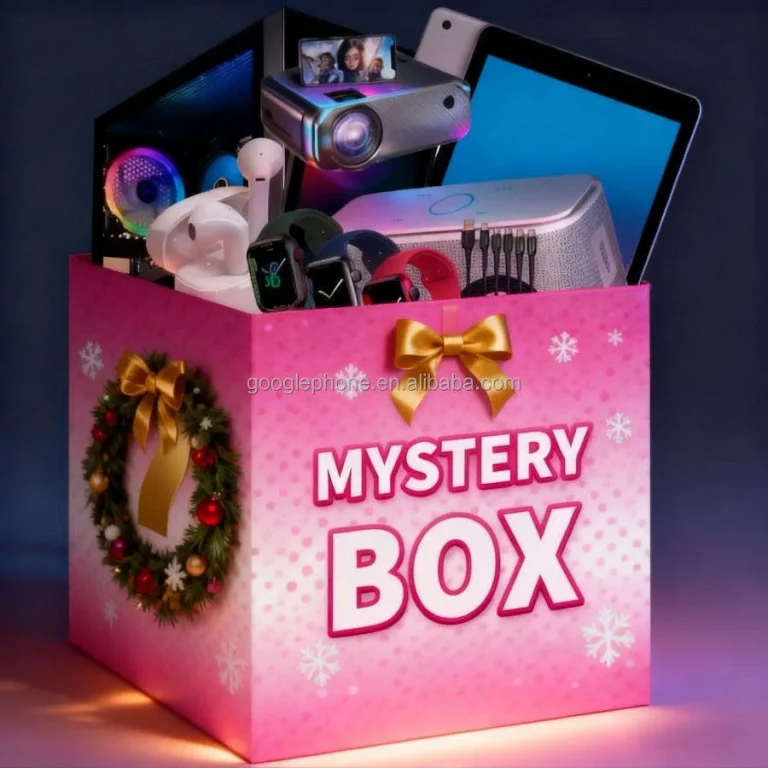
A phone or a tablet is the rarest thing a mystery box can contain and the one that needs the most checking before you feel pleased. Unlike earbuds, a phone carries a history: an identity number that may be on a blocklist, a lock tied to a previous owner's account, and radio bands that may or may not work on your carrier. Here are the four fifteen-minute checks that tell you whether you have a phone or a paperweight.
First, Do Not Expect One
Boxes at ordinary prices are built from accessories, and a phone or tablet is worth more than most boxes cost, so one appears only in the larger tiers and only occasionally; the arithmetic that keeps big items rare is in laptop and computer mystery boxes: why big items rarely appear. When one does appear, it is more likely to be a budget model, a tablet than a phone, and possibly refurbished rather than new, and the listing's condition wording tells you which; how to read that is in used, refurbished or new: how to read condition on a mystery box. None of that makes it a bad find. It makes it a find that needs checking.
The Four Checks
- Dial *#06# for the IMEI and check it on the CTIA Stolen Phone Checker; a blocklisted number means the phone will never work on a US network.
- A setup screen asking for a previous owner's Apple ID or Google account is an activation lock, and no seller can remove it without that account; it is a fault to report at once.
- Put your own SIM in to test the carrier lock, then confirm calls and data work, because a phone built for another market can lack the bands your carrier uses.
1. The IMEI. Every phone and cellular tablet has a fifteen-digit identity number, the IMEI, printed on the box, under the battery cover on older phones, and shown on the screen when you dial *#06#. The CTIA, the US wireless industry body, runs a free lookup at stolenphonechecker.org that tells you whether that number has been reported lost or stolen and placed on the carriers' shared blocklist. A blocklisted phone cannot be activated on any US carrier, whatever else is right about it. Check the number on the screen, not the box, because the two should match and a mismatch is its own warning. Photograph both.
2. The activation lock. Turn the device on and go through setup. If it asks you to enter the Apple ID or Google account of a previous owner, it is locked to that owner. On an iPhone or iPad this is Activation Lock and Apple will not remove it for you without the original owner or proof of purchase in that owner's name. On Android it is Factory Reset Protection, and the same applies. A locked device is not usable and cannot be made usable; it is a fault to report to the seller immediately, with a photograph of the lock screen.
3. The carrier lock. Put your own SIM in. A phone locked to one carrier will refuse a SIM from another, usually with a message saying so. Unlocked phones accept any SIM. US carriers release the lock under industry rules once the device is paid off, but a phone from a random box has no account you can call, so a carrier lock is, for you, a fault.
4. The bands. A phone that accepts your SIM can still fail to work, because phones are built for particular markets and carry the radio bands of those markets. A model made for China or Europe may lack the bands your US carrier uses for voice and data, and with the old 3G networks gone, a phone that cannot do voice over LTE on your carrier cannot make calls at all. Make a call, send a text, and load a web page on mobile data. If any of the three fails with a good SIM and signal, the phone is not compatible with your carrier, and no setting will fix it.
What Each Result Means
| Check | Pass | Fail | What you do on a fail |
|---|---|---|---|
| IMEI on the CTIA checker | "Not reported lost or stolen" | On the blocklist, or IMEI on box and screen differ | Report to the seller as unusable; do not try to use it |
| Setup screen | Asks you to create or sign in with your own account | Asks for a previous owner's account | Photograph; report as activation-locked |
| Your SIM | Accepted; signal bars appear | "SIM not supported" or similar | Report as carrier-locked |
| Call, text, data | All three work | Any fails with good signal | Report as incompatible with US networks |
| FCC ID on the device | Present, looks up to the right model | Absent | Not lawfully sold in the US; report |
| Condition vs listing | Matches "new" or "refurbished" as stated | Scratches, worn battery on a "new" listing | Report as misdescribed |
Read the first two rows as the ones that end the discussion. A blocklisted or activation-locked phone is a brick to you, and the only correct response is a claim on the seller for a replacement or a refund, sent the same day with the photographs. The lookup for the FCC ID, which a phone must carry to be sold in the United States, is in what the FCC ID on your mystery box earbuds tells you; a phone with no ID at all has skipped the process.
Note: Do not sign in until the checks are done. Once you put your own Apple ID or Google account on a device, you have adopted it, and if it later turns out to be blocklisted you will be removing your account from a phone you cannot use. Run the IMEI check with the device still on the setup screen, look for the lock, test the SIM, and only then sign in. Fifteen minutes in that order saves an afternoon in the other one.

If It Passes
- Update it. A phone that sat in a warehouse is months behind on security updates; install them before you put anything personal on it.
- Check the battery health in settings on an iPhone, or with a battery app on Android. A "new" phone should show close to full capacity; a refurbished one may not, and the listing should have said so.
- Charge it with a charger you trust, and see what the included one is rated for; the safety marks on mains adapters are in UL, ETL and the charger in your mystery box.
- Set your own lock and account, and turn on the find-my feature, so the device is protected the way the previous one was not.
A tablet without a SIM slot skips the SIM and band checks but not the IMEI-equivalent serial lookup with its maker, and not the activation lock, which applies to tablets exactly as to phones.
If You Do Not Want It
A passed phone is one of the few mystery box items with real resale value, and one of the few where wiping matters before it leaves your hands. Sign out of every account, turn off the find-my feature, and factory reset, so the next owner does not meet the lock you were checking for. The disposal and wiping order for anything with storage is in what to do with dead or unwanted electronics from a mystery box.
What This Means When You Order
You should not buy a mystery box hoping for a phone, and you should check any phone that arrives before you are glad of it. Mewoo's product pages put it plainly: higher-value items such as phones, laptops, cameras and drones appear less often, and the chance of one rises with the box price, and every item in a Mewoo box is new and checked before dispatch. Ask any seller putting phones in boxes whether they are new or refurbished, unlocked, and sold with the IMEI verified; a seller who cannot answer all three has answered. Then run the four checks on the setup screen, sign in only on a pass, and treat a lock or a blocklist as the fault it is.
FAQ
How do I check if a phone from a mystery box is stolen?
Get the IMEI by dialling *#06# on the setup screen, then enter it at stolenphonechecker.org, the free service run by the US wireless industry body. It returns whether that number sits on the carriers' shared list of devices reported lost or stolen. Any US network will refuse a listed handset. Compare the on-screen number with the one on the box as well; a mismatch means the box and the phone did not start life together.
The phone asks for someone else's Apple ID. Can the seller remove it?
No. That screen is Activation Lock, and only the account holder can release it, either from the device or from their online account. Apple will remove it only with proof of purchase in that person's name, which a mystery box seller cannot produce for you, and third-party services promising to remove it are either scams or bypasses that fail at the next update. Photograph the screen and claim on the seller for a replacement or refund straight away.
What does "carrier locked" mean and does it matter?
It means the phone was sold by one network on a contract and refuses SIM cards from any other until that network releases it. The original customer can ask for release once the contract is paid; you, holding the phone with no account, cannot. Test by inserting your own SIM: bars mean unlocked, a "SIM not supported" message means locked. For a mystery box phone, a lock is a fault, since you have no route to remove it.
The phone accepts my SIM but cannot make calls. Why?
Radio bands. Phones are built for regional markets and carry only the frequencies those markets use; a model made for China or Europe may lack the bands your US carrier relies on, and since the 3G shutdown a phone that cannot carry voice over LTE on your network has no way to place a call. Data may work while calls do not, or nothing works at all. There is no setting to fix it. Report it as incompatible.
Should I sign in to the phone before checking it?
No. Do everything from the setup screen: dial the IMEI code, run the lookup, look for a previous owner's lock, insert your SIM and test a call. Adding your own account first means adopting a device that may turn out to be blocklisted or locked, and then unpicking your account from it. Sign in only after all four checks pass, then update the software and set your own lock and find-my protection.
Is a refurbished phone in a mystery box a bad sign?
Not if the listing said so. Refurbished is a legitimate condition with its own meaning, and a tested, unlocked refurbished phone with a healthy battery is a fair item at a box price. It becomes a problem only when a listing said new and the device shows wear or a worn battery, which is a misdescription to report. Once it passes the four checks, open the battery health screen and hold the figure against the listing's wording.
Final Thoughts
A phone in a mystery box is rare and needs four checks before you sign in: the IMEI on the CTIA stolen phone checker, the setup screen for a previous owner's lock, your own SIM for a carrier lock, and a real call for the bands. A blocklist or an activation lock is a brick and a same-day claim; a pass is a phone worth updating and protecting. Check from the setup screen, then make it yours.
If you want a larger tier where a tablet or phone is possible, with devices tested before dispatch and the categories stated on the product page, start with the Big Reveal Electronics Mystery Box (8 items) or the Party Electronics Mystery Box (6 items). Compare every tier side by side on the electronics mystery box category page.
See how devices are tested before dispatch →