
Used, Refurbished or New: How to Read Condition on a Mystery Box

"New or like new." "Excellent condition." "Refurbished." Those phrases have precise, published meanings on the marketplaces where most electronics change hands, and almost none of that precision survives the trip onto a mystery box listing. If you know the real condition ladder, you can see exactly what a vague description is leaving out, and you can ask the one question that settles it before you pay. This guide gives you the ladder and the question.
The Ladder Already Exists
Here is the useful thing most buyers do not know: condition is not a matter of opinion in online electronics retail. Marketplaces have spent years turning it into a graded ladder with published definitions, because vague condition claims generate disputes. eBay's item condition definitions are the clearest public example. They run from brand new down to non-functional, with several distinct rungs of refurbishment in between, and every rung says something specific about who did the work and what comes in the box.
A mystery box listing that says "good condition" is not using that ladder. It is using a phrase that sounds like a rung and is not one, and you should read it that way.
The Rungs, in Order
- Formal condition grades are published and specific; listing adjectives are not.
- Warranty, not appearance, is what separates the refurbished grades from "used".
- "Untested" sits below "used" and is the honest name for stock nobody has checked.
- Ask three things: which grade, tested by whom, and backed for how long.
Here is the published ladder, in the words the marketplace itself uses, so you can hold any listing up against it.
| Grade | What it means for you | Who did the work |
|---|---|---|
| New | Brand new, unused, unopened, undamaged | Nobody; untouched |
| Certified refurbished | Like-new; meets manufacturer specifications; new packaging with original or new accessories | Manufacturer or approved vendor |
| Excellent refurbished | Like-new, one-year warranty, new generic packaging | Qualified sellers |
| Very good refurbished | Minimal wear, one-year warranty | Qualified sellers |
| Good refurbished | Moderate wear, one-year warranty | Qualified sellers |
| Seller refurbished | Restored to full working order; may or may not be in original packaging | The seller or a third party |
| Used | Previously used, may show cosmetic wear, fully operational; may be a floor model or store return | Nobody; sold as-is |
| For parts or not working | Does not function as intended; defective, needs repair, or missing essential components | Nobody |
Read that ladder once and the vagueness of most mystery box descriptions becomes obvious. "Like new" could mean the second rung or the seventh, and those are different products at very different prices. When you see the phrase, you are entitled to ask which rung it means.
Warranty Is the Real Dividing Line
Notice what actually separates the middle of that ladder from the bottom, because it is not how the item looks. The graded refurbished tiers, excellent, very good, and good, are each defined as being backed by a one-year warranty. The wear level changes between them; the warranty does not. Meanwhile "seller refurbished" and "used" carry no such commitment at all.
So a "good refurbished" item with visible wear comes to you with a year of cover, while an immaculate "used" item comes with nothing. Appearance and backing move independently, and the backing is the part that matters to you when something stops working in month three. That gives you the question that replaces every adjective: who stands behind this item, and for how long? It has an answer or it does not, and either answer tells you what you need.
The Rung That Is Not on the Ladder
There is a category the formal grades do not name, and it is common in assorted boxes: untested. Untested is not a condition. It is a statement that nobody has checked, which means the item could sit anywhere from "new" to "for parts". The published ladder has no rung for it because a marketplace requires the seller to pick a grade, and untested stock is exactly what a seller cannot grade.
Treat it as sitting below "used" rather than beside it. A used item has at least been confirmed to work; an untested one has not. That is why testing before dispatch is the single most price-relevant thing a mystery box seller can do for you, and why you should check whether it happens before you order. Mewoo describes its own process in how it tests electronics before dispatch.
Note: "Open box" is the phrase you are most likely to misread. On the formal ladder it means an item in excellent, new condition with no wear whose packaging has simply been opened. In casual listing language it is often stretched to cover goods that have been used. If you see the words without a grade beside them, ask the seller which meaning applies before you price the box.
Why a Mystery Box Removes Your Usual Cues
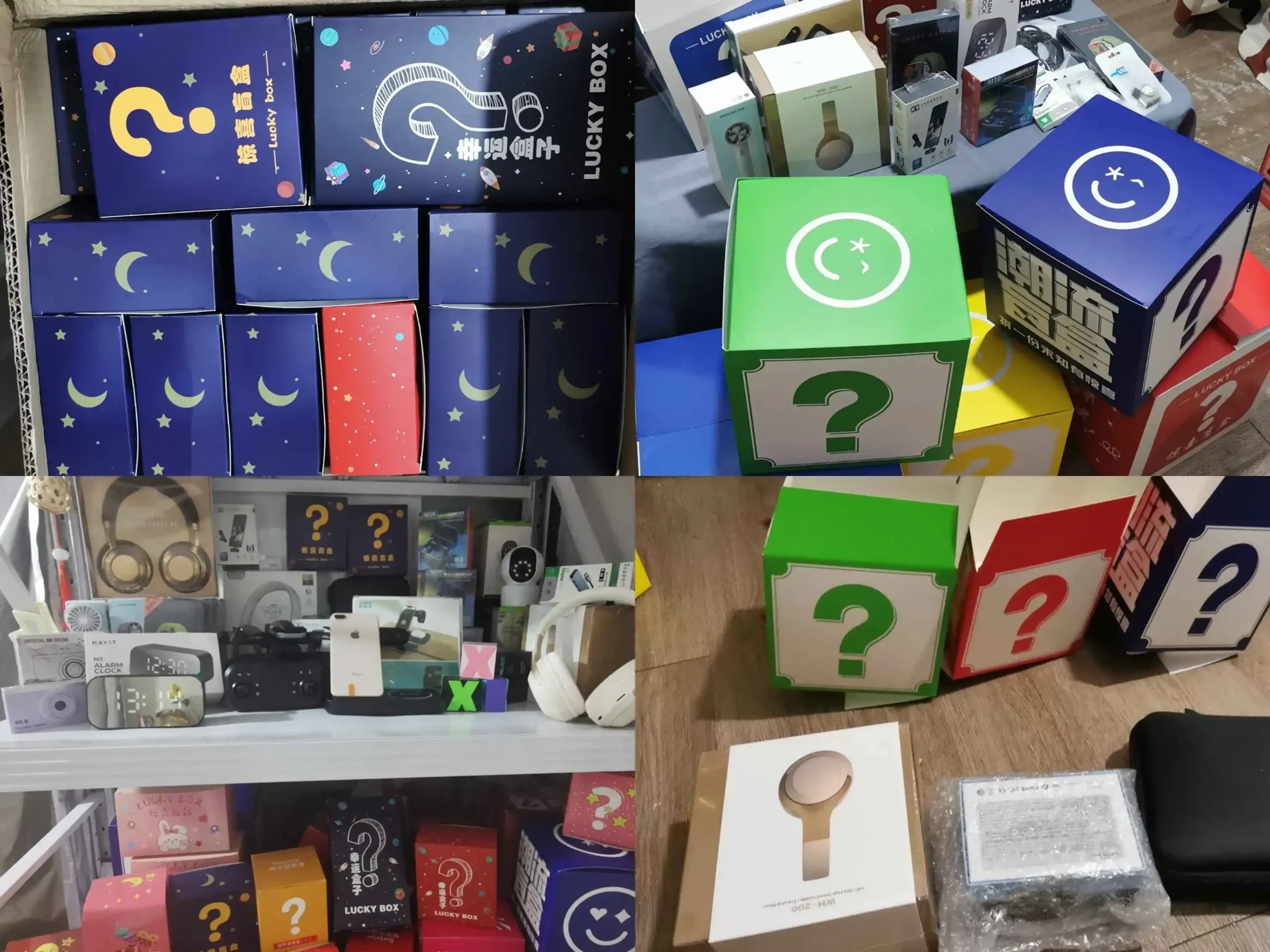
With a normal purchase you read condition from three things: the photograph of the actual item, the packaging, and the stated grade. An assortment takes all three away from you. There is no photograph of your specific item, because it has not been chosen yet. Packaging is often stripped so the contents fit one carton, which discards the cue that separates certified refurbished, new packaging with original accessories, from a generic-boxed grade. And a single grade cannot honestly cover a mixed box in which different items came from different places.
That is not a flaw in the format so much as a consequence of it. But it does mean condition has to be stated in words on the listing, because nothing else in the transaction will tell you.
What Condition Should Cost You
Grades carry roughly predictable price relationships, and knowing them makes a listing easier for you to judge.
- New sets the ceiling and is the only grade with no history to disclose.
- Certified refurbished sits close beneath it, because manufacturer involvement and new packaging cost real money.
- Graded refurbished trades appearance for price while keeping the warranty constant, which is why "good" is often the best value on the whole ladder.
- Used drops further, because the risk transfers to you.
- Untested should be the cheapest of all, and a listing charging near-new prices for it is mispriced rather than generous.
If you are buying to resell, the ladder is also your listing vocabulary. You can only describe an item to your own buyer with the grade your supplier gave you, and "new and tested" is a grade you can pass on; "good condition" is not. Returns-sourced boxes deserve a specific mention here, because their condition profile is not an average but a split: mostly as-new goods plus a small tail of genuine problems. That distribution is covered in what is actually inside a box of returns.
The Three Questions to Ask
- Which grade, in the marketplace's words? Not "like new". New, certified refurbished, used, or untested.
- Has it been tested, and by whom? Tested by the seller is worth considerably more to you than untested, and it is a yes-or-no answer.
- Is there a warranty, and how long? This separates the graded refurbished tiers from everything below them.
A seller who answers all three has told you what you are buying even though you do not know what the items are. Mewoo's own position is published in product condition and grading, and it is honest about which parts are stated and which you should confirm for your order.
FAQ
What is the difference between refurbished and used?
Someone has worked on a refurbished item and someone stands behind it. It has been inspected, cleaned, and brought back to spec, and on the graded tiers you get a year of cover. A used item comes to you exactly as the last owner left it, working but unbacked. Two items can look identical on your desk while one has a warranty card and the other has nothing.
Does "second hand" mean the same as "used"?
In conversation, yes. On a listing, "used" carries a promise you can hold the seller to: the thing works. Cosmetic marks are allowed; a dead battery is not. If a seller wants to sell you something that may not function, the honest label is "for parts or not working", and a price that looks too good for "used" is often a sign that this is what they mean.
What does "untested" actually mean on a listing?
It means the seller is handing the checking job to you. Nobody switched the item on, so it might be perfect or it might be dead, and the seller has priced in not knowing. Expect to pay well below the used price for it, budget time to test every piece on arrival, and remember that a fault you find is not a surprise to the seller, so a refund will be harder to argue.
Is "open box" the same as used?
It should not be, but it often is. Properly used, the term describes a new item whose retail packaging was opened and nothing more, which is close to the top of the ladder. Loosely used, it is a softer way of saying somebody had it for a while. Ask the seller directly whether the item shows any wear or use; a straight answer tells you which version you are being offered.
Should a mystery box state one condition for everything inside?
Only if everything inside genuinely meets it. What you want from a seller of mixed boxes is a floor: the worst condition any item can be in, plus a yes or no on whether untested stock is ever included. A listing that says "new and tested" for the whole box has given you a floor. A listing that says nothing has usually given you the cheaper answer by omission.
Which grade gives me the best value?
For a single item you are buying for yourself, "good refurbished" is usually the sweet spot: the price drops for cosmetic wear while the year of cover stays exactly the same as the prettier tiers. For a mystery box, the best value is whatever grade is written down and tested, because an unwritten grade is priced as new and delivered as whatever the packer found.
Final Thoughts
Condition is already formalised into a published ladder that runs from new down to non-working, with warranty rather than appearance separating the middle from the bottom. Mystery box listings rarely use it, so translate their adjectives back into rungs and ask three things before you pay: which grade, tested by whom, and backed for how long. A seller who can answer has told you what you are buying.
Condition is stated on the product page for each tier: Discovery Electronics Mystery Box (1 item) and Triple Reveal Electronics Mystery Box (3 items). Compare every tier side by side on the electronics mystery box category page.
See stated condition by tier →