Free Mystery Box Offers: Reading the Fine Print
"Free mystery box" describes three completely different offers. One is a bundle, one is a postage charge wearing a costume, and one signs you up to a recurring payment. Only the third has specific legal requirements attached, and they are requirements you can check while the page is still in front of you, before your card details are typed. This guide shows you how to tell them apart in thirty seconds.
Three Offers, One Word
- Free with purchase is a bundle; judge it on the delivered total and whether you wanted that many boxes.
- Free plus postage is a price, and postage is the biggest line in a cheap box.
- Free with a subscription must disclose all material terms before your card details, and cancelling must be simple.
- Take a free box when you would have bought anyway, not because it is free.
Sort the offer into one of three shapes before you do anything else. They fail differently and you check them differently. Free with a purchase. Buy five boxes, get one free. Nothing is given away; a discount is being expressed as a quantity. Free, you pay shipping. The goods are nominally free and the postage is the transaction. Whether this is good for you depends entirely on the postage figure. Free when you sign up. A box arrives at no charge and something recurring starts. This is the only one of the three with a specific statute behind it.
Offer One: Free With Purchase
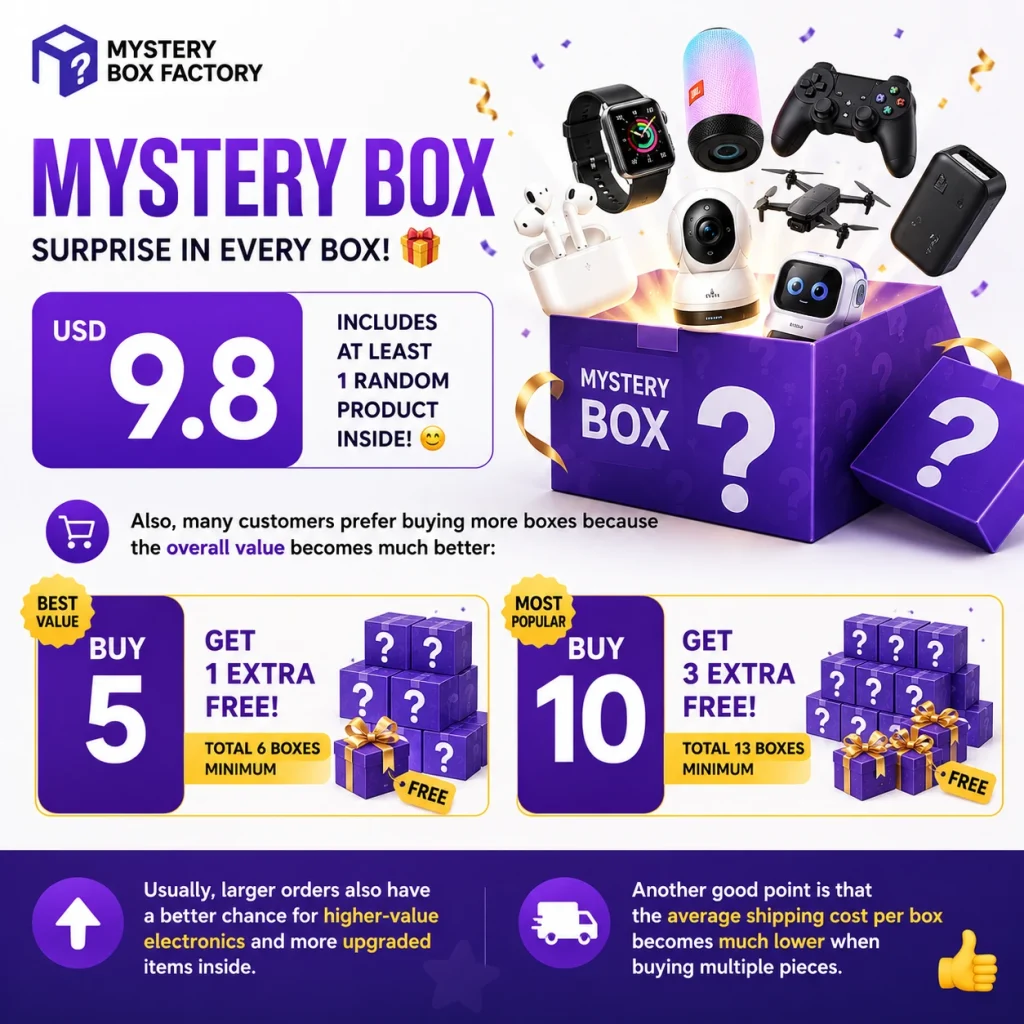
This is the most common and the least troublesome, provided you do the arithmetic the offer is designed to skip. Six boxes for the price of five is a discount of roughly seventeen per cent. That is a real saving, and for this category it is often a sensible one for you, because carriage is charged per parcel rather than per item and a larger order spreads it. The trap is that it changes what you are buying. An offer sized for six boxes is only a saving if you wanted six boxes. If you wanted one, the "free" box has cost you the price of four others. The relevant rule is the FTC's guide on the word "free", which requires that the item you must buy stays at its regular price; the mechanics are in what free shipping really means, and they apply identically to a free box.
Offer Two: Free, You Pay Shipping
Here the honest description is simply that the box costs you whatever the postage costs. That is not automatically bad. It is bad when the postage figure exceeds what the box would sell for outright, which happens more often than you would expect, because postage is the largest single line in any cheap box; the arithmetic is in what to realistically expect under $20. Two checks settle it for you. First, what does the same seller charge for a comparable box with normal shipping? If a "free" box with $9 postage costs the same delivered total as a $9 box with free shipping, nothing has been given away. Second, is the postage figure fixed, or does it rise with your destination in a way the headline never mentions?
Offer Three: Free If You Subscribe
This is the one to read carefully, because it is the only version where you can still be paying in three months. US law addresses it directly. Under 15 U.S.C. § 8403, it is unlawful to charge you for goods sold in an internet transaction through a negative option feature unless the seller does three things: clearly and conspicuously discloses all material terms of the transaction before obtaining your billing information; obtains your express informed consent before charging your card; and provides simple mechanisms for you to stop the recurring charges.
Look closely at the first requirement, because it contains a sequence rather than just a duty. The material terms must be disclosed before billing information is obtained. That gives you something you can observe in real time rather than having to argue afterwards. Walk through the signup and notice where the card field appears relative to the renewal price, the renewal date, and the cancellation route. If you reach the card field without having been told what happens next month, the sequence the statute describes has not been followed. The third requirement is equally checkable, just later: find the cancellation mechanism before you sign up, not after. If cancelling requires an email exchange or a phone call while joining took two clicks, that asymmetry is the thing the word "simple" is aimed at.
Note: Screenshot the offer page including the renewal terms before you complete signup. Promotional pages are edited frequently, and the version that persuaded you is the one you will want if the charge that arrives does not match what you read. This is the same habit that protects you on marketplace listings, and it takes you five seconds.
Side by Side
| Offer | What it really is | Your main risk | Your check |
|---|---|---|---|
| Buy 5, get 1 free | Volume discount | Buying more than you wanted | Delivered total ÷ item count |
| Free, pay shipping | The postage is the price | Postage above the box's worth | Compare with an ordinary box |
| Free with signup | A recurring contract | Still paying months later | Terms shown before card field |
| Free gift at checkout | Margin already in the price | Little; mostly harmless | Would you buy it without? |
The fourth row is worth naming because people worry about it unnecessarily. A small item added at checkout after you had already decided to buy is a normal retail courtesy, not a trap, and it needs no analysis from you.
Thirty Seconds Before You Type a Card Number
- Name the offer type. Bundle, postage, or subscription. Everything follows from this.
- Find the recurring price and date. If it is a subscription and you cannot see both, stop.
- Find the cancellation route. Before signing up, not after.
- Work out the delivered total. Including postage, in your currency.
- Divide by the stated item count. Free boxes rarely state one, which is itself informative.
- Screenshot the page. Terms and renewal price included.
If the offer is a subscription and you want to know whether that format suits you at all before any of this, the comparison is in subscription box vs one-time mystery box.
When a Free Box Is Genuinely Worth Taking
Three situations, stated plainly, because the answer is not always no. You were buying anyway. A bundle that matches an order you had already decided on is a straightforward discount. The postage is genuinely low and stated. A small box for the cost of a stamp is a fair sample, and sampling a seller cheaply before a larger order is sensible. You want the subscription. If the recurring product is something you would have bought at full price, the free first box is a real introductory saving rather than a hook. What all three have in common is that the free item is not the reason for your transaction. When it is the reason, the offer is doing the deciding for you, which is what it was designed to do.
FAQ
Are free mystery boxes ever actually free?
Almost never in the way you hope. Strip the word away and you are usually looking at one of three things: a bulk discount dressed up as a bonus box, a box whose real price arrives as a postage charge, or a first box that costs nothing because the second and third will be billed to you automatically. The one exception is a small gift dropped into your basket after you had already decided to buy.
What does the law require for a free trial box?
Three things, and they are in a fixed order. Before the site takes your card number it must show you every material term, including what renews and for how much. Before it charges you it must have your clear agreement. And once you are in, it must give you an easy way out. That is the US rule for internet transactions with an automatic renewal, and the ordering is what lets you spot a breach on the page itself.
How do I spot a subscription hidden in a free offer?
Go through the signup slowly and watch the order of the screens. You should see the renewal price, the renewal date, and how to cancel before you are asked for a card. If the card box comes first, close the tab. Also try to find the cancellation page while you are still a visitor; a site that lets you join in two clicks but only lets you leave by phone has told you what kind of relationship it wants.
Is "free plus shipping" a good deal?
Read the postage figure as the price, because that is what it is. Next, open the seller's normal listings and find a box of similar size that is sold at a price with shipping on top. Put the two delivered figures next to each other; when they match, you have found a discount that does not exist. It becomes a good deal only when the postage is genuinely small and stated in full before you commit, in your own currency.
Is "buy five, get one free" worth taking?
If six boxes were already on your shopping list, take it; you save about a sixth and pay postage once instead of six times. If you came for a single box, that free sixth one has just persuaded you to buy four more than you wanted, which is the whole job of the offer. Decide the number of boxes you need before you look at the promotion, then see whether it happens to fit.
What should I do before entering card details?
Work out which of the three offers you are looking at, then run the matching check. For a subscription, find the renewal price, the date, and the cancel button first. For any offer, add up what you will actually pay to your door and divide it by the number of items the page promises; if it promises no number at all, that silence is worth noticing. Keep a picture of the page, renewal wording included.
Final Thoughts
Decide which of the three offers you are looking at before anything else. Bundles are discounts, postage-only boxes cost whatever the postage costs, and subscription offers are the only version with a statute behind them, one that requires the terms to appear before the card field and cancellation to be simple. Take the free box when you would have bought anyway, not because it is free, and screenshot the page either way.
A plainly priced small tier is easier to judge than a conditional free offer: Discovery Electronics Mystery Box (1 item) and Double Surprise Electronics Mystery Box (2 items). Compare every tier side by side on the electronics mystery box category page.
See stated prices and item counts →