Blind Boxes in the Toy Aisle: What Big-Box Retail Actually Sells You
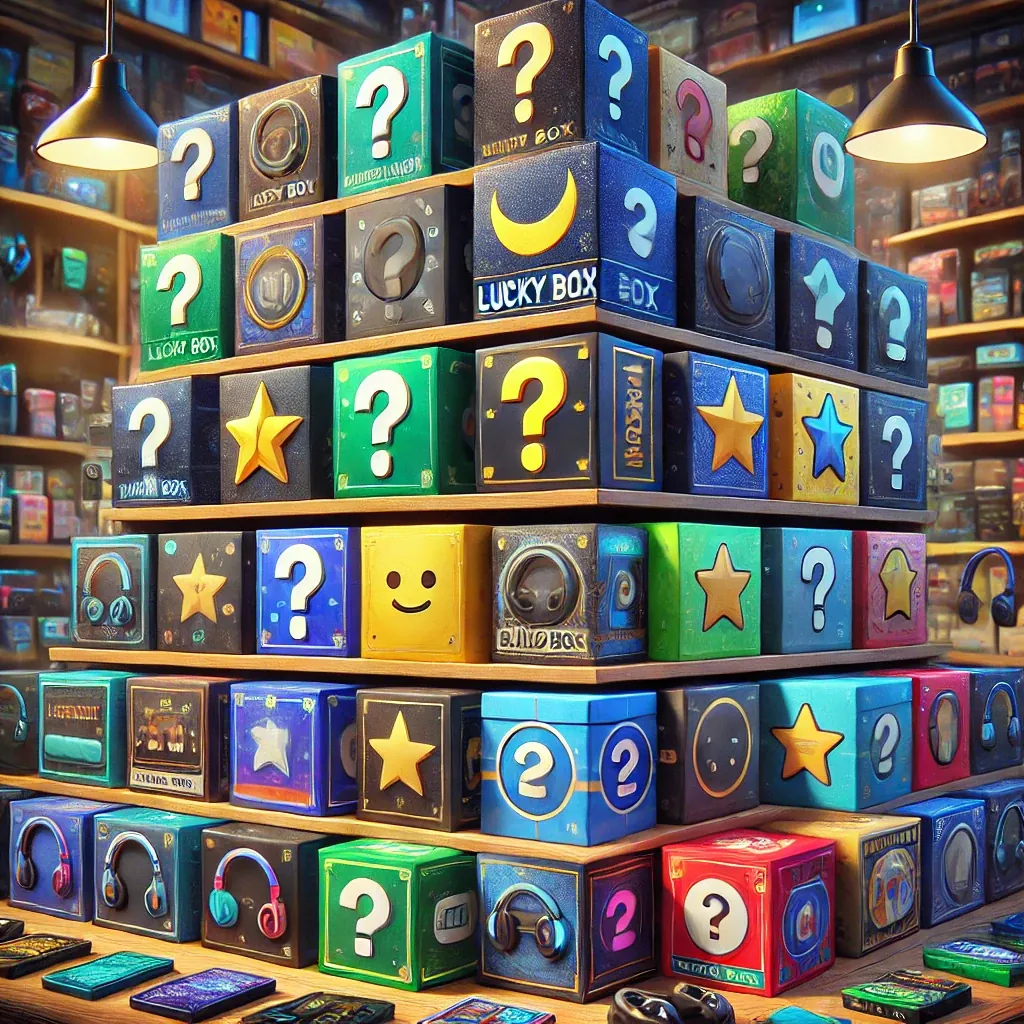
Searching for mystery boxes on Amazon, or wandering into the toy aisle at a large chain, produces a strange result for you: two things sold under one name that have almost nothing in common. One is a licensed collectible with a roster and a barcode. The other is an assortment somebody packed. Big-box retail carries both, side by side, and the shelf gives you no help telling them apart. Here is what each one actually guarantees you.
Two Different Products on One Shelf
Large retailers stock blind boxes for two entirely separate reasons, and understanding which is which explains most of what you see. Licensed collectible units. A named series from a known manufacturer, with a published roster, a barcode, and a place in a wider product line. The retailer buys these the way it buys any other toy: as a stocked SKU with a supplier behind it. Third-party assortments. Somebody's packed selection, listed by a marketplace seller rather than stocked by the retailer. These appear online far more than in physical aisles, because a shelf requires a buying decision and a marketplace listing does not. The first is a retail product. The second is a listing on a retailer's platform. That difference decides who you are actually buying from, and it is the whole subject of buying on a marketplace vs direct from a seller.
What the Physical Shelf Actually Guarantees
- Shelf space means somebody at the retailer approved the product.
- An online listing on the same retailer means only that a seller uploaded it.
- Returns are the biggest practical difference between the two for you.
- Check "sold by" before anything else on the page.
Getting onto a physical shelf is genuinely difficult, and that difficulty is the value to you. A buyer at the retailer assessed the product, the supplier signed contracts, the packaging met the chain's labelling requirements, and someone accepted responsibility for it. Toys in particular have to satisfy the retailer's own compliance checks before they occupy space, a filter that costs the supplier real money and time. None of that applies to a third-party listing on the same company's website. There, the retailer is providing a venue, and the seller is the one making the claims. Both carry the same logo at the top of the page, which is exactly why people conflate them.
The test
Look for who is selling and who is fulfilling. "Sold by [retailer]" is a stocked product. "Sold by [some company name]" is a marketplace listing, whatever the site design implies. It takes you two seconds and changes what you are looking at.
Returns Are the Real Difference
This is where the two diverge most usefully for you. A stocked retail product can generally be walked back into a store. That is an enormous practical advantage for a category where you cannot inspect before buying; you are not stuck with a decision made blind. A marketplace listing runs on the platform's dispute process instead, which works but is slower and depends on the listing having said something specific enough to depart from. Vague listings weaken it, for reasons covered in the marketplace comparison above. For anything sealed and random, the ability to walk it back is worth more to you than a small price difference.
Side by Side
| Stocked on the shelf | Third-party listing | |
|---|---|---|
| Who chose it | A buyer at the retailer | The seller alone |
| Compliance checks | Retailer's own, before stocking | Platform policy only |
| Returns | Usually walk-in | Dispute process |
| Roster published | Almost always | Rarely |
| Price | Higher | Lower |
| What "mystery" means | Which figure from a known series | What the seller packed |
The last row is the one that catches you. On a shelf, "mystery" almost always means one known design out of a published set. Online it frequently means the seller decided, and there is no set at all.
Note: Toy aisle displays are picked over. Where contents can be identified through packaging, the good ones go first, so a half-empty display is worse odds for you than a full one even though the price is identical. Buy from freshly stocked displays, or buy sealed cases where the mix is fixed.
Why Big Retailers Rarely Stock Electronics Assortments
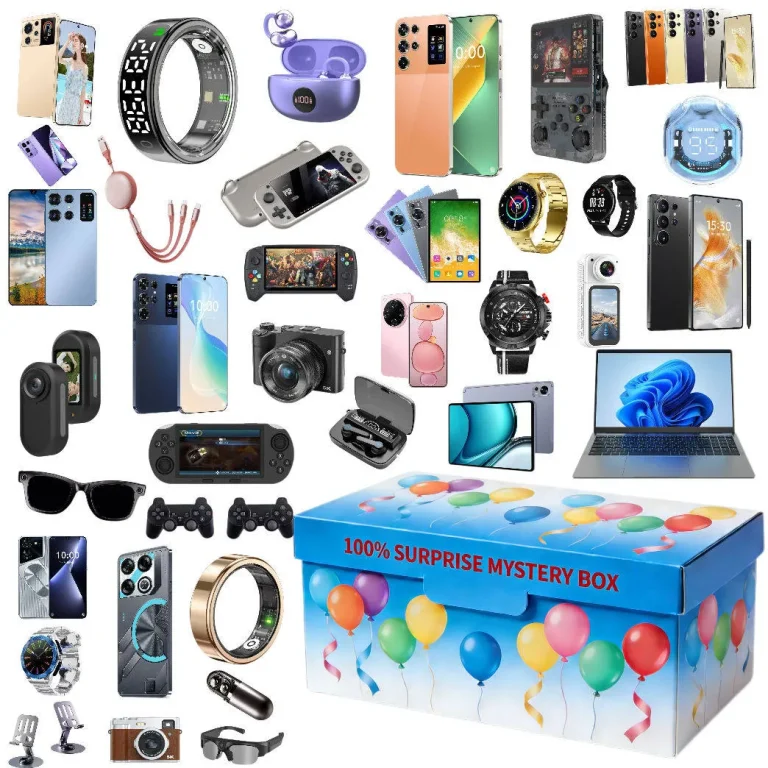
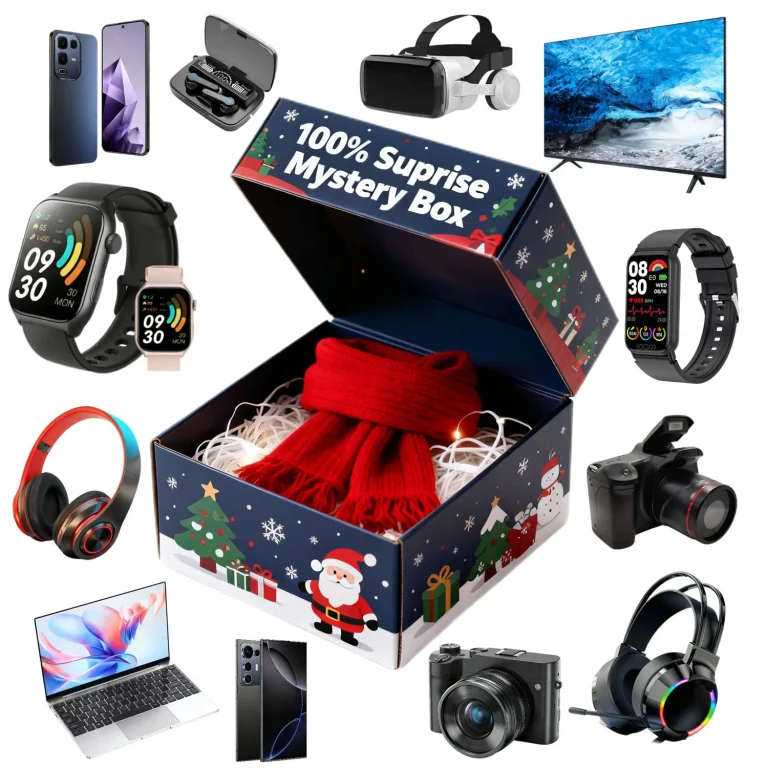
Notice what is missing from the toy aisle: general electronics mystery boxes. The reason is structural. A retailer stocking a product needs a consistent SKU: the same thing, in the same packaging, with the same barcode, arriving repeatedly. An assortment whose contents change with whatever the packer sourced this month cannot be that. There is nothing stable to put on a planogram. Collectible blind boxes solve this by having a roster: the series is fixed, so the SKU is stable even though each unit differs. An electronics assortment has no roster, which is precisely the distinction drawn in toy mystery boxes and electronics boxes follow different rules. So electronics assortments live online, sold direct or through marketplaces, and the absence of a shelf version is a fact about inventory systems rather than about quality. What replaces the shelf's filter, if you buy one, is the seller's own published terms: Mewoo's tiers state a count, a condition, an exclusion list, and a fault window on the product page, which is the direct-seller equivalent of a walk-in return.
The Seasonal Aisle Is a Third Thing
Alongside both of those sits a category that behaves differently again: the seasonal end-cap. These are the stacks that appear near a till in the weeks before an occasion, assorted boxes at a low price, bought by the retailer as a short-term promotion rather than as permanent stock. They are genuinely stocked products, so returns apply, but they are not part of any ongoing line. Two consequences follow for you. The stock is not replenished, so what is there on the last week is what nobody wanted in the first week. And there is no series behind it, so nothing published tells you what could be inside; it is an assortment that happens to be sitting on a shelf. Treat a seasonal end-cap as an assortment with a returns policy, which is a reasonable thing to buy, rather than as a collectible with a roster.
Reading a Big-Box Listing
- Check "sold by" and "ships from". The single most informative line on the page.
- Look for the series name. A named series with a roster is a different product from an unnamed assortment.
- Check the returns terms specifically. Marketplace items often have different terms from stocked ones on the same site.
- Compare against the same item in store. Price gaps between shelf and platform are usually explained by who is selling.
- Screenshot the listing. Marketplace listings are editable by the seller at any time.
Which to Buy Where
Collectible series: in store or from the retailer directly. Returns, fresh stock, and a real roster. Sealed cases: online. Physical shelves rarely carry them, and the case is where the set maths works; see completing a blind box set. Electronics assortments: direct from a seller with published policies. The shelf version does not exist, and the seller's own pages carry the information a listing omits; what those pages should contain is in the pages a mystery box site should have. Gifts with a deadline: whichever has the shortest, most certain delivery. Usually in store, since there is no transit at all. The general habit that serves you across all of them is the same: judge the seller by what they have committed to in writing, not by the size of the logo above the listing.
FAQ
Are mystery boxes on Amazon sold by Amazon?
Mostly not. The bulk of what you find are marketplace listings: the retailer supplies the web page and a third-party seller supplies the product and every claim about it. Two lines on the page settle it, "sold by" and "ships from". When the retailer's own name appears there, a buyer on staff chose that product and it went through the chain's checks. When a company you have never heard of appears there, nobody but that seller has looked at it.
Is a blind box from a shop shelf better than an online one?
More dependable, though it will usually cost you more. A product only reaches a shelf after a buyer approves it, a supplier signs a contract, and the packaging passes the chain's compliance rules, a filter a marketplace listing never has to pass. On top of that you can usually carry a shelf purchase back into the store, which is worth a great deal for a sealed product you could not inspect before paying.
Why does the same retailer show two different kinds of box?
Because one company is running two businesses under one logo. Stocking goods means choosing them, checking them, and taking them back if you return them. Hosting a marketplace means letting outside sellers upload whatever they like and handling complaints through a dispute process. The page layout rarely makes the split obvious, which is how you end up trusting a random seller's listing as if the retailer stood behind it.
Why are there no electronics mystery boxes in the toy aisle?
Because a planogram has no slot for a product that reinvents itself every month. A retailer's stock system wants one barcode that always means one thing, and a box packed from whatever happened to be cheap in September is not that. Collectible series get round it with a fixed roster, so each unit varies but the product does not. An electronics assortment has no roster, so it lives online, where you read the seller's terms instead.
Does a picked-over display matter?
It does whenever the contents can be guessed through the packaging. In that case the shoppers before you have already found the rare figure and left the rest, so the half-empty tray you are looking at carries worse odds than the full one it was last week, at the same price. Head for a display that has just been restocked, or buy a sealed case, where the manufacturer fixed the mix and nobody has sorted through it.
Which is cheaper?
The marketplace listing, almost always, because the seller has no shop floor to pay for and no buying process to pass. What the higher shelf price buys you is the approval the product went through and the walk-in return you get afterwards. For a sealed random product that you cannot open before paying, that return route is usually worth more than the few dollars you save online, so decide which you value before you decide which is the bargain.
Final Thoughts
A large retailer's shelf and its website are two different businesses wearing one logo. Shelf space means somebody approved the product and you can walk it back; a listing means a seller uploaded it. Check "sold by" first, prefer the shelf for anything you cannot inspect, and remember that electronics assortments are absent from aisles for inventory reasons rather than quality ones. Online, the seller's written terms are your shelf.
If what you want is an electronics assortment from a seller who publishes the terms a shelf would have checked: Triple Reveal Electronics Mystery Box (3 items) and Party Electronics Mystery Box (6 items). Compare every tier side by side on the electronics mystery box category page.
See what a seller should publish →