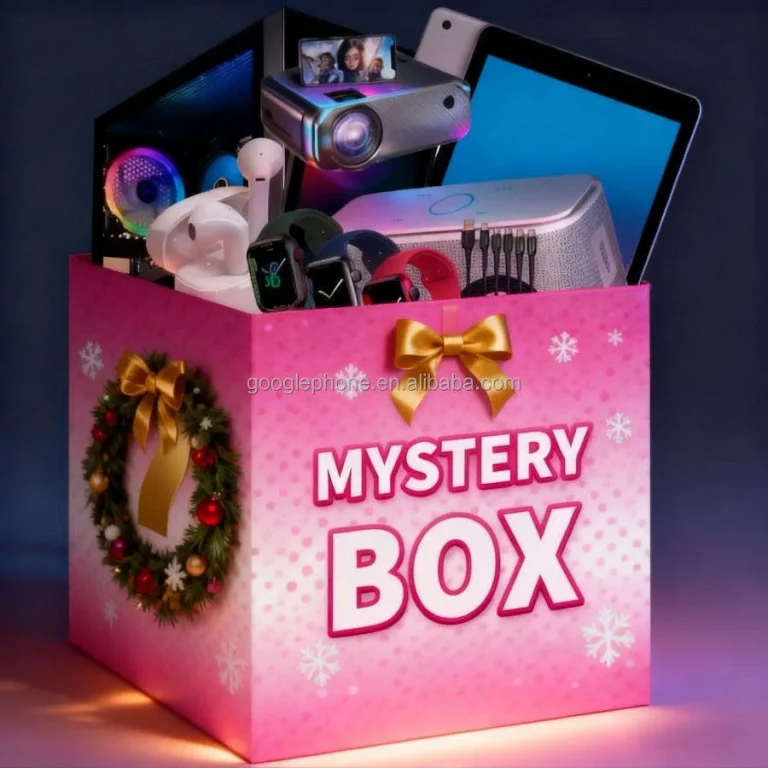
After Christmas: What to Do With a Mystery Box You Did Not Want

It is the twenty-seventh of December and there is a box of things you did not choose sitting in the corner. Some of it is useful, some of it is not, and the whole lot is quietly turning into a drawer you will not open again. This guide gives you the sorting method, the options in order of how much value each one preserves, and the one deadline you must not miss before you do anything else.
Do the Time-Sensitive Part First
Almost everything below can wait until January. One thing cannot. If any item is faulty, missing, or damaged, the reporting window runs from delivery, not from when you got round to looking at it. A box that arrived on the tenth of December and sat under a tree until Christmas Day has already used up two weeks of that window. So before anything else: unpack everything, power on whatever powers on, pair whatever pairs, and report faults now. Keep the outer packaging and the label until you have done it.
What is not covered is preference. Sellers of random assortments commit to item count, condition, and category, not to whether you happen to want the thing. "I did not like it" is not a fault, and treating it as one wastes a phone call you could have spent listing the item instead.
Sort Into Four Piles
- Report faults immediately; that window started at delivery, not at Christmas.
- Sort by who would use the item, not by what you paid for it.
- Selling rarely pays for small accessories; regifting and donating usually preserve more value for less effort.
- Recycling is the last resort, and the "deal with it later" drawer is the only outcome that helps nobody.
Empty the box onto a table and put every item into one of four piles. Do this in one sitting; the mistake is leaving it half-sorted, because a half-sorted box becomes a stored box.
- Keep. You will genuinely use it, even occasionally. A spare cable counts.
- Someone specific. You can name the person who would want it. Not "someone might"; a name.
- Sell or donate. Usable, unopened or as-new, but nobody you know needs it.
- Neither. Broken, incompatible, or genuinely useless to anyone.
The sorting rule that matters is this: judge each item by who would use it, not by what it cost. Sunk cost is the reason unwanted things sit in your drawers for years. The money is already spent either way, and the only remaining question is where the object should live.
Your Options, in Order of Value Preserved
| Option | Best for | Your effort | Catch |
|---|---|---|---|
| Keep as a spare | Cables, adapters, chargers | None | Only if you would actually reach for it |
| Regift | Unopened, boxed items | Low | Needs a genuine recipient, not a placeholder |
| Sell | Recognisable brands, as-new | Medium | Listing time rarely pays on cheap accessories |
| Donate | Unused, boxed, safe items | Low | Many shops decline untested electricals |
| Recycle | Broken or unsellable | Low | Needs a proper e-waste point, not the bin |
Regifting works if you are honest about it
An unopened accessory in its original packaging is a perfectly good present for the right person, and January to March is full of birthdays. Two conditions. It has to be something the recipient would actually use, and it has to be unopened. A regift that is visibly a spare from your Christmas is worse than no gift, because it reads as clearing a shelf rather than thinking of them.
Selling is usually not worth your evening
This is the option people reach for first and abandon halfway through. Photographing, listing, answering questions, packing, and posting a ten-dollar accessory costs more of your evening than the accessory is worth, and the fees and postage eat most of what is left. Selling makes sense for one recognisable, boxed item of reasonable value. It rarely makes sense for a handful of small accessories. If you do sell, list everything in one go, and be plain that the items came from a mixed assortment. The full arithmetic is in can you resell what comes in a mystery box.

Donation Has Rules Nobody Mentions
Handing electricals to a charity shop is less straightforward than handing over a jumper. Shops that resell electrical goods are responsible for their safety, which in practice means donated appliances are safety-tested before they go on the shelf. Testing costs the shop money and time, so many branches decline electrical donations, and others accept only items that are unused and still boxed. Two practical consequences for you: call before you carry, and ask the specific branch what they take, because policies differ between shops in the same chain. And unopened items are far more welcome than opened ones, which is a reason not to unwrap something you already suspect you will pass on. Non-electrical items from the box, such as cases, stands, and cloths, have none of these problems and are usually accepted without question.
Note: Do not put anything containing a battery into your household bin or general recycling. Lithium cells crushed in collection vehicles are a well-documented fire cause. Battery-containing items go to a designated collection point, and many supermarkets and electrical retailers have one near the entrance. It takes you two minutes on your next shop.
Recycling Is the Last Resort, Not the Default
When an item genuinely has no use to anyone, it needs a proper e-waste route rather than a bin. The scale of the problem is worth knowing. The UN's fourth Global E-waste Monitor, published in March 2024, reported that 62 million tonnes of e-waste was generated in 2022, and that less than a quarter, 22.3%, was documented as properly collected and recycled. The gap is not mostly industrial. It is small household electronics that were easier to bin than to carry somewhere. Two or three unwanted accessories from your box are a rounding error individually and the entire problem collectively.
Where to take things: retailer take-back points, since many large electrical retailers accept small items regardless of where you bought them; local recycling centres for anything larger; and battery bins at supermarkets, DIY stores, and electrical shops. Recycling is the right answer for your fourth pile. It is the wrong answer for the third, because a working item that gets recycled has had its remaining life thrown away along with its materials.
The Pile Everyone Gets Wrong
The genuine failure mode is not any of the options above. It is the fifth pile that you invent: the "I will deal with this later" drawer. Items in that drawer lose value steadily. Packaging gets damaged, which rules out donation. Batteries discharge and eventually will not hold charge, which rules out resale. Connectors go out of date. Two years later the entire drawer goes into the bin at once, which is exactly the outcome the drawer was meant to avoid. If a whole afternoon is not available to you, do the sorting anyway and put each pile in a separate bag with the destination written on it. The decision is the hard part; the trip can wait a fortnight.
Preventing the Repeat Next Year
If you have ended up with a pile of things nobody wants, the box was probably mismatched to the recipient rather than badly assembled. Narrow the category rather than widening it, because a broad range means each item is less likely to be relevant; Mewoo publishes its range in what categories can be in an electronics mystery box. Choose a smaller tier, since fewer, more substantial items produce less residue than a high count of small accessories, as set out in choosing a gift size. Open it before giving it, trading the sealed reveal for the ability to remove anything obviously wrong. And spread it out, because items that would look thin in a single pile work better as a sequence, which is the idea behind building a countdown from one box.
FAQ
Can I return a mystery box I did not like?
Not for that reason. What the seller signed up to was a number of items, a condition, and a category, and if all three match what arrived, the deal is done even if none of it suits you. What you can act on is a dead unit, a damaged one, or a short count, and for those the clock started ticking the day the courier delivered the parcel, so check everything before you do any sorting.
Is it acceptable to regift items from a mystery box?
Yes, if you hold it to the same standard as anything you would buy. Still sealed in its packaging and genuinely useful to the person you have in mind, it is a proper present. Already opened and handed on to fill a gap, it is a spare with a bow on it, and people can tell. Match each item to a real name on your list, and skip the ones that only fit "someone, probably".
Will a charity shop take unwanted electronics?
Ring the branch before you drive there. Because a shop is liable for anything electrical it resells, most either test donated items first or refuse them outright, and even branches in the same chain differ. Your best odds are with items still sealed in their retail packaging. Cases, stands, and other non-electrical bits from the same box will almost always be taken with no questions asked.
Is selling the items worth the effort?
Do the sum before you open the listing app. A ten-dollar accessory takes the same photographs, questions, packing, and post office trip as a hundred-dollar one, and after fees and postage you might clear three dollars for an hour of your evening. Save selling for a single boxed, branded item that will fetch real money, and pass the small stuff on to someone who will use it.
How do I dispose of items I cannot use at all?
Take them somewhere that handles electronics, never the household bin. Big electrical retailers usually have a take-back point by the door that accepts small gadgets whoever sold them, and your local recycling centre handles anything larger. Anything with a battery inside goes into a dedicated battery bin, because a lithium cell crushed in a refuse truck is a fire waiting to happen.
What should I do with duplicate cables and adapters?
Keep one of each type you genuinely use and move the rest on this month. Spare cables are the items most likely to sink to the bottom of your drawer, where the packaging gets crushed and the connector becomes obsolete before anyone wants it. A working cable handed to a friend in January does more good than the same cable dropped in a recycling bin in three years' time.
Final Thoughts
Report faults straight away, then sort the rest in one sitting by who would use each item rather than by what it cost. Keep the spares you will reach for, pass on what is unopened, donate what a shop will take, and recycle only what genuinely has no use left. The drawer is the only outcome that helps nobody, and the whole job takes you one afternoon.
If you are replacing a box that missed, a small tier is the low-commitment way to retry: Discovery Electronics Mystery Box (1 item) and Triple Reveal Electronics Mystery Box (3 items). Compare every tier side by side on the electronics mystery box category page.
See box sizes and counts →