
What Gold and Silver Tiers Really Mean on a Mystery Box
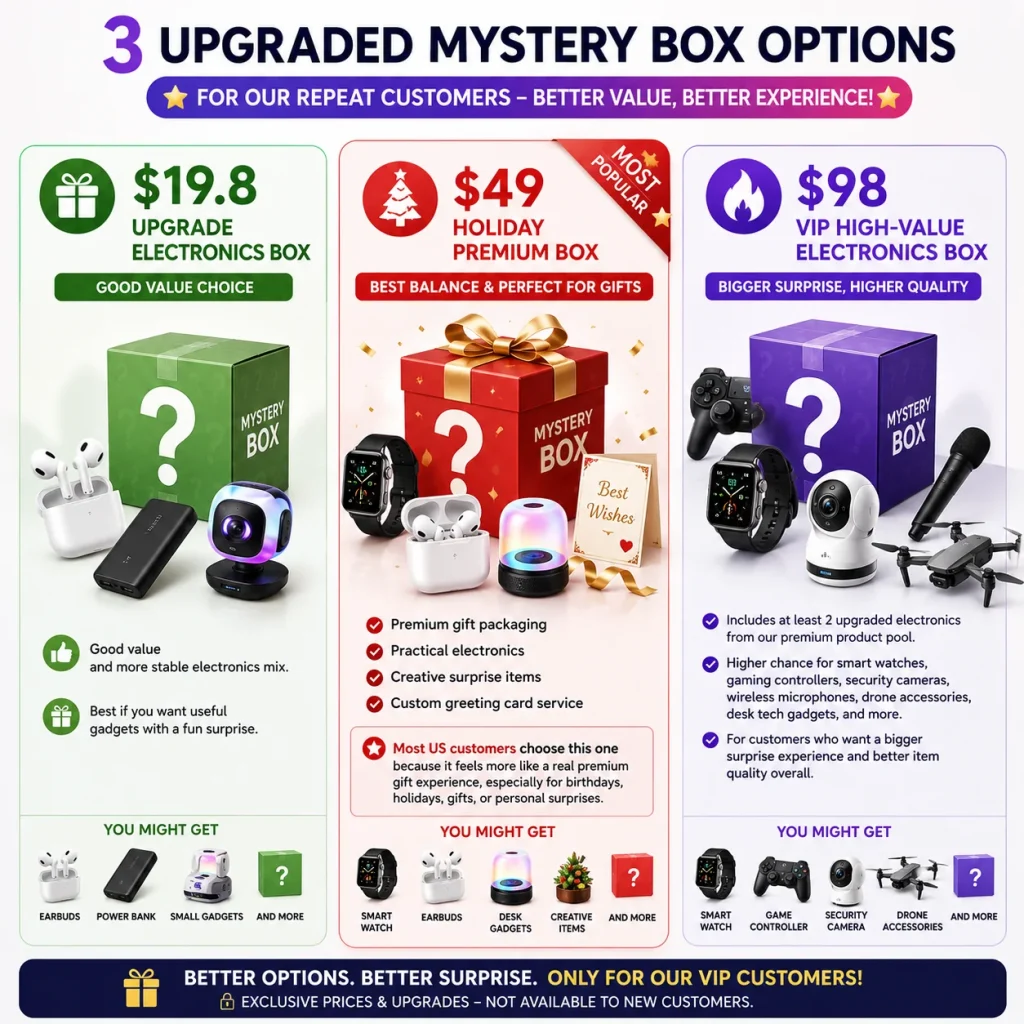
Gold, silver, bronze. Basic, premium, VIP. Mini, standard, ultimate. Every seller you look at runs a ladder, and the words on the rungs sound like a shared scale. They are not. A gold mystery box from one shop and a silver one from another can differ five times over in what goes in, because tier names are invented per seller. What you need to know is what a higher tier structurally changes for you, and what it never does.
Tier Names Are Local, Not Standard
There is no body that defines what "gold" means on a mystery box. Each seller picks three or four words that sound ascending and attaches prices to them. The words carry a feeling of rank and no information about contents. That has a practical consequence for you: you cannot compare a gold tier at one shop with a gold tier at another by name. You can only compare what each seller has written down about the tier, meaning item count, condition, category range, testing, and terms, against the price. The other thing "gold mystery box" sometimes means is literally a gold-coloured box. A fair share of listings under that phrase are describing packaging, not a rung on a ladder. Check which one you are looking at before you read anything into the word.
The One Thing a Higher Tier Really Buys You
- Carriage and packaging are fixed per box, so the goods budget grows faster than the price you pay.
- A higher tier should change item count, wireless share, condition, or terms, in writing on the listing.
- If only the price and the adjective change, the ladder is decoration.
- Your best-value move is usually the first step up, not the top rung.
Follow your money through two rungs and the structural advantage of a higher tier becomes obvious. A parcel costs roughly the same to send whether it holds $10 of goods or $40. USPS Ground Advantage, for example, starts at about $7.90 at a Post Office. Packaging, labour, and payment processing are similarly fixed or nearly so. Call the fixed costs about $10 on a small box.
| Silver tier | Gold tier | |
|---|---|---|
| Price you pay | $20 | $50 |
| Fixed costs (carriage, packaging, processing) | about $10 | about $11 |
| Left for goods and margin | about $10 | about $39 |
| Price multiple | 2.5x | |
| Goods-budget multiple | about 4x |
That is the honest reason for you to buy up a tier. Paying two and a half times as much buys roughly four times the goods budget, because the fixed costs are paid once either way. The arithmetic at the bottom rung is worked through in what to realistically expect under $20. The effect flattens as you climb. Between a $50 and a $100 tier the fixed costs are a small share of both, so the goods budget roughly doubles when the price doubles. The big gain is your first step up, not your last.
What Should Change Between Rungs
A tier ladder is only meaningful to you if something specific changes in writing at each step. Five things can, and a serious seller will say which.
- Item count. The cheapest thing for a seller to raise and the one every ladder states. Necessary, not sufficient.
- Wireless share. How many items are certified radio devices, earbuds, speakers, trackers, rather than cables and cases. This is the number that moves value for you, because those items carry a per-model approval cost that accessories do not.
- Condition. New across all rungs, or new only at the top and mixed below. Must be stated, not implied.
- Testing. Whether every unit is powered on before dispatch, or only the upper tiers.
- Terms. Returnability and the fault window. At the premium end this is the term that decides whether the price is reasonable, as set out in what should change above $100.
If a ladder changes only the first of those and the adjective, the rungs are the same product at three prices, and you are paying for the word.
What a Tier Never Changes
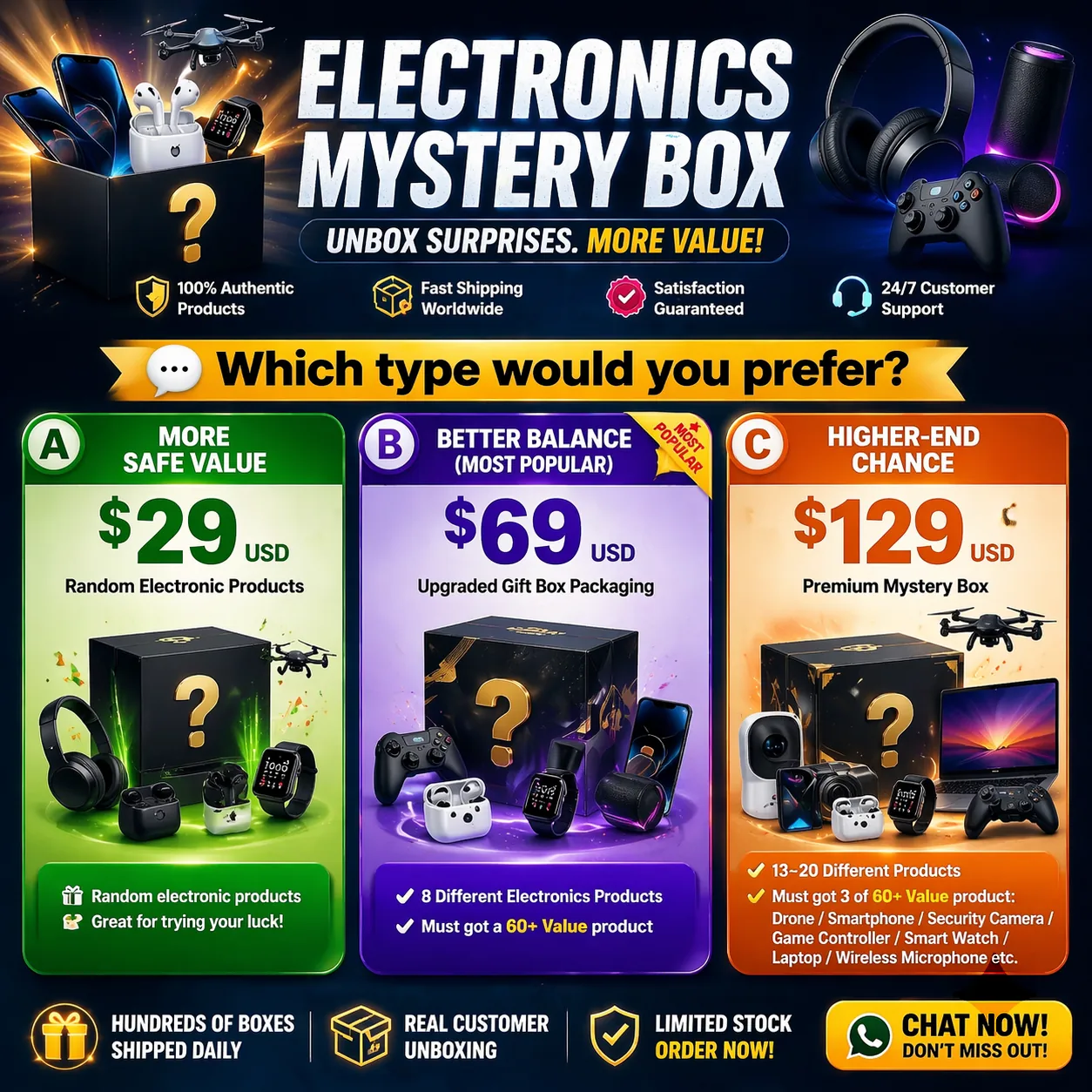
Three things stay constant up the ladder, whatever the name says. The randomness. A gold box is still a draw from a pool. A higher tier raises the average of the pool; it does not remove the variance, and you still do not choose. Retail-value claims. "Worth $300" at the top rung is the same kind of statement as "worth $60" at the bottom: a sum of list prices assigned by the seller, checkable by nobody, least of all you. The category range. Unless the listing says the range narrows or widens by tier, assume it is the same shelf drawn from with a bigger budget.
Note: "VIP" and "premium" tiers sometimes exist only for returning customers and are not on the public price list. That is a retention tool rather than a different product. Before you accept an upgraded rung, ask whether it has firmer terms, meaning testing, condition, and fault window, or just a higher price and a warmer word.
Reading a Ladder in Two Minutes
- Write the three prices in a row. Ignore the names entirely.
- Under each, copy what the listing commits to you: count, wireless count, condition, testing, fault window.
- Cross out anything that is identical across all rungs. What remains is what the ladder actually sells.
- Divide each price by its stated item count. The middle rung is usually your best ratio, because the first step up captures the fixed-cost advantage and the top step does not.
- Check whether terms firm up at the top. If they do not, the top rung is paying for adjectives.
Which Rung Should You Buy
The middle rung for a gift. It captures most of the fixed-cost advantage, presents better than a thin bottom-tier box, and avoids the top-tier expectation problem. Matching count to occasion is covered in choosing an electronics mystery box gift size. The bottom rung for volume. Party bags, giveaways, anything where several ordinary items beat one better one. The top rung only when terms change. If the premium tier adds testing, stated new condition, and a real fault process, you are buying certainty. If it adds a colour and a word, you are not.
The one thing not to do is buy two bottom-rung boxes instead of one middle-rung box. That pays the fixed costs twice for the same total, which is the exact opposite of what the ladder is for. The same applies if you buy a silver mystery box twice in a month: one gold mystery box at the combined price almost always contains more.
How Mewoo's Ladder Reads Under This Test
Run the two-minute check on Mewoo's own tiers and here is what you find. The names are plain item counts rather than metals, so there is no adjective to cross out. Condition is stated the same on every rung: new, and checked before dispatch. What changes as you climb is the count and, with it, the room for the heavier wireless items that a 1-item or 2-item box cannot afford to carry. The fault window and the one exclusion (power banks are never included) are identical top to bottom. By the logic above, that makes the 3-item and 6-item tiers the rungs where your fixed-cost advantage is largest, and the single-item box the one to choose only when you want a small, deliberate reveal rather than a spread.
FAQ
What is the difference between a gold and a silver mystery box?
Whatever that particular shop decides, because no standard sits behind the names. Two sellers can call completely different products "gold". What you can hold a seller to is the written detail: how many items, how many of them are proper wireless devices, whether everything is new, whether it was switched on before packing, and how long you have to report a fault. When only the price and the word differ, you are looking at one product with two labels.
Is a premium mystery box worth the extra money?
Going from the cheapest rung to the next one usually is, and the reason is postage. The seller pays about the same to send you a $20 box as a $50 one, so nearly all of the extra $30 lands in the goods. The step from middle to top is worth it to you only if the listing promises something firmer there, such as testing on every unit or a longer fault window, rather than a shinier name.
Does "gold mystery box" mean a gold-coloured box?
Quite often, yes. Search that phrase and a good share of what comes back is gold packaging with no higher or lower tier beside it. The tell is context: if the listing sits in a set with a silver and a bronze, the word is a rank; if it stands alone, it is almost certainly a colour choice and says nothing about what is inside. Look for the neighbours before you assume it means "better".
Which mystery box tier gives you the best value?
Usually the middle one. It picks up most of the postage advantage, because sending the parcel costs the seller the same whether it holds $10 or $40 of goods, and it dodges the disappointment that a top-tier price tends to set up. A quick way to see it yourself: divide each rung's price by the number of items it promises, and the middle rung tends to come out cheapest per item.
Does a higher tier change the odds?
It lifts the average of what you might receive; it does not turn a lucky dip into a choice. A gold box is still random, and its "worth $300" claim is the same sort of unverifiable figure as the cheap box's "worth $60". What genuinely improves as you climb is the goods budget, and at a good seller the condition and the terms. The fact that you do not pick the contents stays exactly as it was.
Should you buy two cheap boxes or one mid-tier box?
One mid-tier box, nearly every time. Two cheap boxes make you pay for two parcels, two lots of packaging, and two payment fees on the same total spend, which is precisely the waste the ladder exists to avoid. Putting the same money into one larger box also gives the seller room to include one substantial item instead of a second round of cables. It is the same logic that makes bulk orders and free-shipping thresholds work.
Final Thoughts
Tier names are a seller's vocabulary, not a scale you can trust across shops. What a higher rung genuinely buys you is goods budget, because the fixed costs of sending a box are paid once, and that makes the first step up the best-value move on the whole ladder. Read what changes in writing between rungs, and treat a tier that changes only its adjective as the same box at a higher price.
Mewoo's ladder is named by item count rather than metal, with the same stated condition on every rung: Triple Reveal Electronics Mystery Box (3 items) and Party Electronics Mystery Box (6 items). Compare every tier side by side on the electronics mystery box category page.
See what changes at each tier →