
“Guaranteed Value” on a Mystery Box: What the Claim Can and Cannot Mean
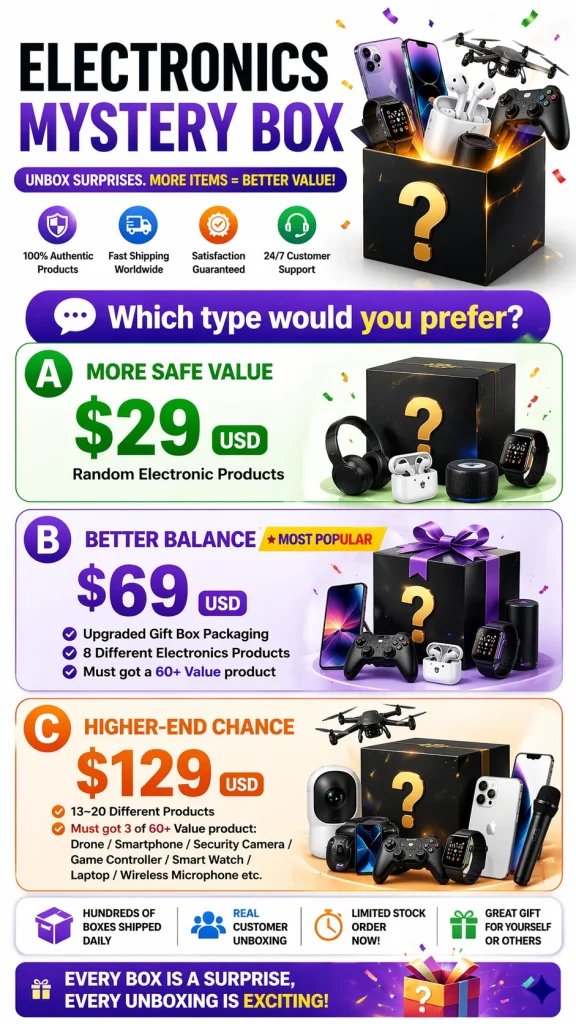
"Guaranteed value over $80" is the most common promise on a mystery box listing and the least examined. It sounds like a floor under your purchase. Whether it is one depends on three words the listing rarely defines: what "value" is measured against, what "guaranteed" obliges the seller to do if the box falls short, and who checks. Here is how you read the claim, what a real guarantee looks like, and what to ask for instead.
Three Words, Three Questions
Take the claim apart. "Value" is a number the seller chose, and it can be the price the item sells for in ordinary shops, the manufacturer's suggested price that nobody pays, or a figure the seller assigned to its own stock. "Guaranteed" is a promise, and a promise is only as good as the remedy: what you get if the box does not meet it. And "over $80" is a comparison, which in the United States falls under the Federal Trade Commission's guides on deceptive pricing, which say a comparable-value claim must be based on the price at which the goods are actually sold in the market, not on a figure invented for the label.
So a guaranteed value claim is honest when the value is a real retail figure, the remedy is stated, and the seller can be held to it. It is decoration when any of the three is missing. The way sellers pad the number, and what "worth up to" quietly means, is in what is inside a $30 electronics mystery box: three real examples; this article is about the promise itself.
What "Value" Is Measured Against
- A value claim is only meaningful if "value" means the price the items actually sell for elsewhere; suggested retail prices and seller-assigned figures inflate it.
- A guarantee is only a guarantee if the listing states what you get when the box falls short: a top-up item, a partial refund, or a return.
- The claim you can rely on is a minimum item count in named categories with a stated faults window; that is a floor you can check, and a value figure is not.
| What "value" means on the listing | How it is set | How far above the box price it usually lands | Trust it? |
|---|---|---|---|
| Ordinary retail price of the items | What the item sells for on general shopping sites today | 1.1 to 2 times the box price on a fair box | Yes, if you can check it |
| Manufacturer's suggested price | A list price nobody pays for generic accessories | 3 to 10 times | No; it is a ceiling, not a price |
| "Retail value" set by the seller | Whatever the seller prints on its own product pages | Anything | No; it is circular |
| "Up to" a figure | The best single draw in the pool | Irrelevant to your box | No; describes one box in hundreds |
| A minimum item count in named categories | What every box must contain | Not a value figure at all | Yes; this is the checkable floor |
Read the last row against the first four. A count and a category list are things you can verify on the doormat: six items, of which one is audio, one is charging and so on. A value figure is a claim about prices you did not see, set by the person selling to you. When a listing offers both, the count is the promise and the value is the advertising; when it offers only the value, you have been told very little.
Note: A guarantee without a remedy is a sentence. Look for what happens if the box misses: some sellers add an item to the next order, some refund the shortfall, some accept a return. A listing that says "guaranteed" and nothing about what you get when the guarantee fails has not made a guarantee in any sense you could use. What you are entitled to when a box falls short of what was promised, as opposed to what you hoped, is in can you return a mystery box.

Checking a Value Claim in Ten Minutes
- Find the definition. Somewhere on the listing or the FAQ page, the seller should say what "value" means. If it says "retail value" with no source, assume list price.
- Find the remedy. Search the page for "if" and "refund". No remedy, no guarantee.
- Price a sample yourself. Take the categories the seller names, look up what a typical item in each costs on a general shopping site, add them up, and compare with the claim. If the seller says $80 and your sample says $35, the value is a list-price figure.
- Read the reviews for the word "value". Buyers who totalled their box tell you what the claim delivered; how to read reviews without being led is in how to read mystery box reviews after the FTC fake review rule.
- Total your own box on arrival at ordinary retail, and if it lands under the guaranteed figure, invoke the remedy in writing inside the window, with the totals.
Step five is where an honest guarantee shows itself. A seller who set the value at real retail will rarely have to pay out, and will pay out when they do. A seller who set it at list price will argue that the $9 cable is "worth $29", and that argument is the answer to whether their guarantee was ever worth anything.
What a Real Guarantee Looks Like
The version of this promise that actually protects you has three parts, and it is easy to recognise because it is specific. The count: "six items". The categories: "at least one audio device, one charging accessory, one wearable or smart device". The remedy: "if any item is dead on arrival or the count is short, report within fourteen days with photographs and we replace or refund that item". Nothing in that guarantee mentions a dollar value, and nothing in it depends on a number the seller made up. The five-minute checklist for a listing that meets that standard is in what makes a mystery box good.
What This Means When You Order
You should treat "guaranteed value" as a prompt to look for the count, the categories and the remedy, and buy on those. A seller who states all three has given you a floor you can stand on; a seller who states a value figure alone has given you a slogan. Mewoo lists the item count and the categories on each tier and states the faults window on the product page; ask any seller for the same, and when the box lands, total it at ordinary retail for your own record. If a seller's value claim holds up against that total, you have found one worth reordering from.
FAQ
What does "guaranteed value" mean on a mystery box?
Only what the seller defines it to mean, which is the problem. At best it means the items' ordinary retail prices add up to at least the stated figure, and the seller will make good if they do not. At worst it means list prices nobody pays, or figures the seller assigned, with no remedy written anywhere. Search the listing for the definition and the remedy; if either is missing, read the phrase as advertising.
Is a mystery box always worth more than you pay?
Not always, and no honest seller promises it for every box. Items are bought at wholesale, so a fair box does usually add up to more than its price at ordinary retail, typically between a little over and about double. But the seller must cover postage, packaging and margin, so the average cannot be dramatically above the price, and a poor draw can fall below it. Judge over several boxes, in items you would use.
Can a seller legally claim a retail value that nobody pays?
Federal guidance on comparative pricing says a comparable-value claim should rest on prices at which goods are actually sold in the market, and a list price no retailer charges is the classic example of one that does not. In practice enforcement targets patterns rather than single listings, so the protection you can use is your own check: price the categories yourself before you buy and total the box after.
What should I do if my box is worth less than the guaranteed amount?
Total the items at ordinary retail with a screenshot for each price, write to the seller inside their window quoting their own guarantee, attach the totals, and ask for whatever remedy the listing promised. A seller with a real guarantee will add an item or refund the gap. A seller who replies that the items are "worth" their list price has answered a different question, and your review should say so.
Is a minimum item count better than a value guarantee?
Yes, because you can verify it in a minute with no argument about prices. Six items in named categories either arrived or did not, and a short count is a claim any seller has to honour. A value guarantee depends on whose prices are used, and the seller chose them. When a listing offers both, buy on the count and treat the value line as a description of the seller's optimism.
Why do cheap boxes advertise the biggest value multiples?
Because the smaller the price, the easier it is to quote a large multiple against list prices. A ten-dollar box with a nine-dollar accessory whose packet says "$39.99" becomes "value 4x". The items are the same either way; only the comparison changed. A large multiple on a cheap box is a sign that list price is being used, and a reason to price the categories yourself before believing it.
Final Thoughts
A guaranteed value claim is worth exactly what its definition and its remedy say, and most listings state neither. Value should mean ordinary retail, not list price; a guarantee should name what you get when the box misses; and the promise you can actually check is a minimum count in named categories with a faults window. Buy on those, total your box at real prices when it lands, and let the value slogan describe the seller rather than the box.
If you want a box whose count and categories are stated on the product page, rather than a value figure, start with the Triple Reveal Electronics Mystery Box (3 items) or the Party Electronics Mystery Box (6 items). Compare every tier side by side on the electronics mystery box category page.
See the simple value test →