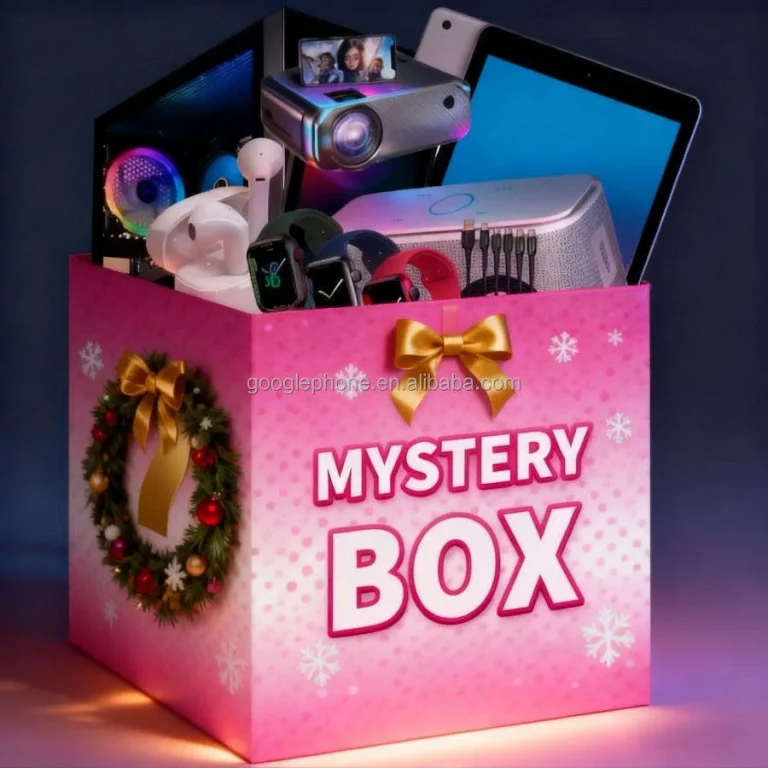
Mystery Boxes for Occasions Other Than Christmas

Almost every guide to buying a mystery box as a gift assumes it is December. But a Halloween blind box, a Valentine mystery box, an Easter surprise box, and a Mother's Day mystery box are four quite different purchases for you. They differ on how hard the deadline is, how close you are to the person, and, the one nobody mentions, whether the contents stop being useful the day after. This guide sorts each occasion on those three questions.
Three Axes, Not One Calendar
Sort any occasion by three questions and your decision falls out of them. How hard is the deadline? Some occasions are events you attend; others are days you hand something over. A costume accessory arriving on 1 November is worthless. A gift arriving on 15 February is merely late. How close is the recipient? Closeness decides whether guessing beats not guessing, which is the finding behind the whole format, set out in a mystery box as a birthday gift. Do the contents expire with the date? This is the axis that separates occasion-themed boxes from general ones, and it is the reason a themed box is a riskier order for you than it looks.
The Expiry Problem With Themed Boxes
- Themed contents lose almost all value the day after the occasion; general contents are only late.
- Easter moves every year, and Mother's and Father's Day fall on different dates by country, so recalculate each time.
- The format performs best where you know the person least and the occasion is shared: Halloween parties, graduation, Easter for children.
- Valentine's Day and anniversaries are the worst fit, because closeness is exactly where your own guess wins.
A Halloween blind box full of decorations, or an Easter mystery box of themed novelties, has contents with a working life of roughly one day. Miss the date and you are storing them for eleven months, at which point you will have forgotten you own them. A general assortment behaves completely differently. Earbuds are earbuds on 3 November. If it arrives late you have a late gift rather than a wasted one, and you can give it anyway. That is the honest argument for choosing a non-themed box for a themed occasion: you are trading a little thematic charm for a much smaller downside if the date is missed. For occasions with hard deadlines and tight ordering windows, that trade is usually worth making.
One scheduling detail people forget. Halloween and Valentine's Day sit on fixed dates. Easter does not; it moves within a range of several weeks from year to year, and Mother's Day and Father's Day fall on different dates in different countries. Last year's order-by date does not carry over for any of them, so you have to redo the calculation each time.
Occasion by Occasion
| Occasion | Deadline | Closeness | Does the format fit you? |
|---|---|---|---|
| Halloween | Hard; the day itself | Low, often a group | Good, if it arrives in time |
| Easter | Hard, and the date moves | Family, mixed ages | Good for children, order early |
| Valentine's Day | Firm | Closest possible | Poor; see below |
| Anniversary | Firm | Closest possible | Poor as the main gift |
| Mother's or Father's Day | Firm, varies by country | Close | Workable with a chosen item alongside |
| Graduation | Soft; the week around it | Often distant | Good, and the soft date helps |
The pattern in the last column is consistent: the format performs best where you know the person least and the occasion is a shared event rather than a private one.

Why Valentine's and Anniversaries Are the Worst Fit
This deserves stating plainly, because the search volume says people are considering it. A Valentine surprise box or an anniversary surprise box is given to the person you know best in the world. That is precisely the situation where a chosen gift performs at its highest, because your guess is well informed. Outsourcing the choice to a seller replaces a good guess with a random one. There is a second problem specific to romantic occasions. The message of these days is "I thought about you specifically". A box whose contents nobody selected sends the opposite message, however good the items turn out to be. The format's honesty, nobody chose this, is a virtue at an office exchange and a liability on an anniversary. If you want the surprise element anyway, the workable version is a small box alongside something chosen, so the randomness is the entertainment rather than the gift.
Note: If a dated order is going to be late, you have a specific remedy in the US. The FTC's Mail, Internet, or Telephone Order Merchandise Rule requires a seller who cannot ship in the stated time to tell you and give you the choice of agreeing to the delay or cancelling for a full refund. For a gift with a date attached, cancelling is often your right choice: take the refund and buy locally.
Where the Format Genuinely Shines
Halloween parties and group events. Nobody compares contents at a party, variety is the point, and the low stakes suit a random assortment. This is the strongest non-Christmas use. Easter for children. The hunt structure suits small items, and you can break a box into several hiding places, the same redistribution idea as a countdown applied to one morning. Graduation. A graduation surprise box has a soft date, the recipient is often someone you do not know well, and practical accessories suit a person setting up a new place. This is quietly the best-fitting occasion of the lot. Father's Day. Better than Mother's Day for the format in most households, simply because "useful gadget" is a more commonly welcome category. That is a generalisation and worth testing against the actual person you are buying for.
Ordering Windows That Actually Work
- Fix the date, then subtract. Dispatch window plus transit estimate, taking the slow end of both.
- Add a week of buffer for anything crossing a border.
- Order themed boxes earlier than general ones, because the cost of missing is total rather than partial.
- Recalculate every year for Easter and for Mother's and Father's Day.
- Test on arrival regardless. Reporting windows run from delivery, not from the occasion.
The full method for working backwards from a date is in when to order a holiday mystery box, and it applies to any dated occasion rather than just December.
Presentation Matters More Off-Season
At Christmas a box lands among many parcels. On Valentine's Day or an anniversary it is often the only thing being opened, with attention entirely on it. That makes your card do more work than usual. Say on it that it is a surprise box and roughly what is inside, so ordinary contents read as the intended format rather than as a shortfall. The presentation method is in how to present a mystery box so it reads as a real gift.
FAQ
Is a mystery box a good Valentine's Day gift?
Not as the main present. The person you are buying for on Valentine's Day is the one whose tastes you know best, so your own choice will beat any random draw, and the day's whole point is to show you thought about them in particular. Handing over a box that nobody chose undercuts that message. If you like the idea of a surprise, make it a small side box next to something you picked yourself.
Which occasion suits a mystery box best?
Graduation first, Halloween parties second. A graduation gift can arrive any time that week, the graduate is often a relative or family friend you do not know intimately, and a set of practical gadgets suits someone moving into a new flat. Halloween works because a party is a crowd, and nobody in a crowd compares what they got. Both are cases where distance and a shared setting play to the format's strengths.
Should I buy a themed box or a general one?
General, whenever the date is fixed and the shipping is tight. Pumpkin decorations or Easter novelties are worth something for one day and nothing for the next eleven months, so a late themed box is a wasted one. A late box of ordinary electronics is just a late present you can still hand over. You give up a bit of seasonal charm and in return you stop a shipping delay from wiping out the whole purchase.
When should I order for Easter or Mother's Day?
Look the date up fresh each year and count back from it. Easter can be almost a month apart from one year to the next, and the parents' days sit on different Sundays in different countries, which makes any date you remembered from last time unreliable. Start from the seller's packing time, stack the longer transit figure on top, and give the border its own week if the parcel is crossing one.
What if the box will not arrive before the date?
You do not have to sit and hope. In the US, a seller who cannot ship inside the time they promised must tell you and let you choose between waiting and a full cash refund, not store credit. For a gift tied to a date, take the refund and buy something nearby. A themed box that turns up in the wrong month has no use to anyone, and the refund plus a local purchase beats it every time.
Does a mystery box work for an anniversary?
Badly, for the same reason it fails on Valentine's Day: after years together your guess about what your partner would like is the best-informed guess in the world, and swapping it for a seller's random pick throws away your biggest advantage. Where it can work is as an extra, opened for a laugh after the real present, so the randomness is part of the evening rather than the whole gesture.
Final Thoughts
Judge the occasion on three things: how hard the deadline is, how well you know the person, and whether themed contents expire with the date. Halloween, Easter, and graduation suit the format; Valentine's Day and anniversaries do not, because closeness is exactly where your guessing wins. Choose general contents over themed ones whenever the date is fixed and the shipping window is tight, and recalculate the order date every year.
For occasions outside the Christmas window: Birthday Electronics Mystery Box (3 items) and Surprise Gift Box (3 items). Compare every tier side by side on the electronics mystery box category page.
For a bigger birthday or a smaller thank-you, the ladder also has: Birthday Electronics Mystery Box (6 items) and Surprise Gift Box (2 items).
See box sizes and item counts →