What Tech Means on a Mystery Box Listing
"Tech mystery box" sounds like a category. It is closer to a shelf label. The word stretches from a phone stand with no electronics in it to a certified wireless device, and those two things have almost nothing in common in cost, regulation, or how likely they are to be in your parcel. This guide shows you what the word actually covers, why the same wireless items keep turning up, and the one question to ask a seller instead.
"Tech" Is a Shopping Word
Sellers use it because you type it. It groups a wide range of goods under one heading that everyone understands instantly and nobody can define precisely. That is fine for finding a listing and useless as a description of what you will get.
Two boxes both honestly labelled "tech" can contain completely different classes of object: one a handful of cables and a stand, the other a pair of wireless earbuds and a tracker. Neither seller has lied to you. The useful move is to treat the word as a pointer to a shelf, then ask what is actually on it. The same method works on gendered labels, as set out in men's and women's mystery box labels, and it applies here for the same reason: the word is standing in for a sentence the seller has not written.
Three Tiers Hiding Behind One Word
- "Tech" spans passive accessories, powered items, and certified wireless devices.
- Wireless devices need FCC authorisation before they can be sold or imported in the US, and that cost shapes what you receive.
- The certification cost is why the same few wireless models recur across many boxes.
- Ask how many items are wireless. That one answer tells you what kind of box you are looking at.
Sort anything sold as tech into three tiers and the category stops being vague for you.
| Tier | Examples | Cost to the seller | Regulatory burden |
|---|---|---|---|
| Passive accessory | Stand, case, cable tidy, cloth, pouch | Very low | None |
| Powered, non-wireless | Cable, adapter, wired earphones, light | Low | Electrical safety only |
| Wireless device | Wireless earbuds, speaker, tracker, mouse | Higher | Equipment authorisation required |
Most assorted boxes you will see are weighted toward the first two tiers, with one or two items from the third. That is not stinginess. It is arithmetic, and the reason becomes clear once you know what the third tier costs to put on sale at all.
The Line the Regulator Draws
Anything that transmits, whether Bluetooth, Wi-Fi, or a wireless dongle, sits in a regulated class in the United States. The FCC explains the scope plainly: products that by design contain circuitry operating in the radio frequency spectrum have to demonstrate compliance through an equipment authorisation procedure, and a device must be approved before it can be marketed, imported, or used in the United States.
Why that shapes what ends up in your box
Authorisation attaches to a model, not to a shipment. Someone pays for testing and approval once per product, and that cost is spread across however many units are sold. For a seller packing assortments, the consequence is direct: it is far cheaper to buy more units of a few already-authorised models than to source endless variety. So wireless items in mixed boxes cluster around a small number of recurring models.
That explains something you might otherwise read as laziness. When you and three other buyers receive the same earbuds from the same seller, it is usually not poor curation. It is the structure of a category where variety in the top tier is genuinely expensive. If you are buying to resell, it is also useful: a seller that repeats the same authorised model gives you a product you can list with confidence.
What "Tech" Almost Never Includes
The exclusions tell you more than the inclusions, and they are consistent across sellers even when nobody states them.
- Anything with a large battery. Power banks carry packing, labelling, and carrier approval rules that make them impractical inside a mixed parcel; Mewoo excludes them, and higher-value items such as drones appear less often. Mewoo sets out its position in battery products and shipping restrictions.
- Large or fragile items. Monitors, televisions, and anything bulky fail on carriage cost and damage rate before any other consideration.
- Anything built for one mains voltage. A device made for a single voltage range cannot be shipped to you without checking your country first.
- Current phones, laptops, and consoles. These appear constantly in marketing imagery and essentially never in a consumer-priced assortment.
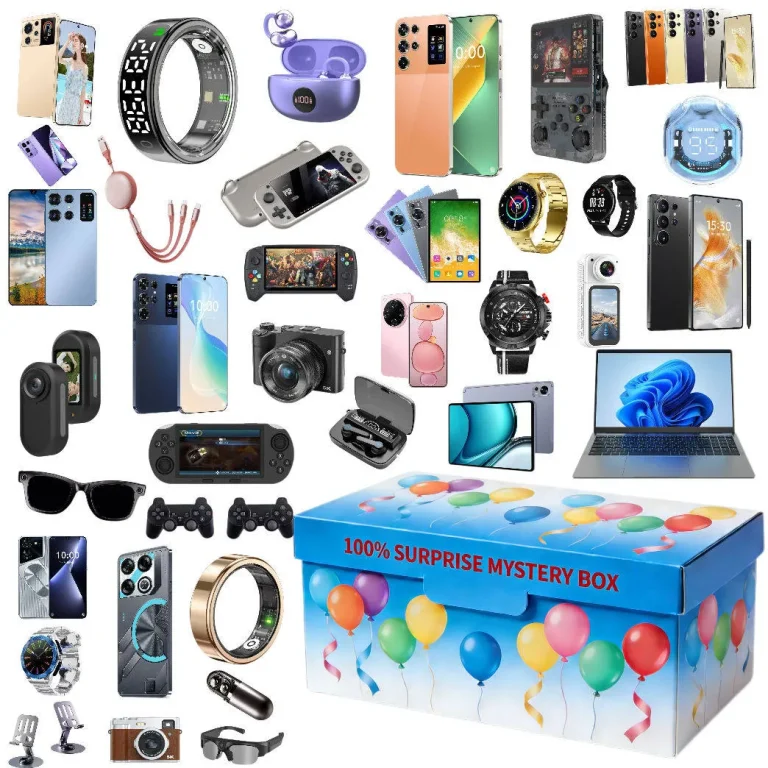
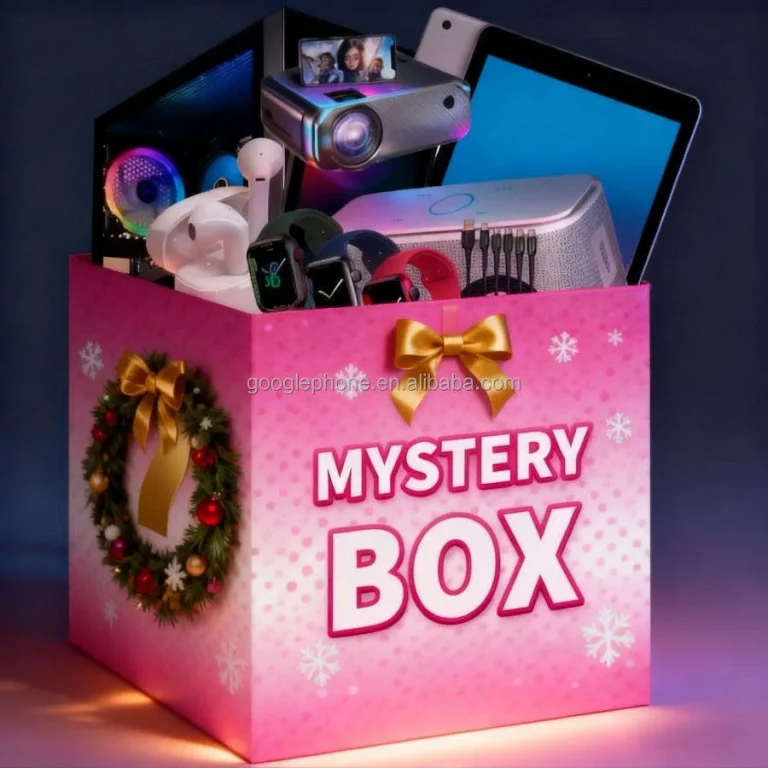
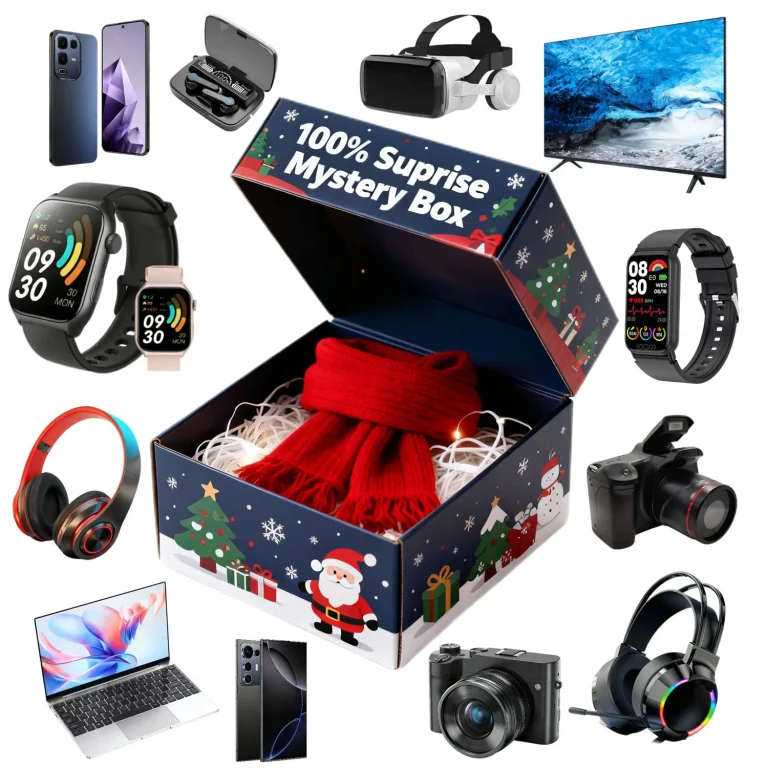
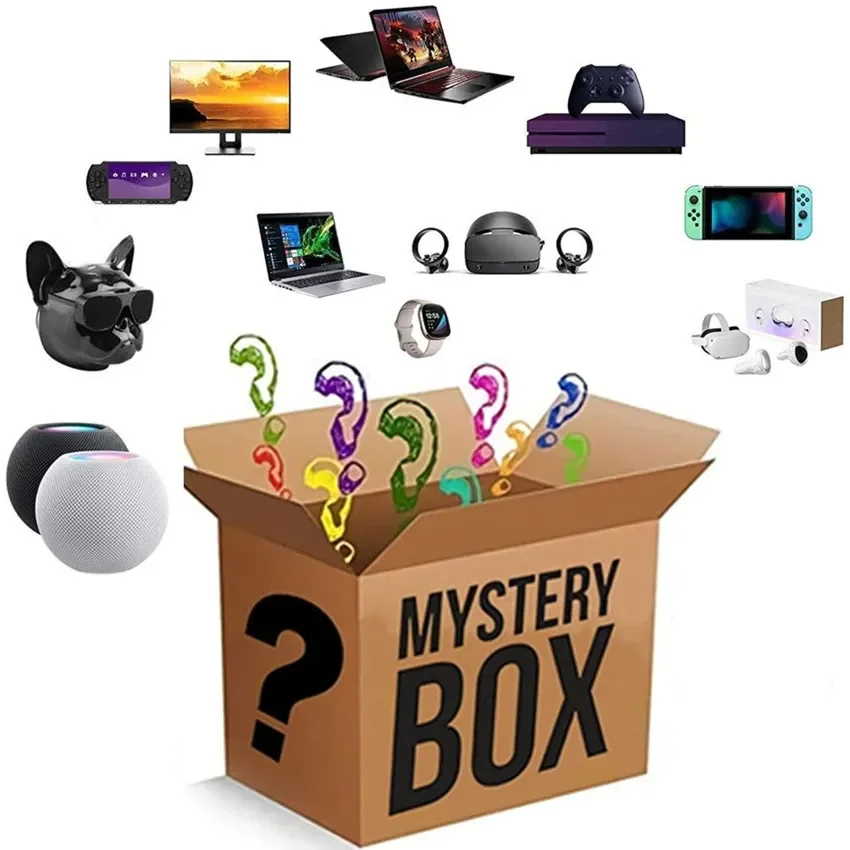
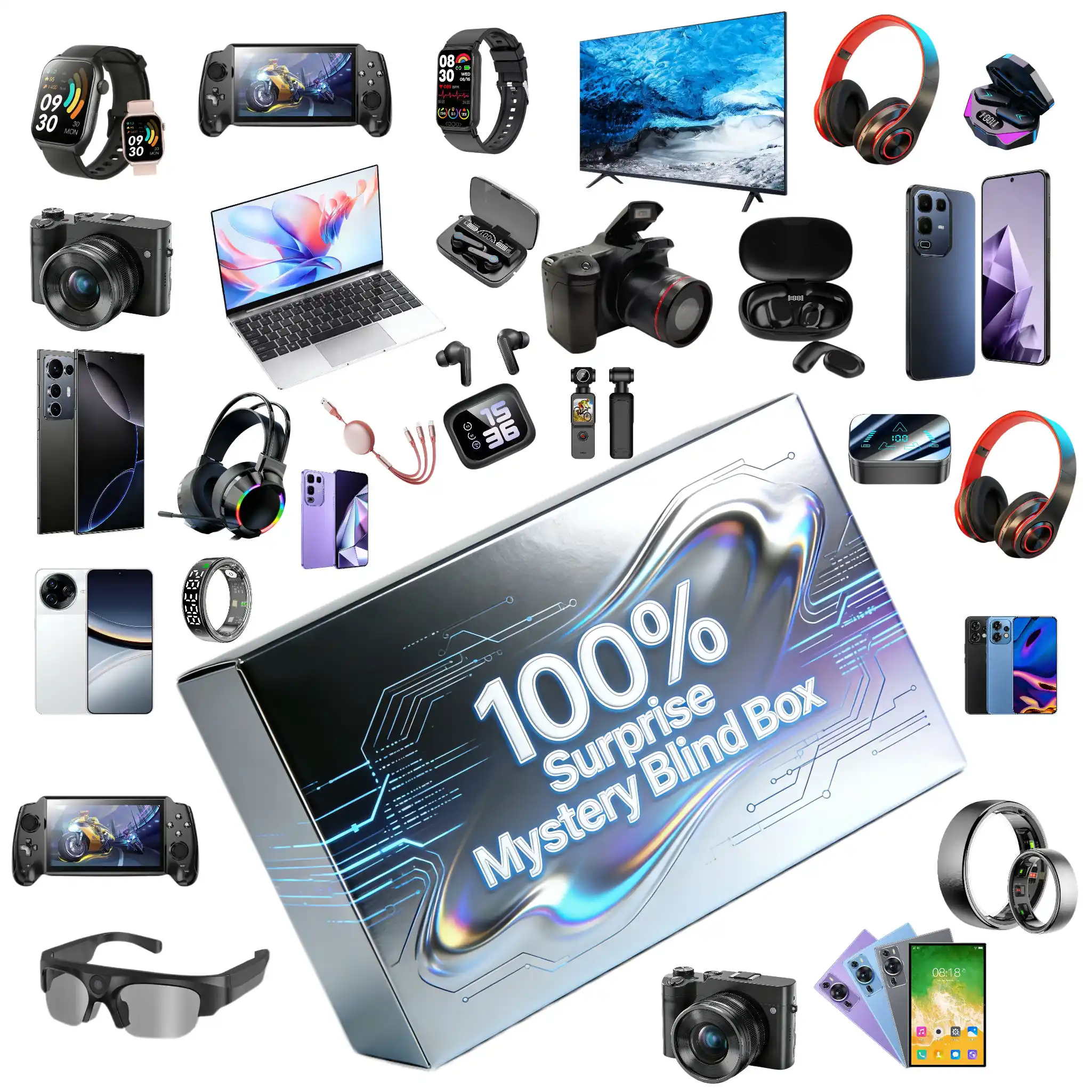
That last one deserves saying plainly, because the images are the most misleading thing you will see in this category. A collage showing laptops and consoles is illustrating the breadth of the word "tech", not the contents of the box you are about to buy.
Note: If a listing pictures a high-value device, look for whether the text commits to it. Images are usually filed under illustration; item count, category range, and condition are the parts you can hold a seller to. Where the picture and the words conflict, the words are the offer, and you should buy on the words.
Tech, Electronics, Gadget: Do the Words Differ?
Barely, and not in any way that binds a seller to you. In practice "electronics" reads slightly more formal and device-oriented, "gadget" implies novelty and small size, and "tech" is the broadest and most neutral of the three. Sellers pick between them by what buyers search for, not by meaning, and the same warehouse will use all three across different marketplaces.
One weak pattern is worth knowing. "Gadget" listings skew toward the passive and powered tiers, small, cheap, visually interesting things, because the word suggests novelty rather than utility. It is a tendency, not a rule, and not something you should plan a purchase around.
What the Tiers Mean If You Are Buying a Gift
The tier structure changes what a box feels like to open, and that matters more for a present than for something you bought for yourself.
Tier one and tier two items are useful and forgettable. Nobody is disappointed by a cable, and nobody remembers receiving one either. They fill a box respectably and carry none of it. A tier three item is what the reveal actually rests on. Wireless earbuds, a speaker, or a tracker is the thing your recipient picks up first and mentions afterwards, and a box with none of them reads as a bag of spares however many items the listing counts.
So for a gift, item count is the wrong number for you to optimise. One wireless item plus four accessories presents far better than eight accessories and nothing that transmits, even where the second box lists more things at the same price. Ask how many wireless items are included before you compare counts at all.
The Question That Replaces the Word
Instead of asking whether a box is "tech", ask which tiers it draws from and in what proportion. Four questions do it:
- How many items, as a number? Tier one items are cheap, so a very high count usually means the box is weighted toward accessories.
- How many are wireless? The single most useful question you can ask, because it places the box in the tier structure immediately.
- What is excluded? A seller who names exclusions is describing a real assortment policy rather than a mood.
- What condition? New, used, and untested are separate products at separate prices.
A seller who answers all four has told you more than any category label could. Mewoo's current range is published in what categories can be in an electronics mystery box, with the exclusions stated alongside, so you can run the four questions against it before you order.
FAQ
What does "tech" actually mean on a mystery box listing?
Very little on its own. It is the seller's shorthand for a broad shelf that runs from a rubber phone stand to a pair of Bluetooth earbuds, and the listing rarely says where on that shelf your box sits. Read it as an invitation to ask, not as a description. The item count, the number of wireless pieces, and the condition line are what tell you what you are buying.
Why did I get the same earbuds as someone else from the same seller?
Every wireless product sold in the US has to be authorised as a model, and that approval is paid for once and spread over every unit. A seller who has an approved earbud is far better off buying a thousand of it than sourcing twenty different ones. Repeats in the top tier are the normal result, and for a reseller they are actually convenient: one known product to list.
Will a tech mystery box contain a phone or laptop?
Not at any price you would call a bargain, however often those devices appear in the listing collage. A single laptop costs more than a whole box of accessories, weighs more to ship, breaks more easily in a loose carton, and attracts more attention at customs. If you want one, buy one. If you see one pictured, check whether the text commits to it; it almost never does.
Is "tech" different from "electronics" or "gadget"?
Only in tone. Electronics sounds a touch more serious, gadget hints at small novelties, and tech is the catch-all. No seller is bound by the choice, and one warehouse will list the same box under all three names on different marketplaces to catch different searches. If you are hunting for a box, search all three terms; you will find the same sellers under each.
What is the single most useful thing to ask a seller?
How many pieces in the box transmit wirelessly. A seller can answer without giving away the surprise, and the number instantly tells you whether you are looking at a device assortment or a bag of cables and stands. For a gift, one wireless item is the minimum you want; for resale, it is the item that will carry your listing price.
Why are power banks left out?
Large lithium cells are treated as restricted cargo by carriers, with their own packing and labelling rules, so they cannot travel economically inside a mixed parcel of small accessories. It is a shipping constraint, not a judgement on the products, and you will find most sellers in this category exclude them for the same reason whether or not they say so on the listing.
Final Thoughts
"Tech" tells you which shelf the seller reached for and nothing about what came off it. Sort the category into passive accessories, powered non-wireless items, and certified wireless devices, then ask how many of each are in the box. The tier structure, not the label, tells you what you will receive, why the same wireless models keep recurring, and whether the box will feel like a gift or a bag of spares when it is opened.
The category range described above applies to these tiers: Electronics Blind Box (3 items) and Party Electronics Mystery Box (6 items). Compare every tier side by side on the electronics mystery box category page.
See the stated range and exclusions →