How to Read Mystery Box Reviews After the FTC Fake Review Rule
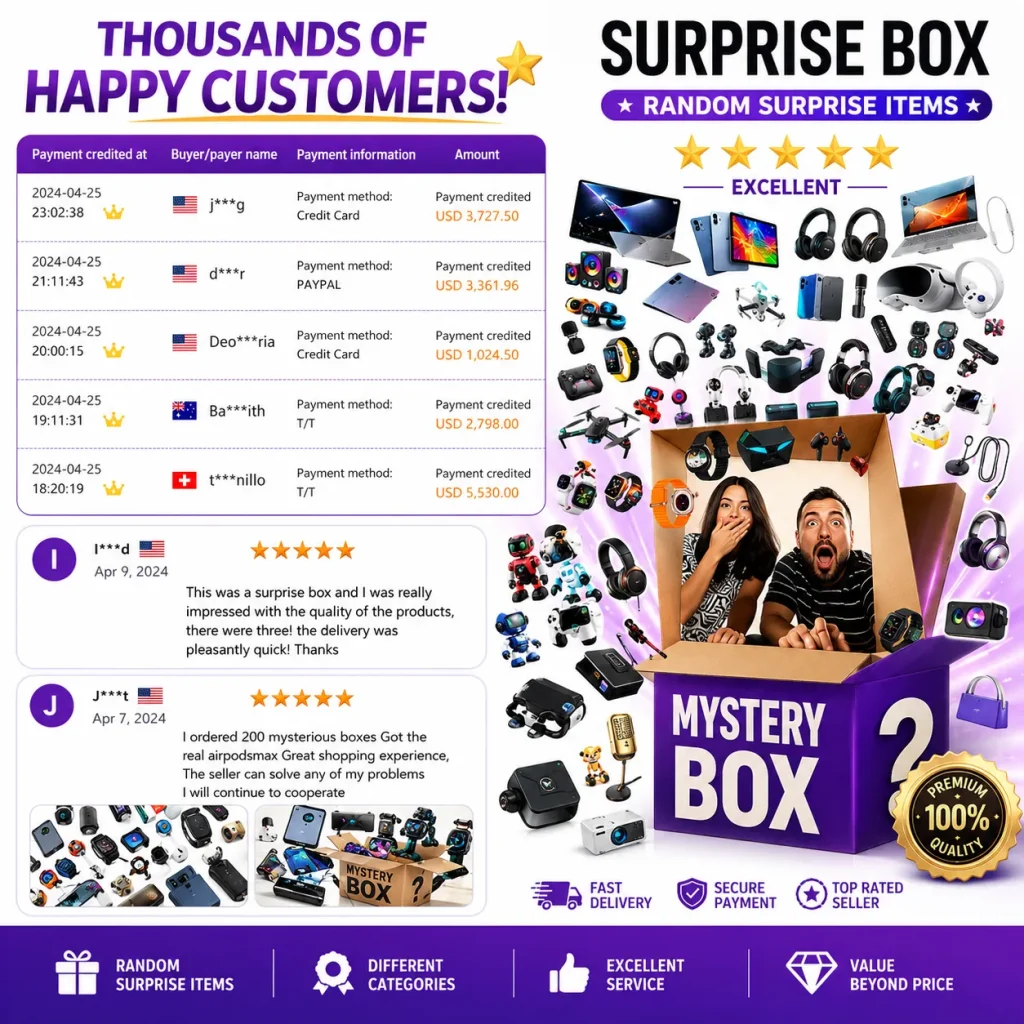
Reviews are the first thing you read on a mystery box listing and the last thing you should trust without checking. Since late 2024 a federal rule has made fake and bought reviews unlawful, which changes what an honest review page has to look like and gives you a way to read one. Here is what the rule bans, what a real review page shows, and the five-minute test you run before the box goes in the basket.
What the Rule Actually Bans
The Federal Trade Commission's rule on consumer reviews and testimonials took effect on 21 October 2024. It makes it unlawful for a business you buy from to write or buy fake reviews, including reviews generated by AI and reviews from people who never used the product; to pay for reviews on condition that they are positive or negative; to have employees or relatives review without disclosing the connection; to run a review site that pretends to be independent; to suppress honest negative reviews with threats or by hiding them while showing positive ones; and to buy fake follower counts or likes. Each violation can draw a civil penalty of more than $50,000, which is why you now have a standard to hold a page to.
What the rule does not do is verify reviews for you. It gives the FTC a stick, and it gives you a standard: a review page that shows every review, dated, with the negative ones visible and the incentivised ones labelled, is a page built to comply. A page of undated five-star one-liners with no bad review anywhere is a page that either predates the rule or ignores it. The wider checklist for judging a seller is in are mystery boxes legit; reviews are one line of it, and this article is that line in full.
Reading a Review Page in Five Minutes
- Since 21 October 2024 fake, bought and suppressed reviews are unlawful in the US; a page with no dates and no negatives is a page that does not meet the standard.
- Real reviews of a random box mention specific items and specific problems, and the seller's replies to the bad ones tell you more than the good ones do.
- Read the two-star and three-star reviews first, sort by newest, and look for the same complaint repeated across months; that is the review page's real message.
- Sort by newest, not by "most helpful". The default sort on many sites shows you the oldest, best reviews. Newest shows you what the seller is shipping now.
- Read the two and three stars first. One-star reviews are often anger; five-star reviews are often brief. The middle is where you find what actually arrived and what went wrong.
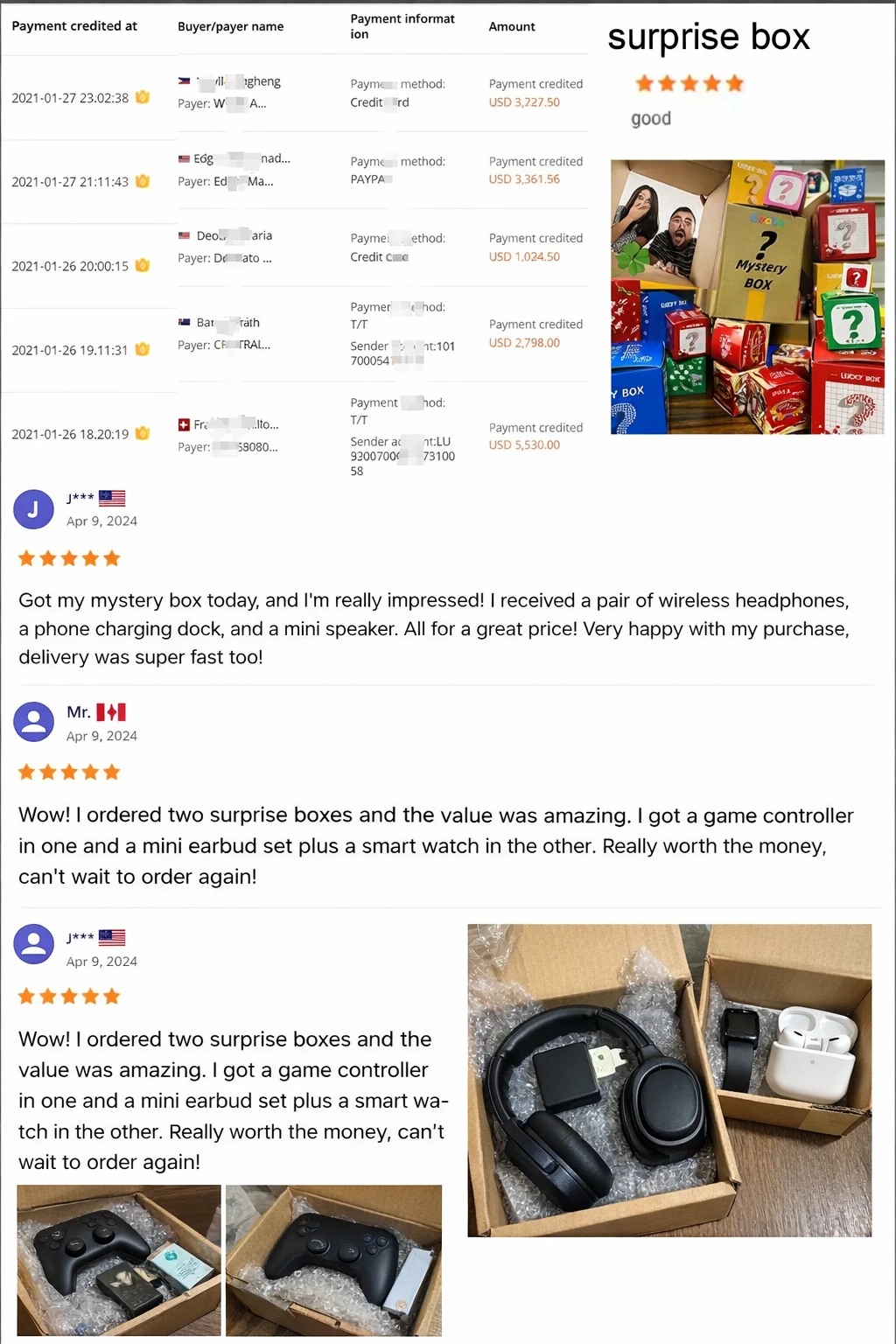
- Look for items and problems by name. "The earbuds were fine, the smart plug would not pair, the seller sent a replacement in a week" is a review of a mystery box. "Great box, love it!!!" is a review of nothing.
- Check the dates spread. Reviews clustered in one week, then silence, suggest a campaign. Reviews spread across months suggest customers like you.
- Read the seller's replies. A seller who answers a complaint with what they did about it is showing you their process. A seller who argues, or never replies, is showing you the other thing.
- Look for the label. Reviews written for a free box or a discount must tell you so. "I received this product in exchange for a review" is the disclosure the rule requires; its absence on a page of glowing reviews is a warning.
Signals, Sorted
| What you see | What it usually means | Weight |
|---|---|---|
| No dates on any review | Page built to hide the timeline | Strong negative |
| No review below four stars, ever | Negatives suppressed or never published | Strong negative |
| Dozens of reviews posted in the same week | A campaign, paid or brushed | Negative |
| Reviews name specific items and specific faults | Written by people who opened a box | Strong positive |
| Seller replies to complaints with what they did | A working faults process | Strong positive |
| Photographs of the actual contents, not the listing image | Real unboxings | Positive |
| Same complaint repeated across months, no reply | An unfixed problem | Negative; this is the page's message |
| "Received free for review" disclosures present | Compliant page; discount the star, keep the detail | Neutral |
| Reviews on a third-party platform that lets you filter and sort | Harder to curate | Positive |
Read the seventh row as the one that matters most to you. A review page is not there to tell you whether a seller is good; it is there to tell you what goes wrong with this seller, and how often, and whether they fix it. A seller whose worst reviews are "the projector was dimmer than I hoped" has a different problem from one whose worst reviews are "tracking stopped and nobody answered for three weeks". Only the second is a reason for you not to buy.
Note: Reviews on the seller's own website are the easiest to curate, because the seller chooses what to publish. That does not make them false, but it means you should weigh them differently from reviews on a marketplace or an independent platform where the seller cannot delete. A seller who shows their negative reviews on their own site, with replies, has chosen to comply in the place where it was easiest not to, and that is worth something.
Unboxing Videos and Influencer Codes
Video reviews you watch follow the same rule plus the FTC's endorsement guides, updated in 2023: anyone paid, gifted or given a commission code for a mystery box must tell you so clearly in the video, not in a description nobody opens. A creator who opens a box with a discount code in the caption and no disclosure on screen is breaking the guides, and a seller who arranges that is breaking the rule. That does not make the box bad, but it means the enthusiasm was bought, and you should watch for what actually comes out of the box rather than the reaction to it. How to read an unboxing video for information rather than performance is in are mystery box unboxing videos real.
Where Fake Reviews Come From
Two sources produce most of the fakes you will meet. The first is paid review services, which the rule now targets directly. The second is brushing, where a seller ships cheap unordered items to real addresses so a marketplace records a verified purchase, then posts a review under the recipient's name. If you have ever received a parcel you did not order, you may have a review to your name that you did not write. How that scheme works, and how to check your own accounts for it, is in a mystery package you never ordered: the brushing scam.
What This Means When You Order
You should read a review page for its worst repeated complaint and the seller's answer to it, not for its average star. Sort newest, read the middle stars, look for named items and named problems, and check that the bad reviews are there at all. Mewoo puts its customer reviews on its home page and its policies on its own pages, so you can run the same five-minute test on it before you buy; any seller trading in 2026 should stand up to it, because the rule now requires honest pages. A page that cannot is telling you either that it was built before the rule or that nobody has read it.
FAQ
How can I tell if mystery box reviews are fake?
Look for what a real customer would know and a paid writer would not: the names of the items that came, the one that failed, how long the seller took to fix it. Then look at the shape of the page. Missing dates, a wall of five stars with nothing below four, and a burst of reviews posted in the same few days mark a manufactured page. One is a caution; all three are a reason to leave.
What does the FTC review rule require sellers to do?
Chiefly, to stop: no invented or AI-written reviews, no paying for a particular star rating, no undisclosed reviews from staff or family, no fake independent review sites, no hiding honest negatives while displaying positives, and no bought follower counts. Incentivised reviews must carry a clear disclosure. The rule has applied since 21 October 2024 and each breach can cost a seller a civil penalty above fifty thousand dollars.
Are reviews on the seller's own website trustworthy?
They can be, but weigh them knowing the seller controls the page. The test is whether the seller publishes criticism there: a site that shows two-star reviews with dates and a reply from the shop has chosen honesty where it would have been easy to curate. A site showing only praise has not. Cross-check against any independent platform where the seller cannot delete, and let the overlap between the two tell you the truth.
Should I trust an influencer unboxing a mystery box?
Trust the footage, not the face. Federal endorsement guides require anyone paid, gifted or on commission to say so on screen, and a creator who buries a discount code in the caption without a disclosure is already outside those rules. Mute the reaction and watch what physically emerges from the carton: which items, in what condition, working or not. That part cannot be bought, and it is the only part that tells you about the box.
What should I look for in negative reviews?
Repetition and response. One person's dim projector is an expectation; the same shipping delay described by six people over four months with no answer from the seller is the page's headline. Read the two- and three-star reviews sorted newest first, note which complaint recurs, then see whether the seller replied with an action or with an argument. A recurring fault the seller fixes is livable; one they ignore is not.
Can I report a seller for fake reviews?
Yes, through the FTC's fraud reporting site, and through the platform if the reviews sit on a marketplace. Keep screenshots showing the pattern: identical wording across accounts, a burst of same-day posts, or a review under your own name that you never wrote. Reports do not bring refunds, but the rule is enforced on the strength of patterns across many complaints, and yours may be the one that completes a pattern.
Final Thoughts
Since October 2024, fake, bought and suppressed reviews are unlawful, and a review page that shows dates, negatives and seller replies is the shape the rule expects. Sort newest, read the middle stars, look for named items and repeated complaints, and check for disclosures on gifted reviews and influencer videos. The average star tells you almost nothing; the worst repeated complaint and the seller's answer to it tell you whether to buy.
If you want a seller whose reviews and policies are on its own pages for you to test, start with the Triple Reveal Electronics Mystery Box (3 items) or the Party Electronics Mystery Box (6 items). Compare every tier side by side on the electronics mystery box category page.
See the pages a real seller should have →