Black Friday Mystery Boxes: Real Deal or Repackaged?
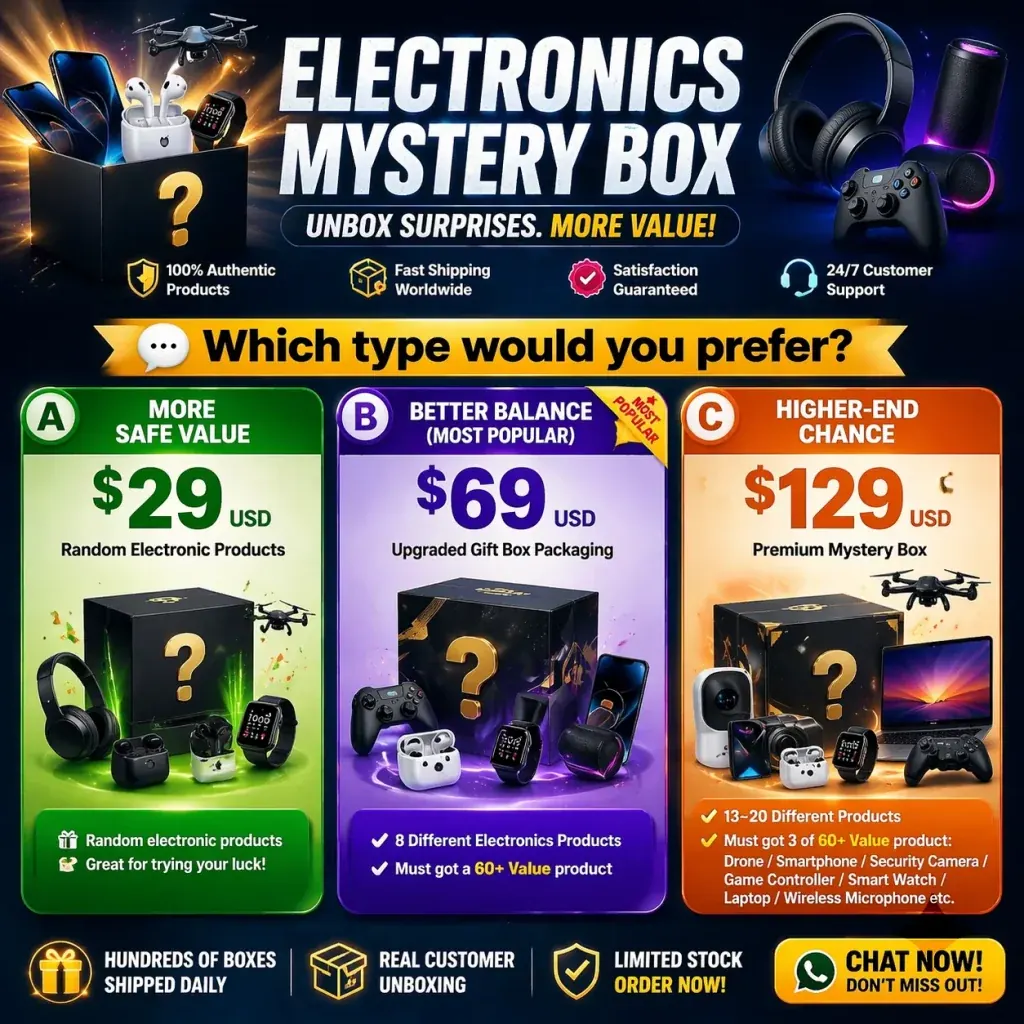
Every discount on a mystery box is actually two claims wearing one price tag: money off the box, and the worth of whatever is inside it. The first you can check. The second you usually cannot, which is why sales season is when the gap between those two claims gets widest. Once you know which one a seller is leaning on, you know most of what you need.
Start With the Uncomfortable Data
Before looking at mystery boxes specifically, it is worth knowing how sale pricing behaves in general. The UK consumer group Which? tracked prices for 175 home, tech, and health products across eight retailers over a full year, from May 2024 to May 2025. On Black Friday itself, none of the offers it examined were at their lowest price of that twelve-month period. US findings run the same way: WalletHub research in late 2025 found that around 36% of items advertised on Black Friday offered no saving against how they had been priced in the weeks before.
None of this means discounts are fictional. It means the date is not evidence. A price is only a deal relative to its own history, and the day it is advertised tells you nothing about that history.
A Mystery Box Stacks Two Claims
- The box price is checkable against its own history; the retail-value figure is not.
- Sale dates are not evidence of a low price, on this category or any other.
- Compare fixed terms per dollar rather than the size of the reduction.
- A discount that costs you the delivery date is not a saving.
This is where the category differs from buying a named product. Claim one: the box is discounted. "Was $80, now $50." You can check this in principle, because it refers to the seller's own price, and prices leave traces. Claim two: the contents are worth more than you pay. "Contains $200 of retail value." You cannot check this before purchase, and often not after, because you would have to establish what the items actually sell for rather than what they are listed at.
Sellers reach for the second claim far more often, because it does the persuading without needing a real price history behind it. Phrasing along the lines of "you receive products valued at or above the amount you pay" is close to standard across the surprise-box market. The important thing for you is that these two claims are not equally verifiable, so they do not deserve equal weight.
What US Pricing Rules Actually Say
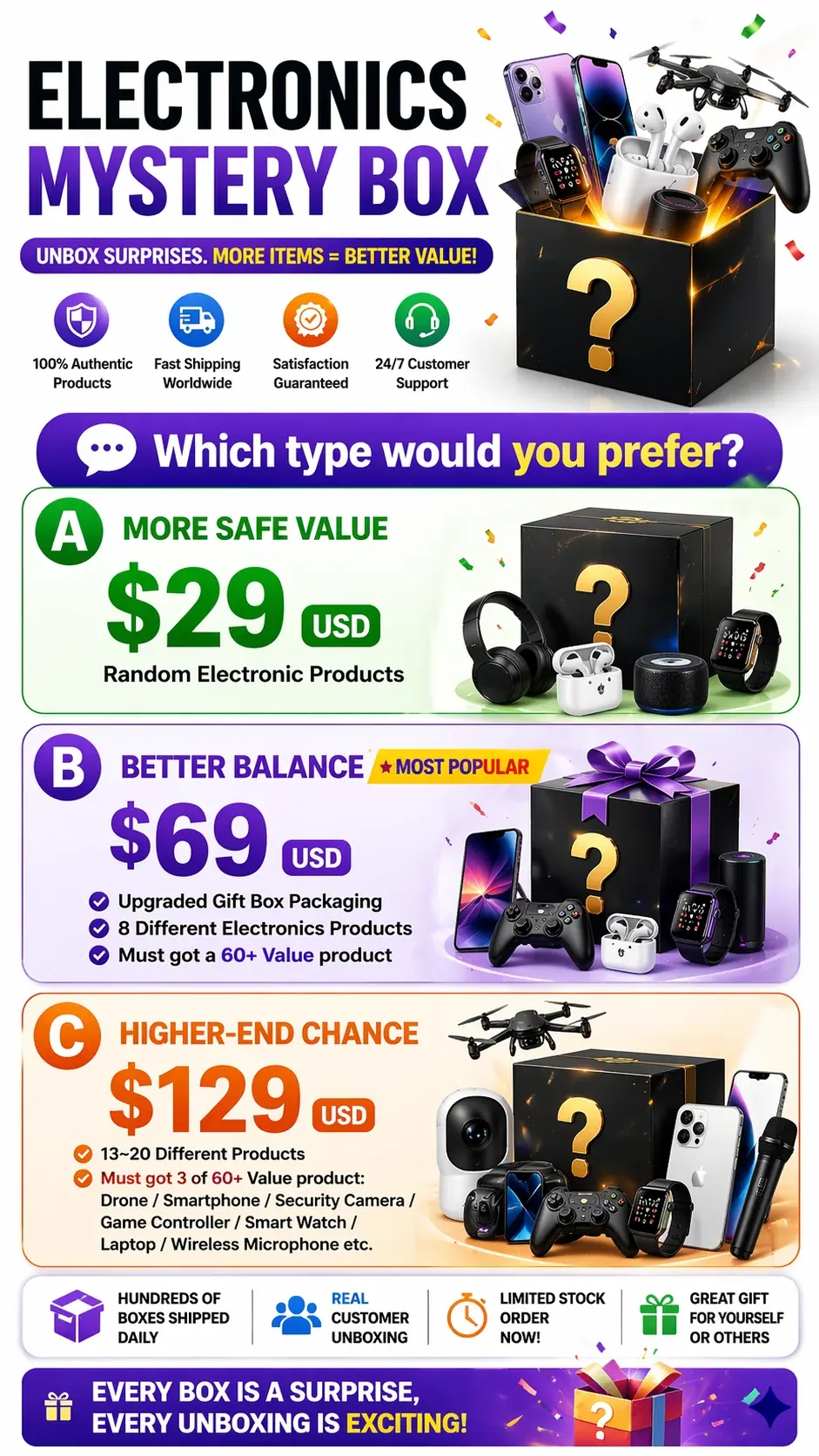
The Federal Trade Commission publishes guidance on exactly this in its Guides Against Deceptive Pricing (16 CFR Part 233), and it maps onto mystery box marketing almost line by line. On a seller's own former price, a comparison is legitimate when the former price was the actual price at which the item was offered on a regular basis for a reasonably substantial period; an inflated price set up to enable a later large reduction is described as a false bargain. On manufacturer list or suggested retail prices, the guidance notes that shoppers tend to believe a list price is what an item generally sells for, and that advertising a reduction from a list price nobody pays may mislead. On "free" and bundle offers, it observes that nothing is literally free when a purchase is required to obtain it.
The list-price section is the one that matters most to you. A claim that a box contains a certain retail value is a claim about prices at which things sell. For a random assortment of generic goods, that is the hardest kind of claim to substantiate and the easiest to state.
Why Resellers Do Not Trust Retail Totals
You do not have to take this from a regulation. The people who buy surplus goods for a living reached the same conclusion from experience. Buyers who evaluate liquidation manifests describe the total retail figure as close to meaningless on its own, with recoverable value, what items realistically sell for after condition, fees, and shipping, being the only number worth acting on. Resellers discussing consumer mystery boxes put it more bluntly: the contents might carry two or three times the price in retail terms, but that is full retail, which nobody achieves when reselling. If you are buying to resell, that is the number you should be working from too.
The Number You Can Actually Check
Since the value claim is hard to verify and the discount claim is easy to inflate, the practical move for you is to compare something else entirely: how much fixed information you get per dollar. For any two offers, put the item count, the stated condition, the category range and exclusions, the delivered price including shipping, and the written fault process side by side. A genuine improvement shows up as more of those per dollar. A repackaged offer shows up as the same terms with a larger adjective in front of them.
| The claim | What it refers to | Can you verify it? |
|---|---|---|
| "Was $80, now $50" | The seller's own past price | In principle yes; prices leave traces |
| "Contains $200 of retail value" | A figure the seller assigned | No, before or usually after |
| "Biggest discount of the year" | A comparison to unnamed prices | No |
| "Free box with purchase" | A bundle total | Yes; work out the delivered total |
This also handles bundle promotions cleanly. If a "free" box arrives with a purchase, work out the total you are paying and what fixed terms that total buys. Mewoo's tiers and what each includes are on its shop page, and the commitments behind an order sit in its terms and conditions, which is the document a sales banner does not change.
Five Checks Before You Buy in a Sale
- Look up the box's own price history if the seller has been trading a while. Screenshots, archived pages, and your own past orders all count.
- Ignore the percentage, read the terms. A 60% claim attached to vague contents is worth less to you than a 10% one attached to a stated item count and condition.
- Ask what changed. If the price fell, did the item count, condition, or category range fall with it? A cheaper box with fewer or lower-grade items is not a discount; it is a different product.
- Compare delivered totals. Shipping added after the discount can absorb the discount. Quote both offers to your door.
- Check the offer against the ordinary outcome. If typical contents at the sale price would still be acceptable to you, the deal is real. If it only works assuming a standout item, it is a bet with a sale sticker on it.
For the underlying value question, are electronics mystery boxes worth it covers the kinds of value at stake, and box curation and value control covers how contents are assembled in the first place.
Note: Screenshot the listing you buy from, including the item count and the stated condition. Sale pages change quickly after the event, and the page that persuaded you is the one you will want to refer back to if what arrives does not match it. It takes you five seconds and it is the only record of the offer you accepted.
The Timing Conflict Nobody Mentions
There is a second cost to buying in the sales that has nothing to do with price. Carriers formally reprice and manage capacity for the holiday period, with UPS and FedEx surcharges phasing in from late September, because the network is at its fullest, which is also when delivery estimates are least likely to land at the fast end. So the sales period is simultaneously the moment discounts appear and the moment transit gets least predictable for you. If the box is a gift for a fixed date, a discount that costs you the delivery window is not a saving; the arithmetic is in when to order a holiday mystery box.
When a Sale Price Is Genuinely Worth Taking
Plenty of them are. The conditions are just specific: you would have bought at the regular price anyway; the fixed terms are unchanged or better, not just the number; the delivered total is genuinely lower than what you tracked before; the timing still works for whatever you need it for; and you are buying because the contents suit you, not because the countdown says to. If all five hold, buy it. If the only thing that changed is how the offer is described, wait. The same box will be available in January, usually at a price nobody is shouting about.
FAQ
Are Black Friday mystery box discounts usually real?
Some are, and the date will not tell you which. Year-long price tracking across ordinary retail has found that a large share of Black Friday offers match or exceed the price from a few weeks earlier, and one study found not a single tracked item at its annual low on the day itself. Check the specific box's own price history before you believe the banner, and treat the season as marketing rather than proof.
What does "contains $200 of retail value" actually mean?
Usually that someone added up list prices for items like the ones that might be inside. It is not a statement about what the goods sell for, and it is certainly not what you could get for them. US pricing guidance warns that reductions from a list price nobody actually pays can mislead. Do your own conversion: ask what you would pay for these items in a shop, and use that.
Is a bigger discount percentage a better deal?
Not on its own, because the seller chose the number the percentage is measured against. A 60% cut from a reference price that was never charged is worth less to you than 15% off a price you have seen with your own eyes. Put the two offers side by side on delivered cost, item count, and condition, and let those decide, not the size of the number on the sticker.
Should I buy a mystery box as a Black Friday gift?
Only if you have checked the calendar. Black Friday 2026 is 27 November, which leaves 28 days to Christmas, roughly the slow-case shipping window for an international box with nothing to spare. If the gift must be under the tree, ordering earlier at the normal price is the safer buy. If a January arrival would be fine, the sale price is worth taking.
Is a free mystery box with purchase a good offer?
Work out what you are really paying. The regulator's own guidance notes that nothing is free when you have to buy something to get it, so the question is whether the qualifying item is at its usual price or has quietly gone up to fund the "free" box. Add up the whole basket, compare it with what those terms would normally cost you, and decide on that total.
What if the price drops right after I order?
Ask the seller. Plenty will match a drop within a few days as goodwill even with no published policy, and the worst you get is a polite no. Keep your confirmation and the dated screenshot of the page you bought from. It is also a reason to buy when the terms suit you rather than trying to guess the bottom of a sale, because you will rarely guess it.
Final Thoughts
A mystery box discount makes two claims, and you can only check one. Verify the box price against its own history, treat any retail-value figure as marketing until you convert it yourself, and compare offers on fixed terms per dollar rather than on the size of the reduction. If the terms improved, it is a deal. If only the wording did, the checks in are mystery boxes legit still apply on sale days.
A stated item count is what lets you compare an offer against a normal price: Discovery Electronics Mystery Box (1 item) and Party Electronics Mystery Box (6 items). Compare every tier side by side on the electronics mystery box category page.
See what each box commits to →