
Laptop and Computer Mystery Boxes: Why Big Items Rarely Appear
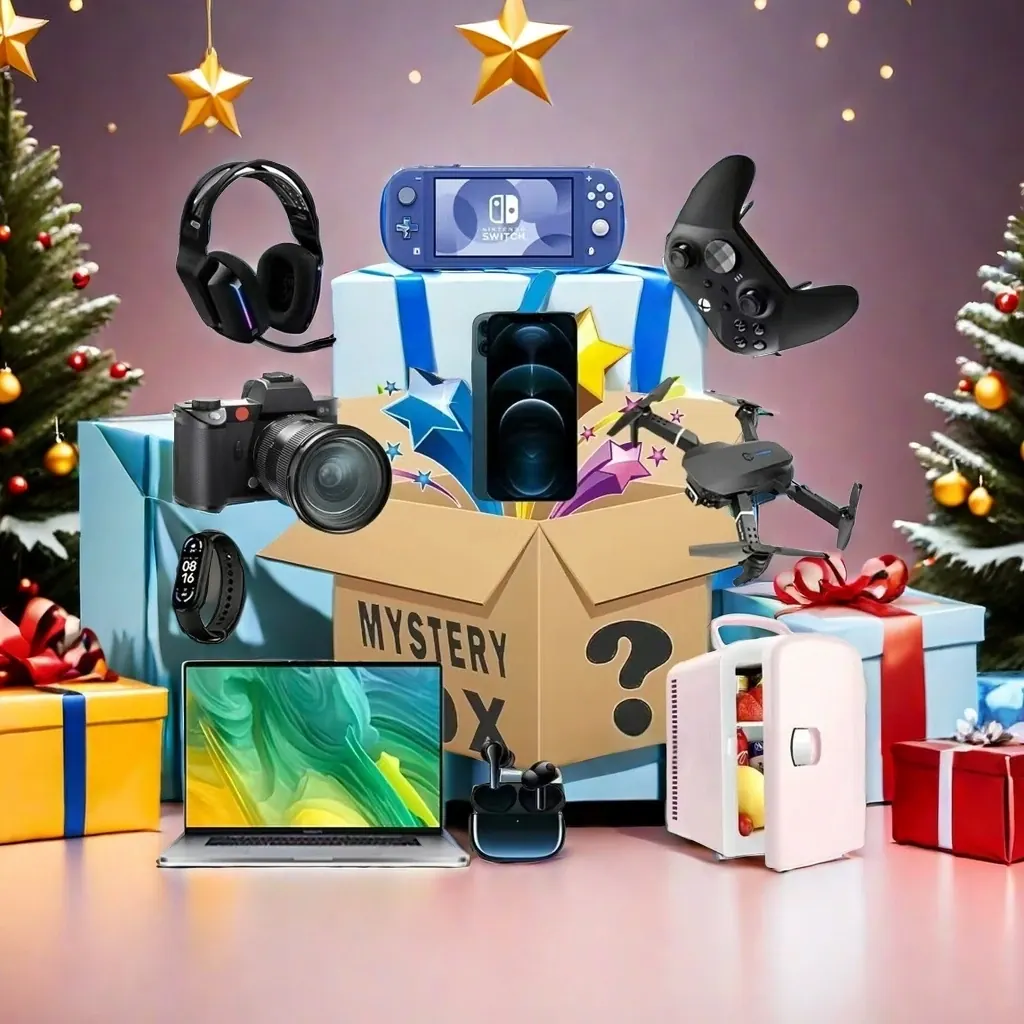
Every listing image in this category has a laptop floating above the box. Sometimes a camera, a console, occasionally a mini fridge. Almost nobody receives one, and the reason is not that every seller is dishonest. It is that the economics of shipping one expensive item inside a random assortment do not work. Once you understand why, you can spot the rare real big-ticket box, and you will stop paying for a photograph.
The Picture and the Parcel
The marketing convention is consistent enough to be a genre: an open carton with high-value devices arranged in a halo above it. Laptop, phone, camera, console, drone. Those images are illustrating the category the goods belong to, not the contents of the box you are buying. That distinction is legitimate in advertising terms and misleading to you in practice, because a photograph is the most persuasive thing on the page and the item count is the thing you notice least.
The gap between the two is where nearly all the disappointment in this category comes from. Close it before you pay and the box you receive will match the box you expected.
The Structural Reason: Insurance Caps
- Standard US parcel services include only $100 of insurance in the price.
- A rare high-value item forces the seller to insure every box or absorb the loss, and both push the odds toward zero.
- Big items that do appear are usually older, lower-spec, or refurbished.
- If you want a laptop, price a known refurbished one first. It usually wins.
Start with something concrete that nobody puts on a product page. USPS Ground Advantage includes up to $100 of insurance in the price, and so do Priority Mail and Priority Mail Express. You can buy cover up to $5,000, but the fee is based on the declared value, so it is an extra cost per parcel rather than something included.
Why that matters for the box you are looking at
A normal retailer knows what is in each box, so it insures the expensive shipments and not the cheap ones. A mystery box seller offering you a small chance of a laptop cannot do that cleanly, and has only two options.
- Insure every parcel at the high value. The cost lands on every box, including the hundreds that contain accessories, which raises the price of the whole line to fund a prize almost nobody receives.
- Insure nothing above the included cover. Then a single lost or damaged parcel wipes out the margin from a great many others.
Both options push the realistic probability of a high-value item in your box toward zero. This is arithmetic rather than character. Even a scrupulous seller ends up in the same place.
Three More Costs That Compound It
Carriage by size and weight. A laptop is heavier and bulkier than a whole box of accessories, and carriage is charged on both. What you do get for a laptop is an accessory, and the commonest is covered in a laptop cooling pad from a mystery box. The shipping cost of one big item can exceed the entire goods budget of a normal assortment.
Damage rate. Mixed boxes are packed with loose items that move in transit. A screen sharing a carton with cables and adapters is a claim waiting to happen, and the manufacturer packaging that normally protects a laptop has usually been removed to fit the assortment.
Cross-border friction. A higher declared value attracts more attention at customs, longer clearance, and duties calculated on that value, which you pay. The mechanics are in shipping an electronics mystery box from China.

What a Real Big-Ticket Box Actually Contains
They do exist. What matters to you is understanding what makes them possible, because it is never generosity. A seller can put a laptop in a box when the laptop was acquired cheaply, and in practice that means one of four things. The listing rarely says which.
| Why it is affordable | What you receive | Worth taking? |
|---|---|---|
| Older generation | Works fine, several years behind | Often yes, if the specs are stated |
| Entry-level specification | New but slow, minimal storage | Depends what you need it for |
| Refurbished or returned | Functional, cosmetically variable | Yes, if the condition is stated in writing |
| Overstock of an unpopular model | New, but nobody wanted it at retail | Sometimes; find out why |
None of these is a bad thing for you to receive. All of them are different from what the photograph implies, which is a current, desirable machine somebody is giving away by accident.
Note: If a big item is genuinely part of the offer, it will be in the text with a specification, not only in the picture. Words like "chance to win" or "possible contents include" describe a lottery rather than a product. Item count, category range, and condition are the parts you can hold a seller to, so read for those three and let the images go.
The One Shape Where a Big Item Is Plausible
There is a version of this that works, and you should recognise it because it looks superficially similar. A retailer clearing a specific model sometimes sells it as a partially blind offer: the product is named and the specification is stated, but the colour, the exact configuration, or the bundled accessories are left unknown. You know you are getting that machine; you do not know which variant.
That is a genuinely different product from a mixed assortment, and every objection above falls away. The seller knows the value of each parcel, so it can insure accurately. The item ships in its own manufacturer packaging rather than loose among cables. Nothing is concealed except a detail that does not change what the thing does. The test for you is simple: if the listing names the model and states the specification, the uncertainty is cosmetic and the purchase is ordinary. If it names only a category and shows a photograph, the uncertainty is the product.
The Comparison You Should Make
Here is the test that settles most of these purchases. Take what a big-ticket mystery box costs you, and price a known refurbished machine of the kind that could realistically be inside it. Not the machine in the photograph; the one the table above describes.
Very often the known machine costs less, arrives with stated specifications, and has a return route if it is wrong. What the box adds is the chance of doing better and the chance of doing considerably worse, and you are paying a premium for that spread rather than for the goods. The same principle runs through the whole premium end of this category, where more money should buy you firmer terms rather than louder claims, as set out in what should change above $100.
Where This Leaves You
A mystery box is a poor tool for acquiring one specific expensive thing and a reasonable one for acquiring several ordinary useful things. Most assorted boxes draw from passive accessories and powered non-wireless items, with one or two wireless devices; large computing hardware sits outside that structure entirely, which is why it does not appear. The tiers are explained in what tech means on a mystery box listing.
So the honest advice is short. If you want a laptop, buy a laptop. If you want to be surprised by a handful of usable gear for yourself, for a gift, or to test a supplier before a bigger order, buy the assortment and judge it on item count, condition, and category range, the three things a seller can actually commit to you.
FAQ
Can a mystery box really contain a laptop?
Occasionally, but not the one in the picture and not at a price you would call cheap. Think about it from the seller's side: parcel cover stops at $100 unless they pay extra on every box, and one lost laptop wipes out the profit on dozens of accessory boxes. Any seller who has done that sum keeps the odds close to nil, whatever the collage suggests.
Why do listings show laptops and consoles at all?
Because a halo of devices sells better than a photo of cables, and advertising rules let a seller illustrate a category rather than the exact contents. It is the same trick as a burger poster. The picture does the persuading while the item count sits further down the page doing the promising, and only the second one is something you can hold them to.
If a box does contain a laptop, what kind will it be?
One the seller got cheaply: a model several generations old, a bottom-of-the-range spec with little storage, a returned or refurbished unit, or leftover stock of something that flopped at retail. Any of those can be a fine machine for the right person. Just do not expect the current, desirable computer the image implies, because that one could never be bought in bulk at a box price.
Should I buy a high-priced mystery box or a refurbished laptop?
Do the comparison before you decide. Find a refurbished machine of the type that could realistically be inside such a box and look at its price, its listed spec, and its return policy. In most cases it is cheaper and safer. The box is charging you extra for the chance of a better outcome, and that chance is smaller than the price suggests.
Are big items more likely to arrive damaged?
Noticeably. A laptop in its own retail carton with moulded foam travels well; the same laptop loose in a mixed box with adapters and cables sliding around it does not. Sellers usually strip the manufacturer packaging to fit an assortment together, which removes exactly the protection the device depends on. If a big item does arrive, photograph the packaging before you open anything.
Which words on a listing should make me cautious?
"Chance to win", "possible contents include", "up to", and any expensive product that appears in the photos but never in the description with a model number and specification. A real offer of a big item reads like a product listing. A lottery reads like a lottery, and you should price it as one, which usually means walking away.
Final Thoughts
The laptop in the picture is advertising a category, not your parcel. Included parcel insurance stops at $100, carriage is charged by size and weight, and loose packing raises the damage rate, three costs that between them make a rare expensive item uneconomic for any seller. Buy an assortment when you want several useful things, and buy a computer when you want a computer.
If you want the highest item count rather than one large device, start at the top tiers: Big Reveal Electronics Mystery Box (8 items) and Ultimate Electronics Mystery Box (12 items). Compare every tier side by side on the electronics mystery box category page.
See stated item counts and tiers →