What “Collectible” Actually Changes on a Mystery Box

The word "collectible" appears on almost everything sold in a sealed box, and most of the time it is decoration. On genuine blind box collectibles it changes four concrete things for you: what condition means, whether opening it costs you money, whether duplicates have value, and whether a secondary market exists at all. On an electronics assortment it changes none of them. Here is how to tell which you are looking at.
A Collectible Needs Three Things
Not every sealed item is a collectible, even when the listing says so. Three conditions have to hold together, and you can check all three before you buy. A defined series. A published roster of what exists: twelve figures, say, with one rare variant. Without a list, there is nothing to complete. Identifiable units. Each item has a name or number that buyers and sellers both recognise. This is what makes a market possible: two strangers must be able to agree on what is being traded. Scarcity that does not reset. The series ends. Production stops. If the seller can print more whenever demand appears, the item is merchandise rather than a collectible. An electronics mystery box fails all three. There is no roster, the items are generic accessories nobody names, and stock is replenished continuously. "Collectible" on such a listing is a mood word, and treating it as a value claim is the mistake this article exists to save you from.
What Changes Once It Really Is Collectible
- Sealed and opened become two different products at two different prices.
- Duplicates stop being waste and become tradeable currency.
- Packaging turns into part of the item rather than something you discard.
- Confirm a market with completed sales, not listings, before you pay a collectible premium.
Opening becomes a transaction
This is the difference that surprises people most. With ordinary goods, opening the box costs you nothing; you bought the thing inside, and the carton is packaging. With collectibles, sealed and opened are distinct market states. A sealed unit carries the unresolved possibility of containing the rare variant; an opened one has resolved into a specific figure with a specific price. Opening it destroys the option and replaces it with the outcome. That is why collector forums argue endlessly about whether to open. It is not sentimentality; it is a genuine choice between holding an option and realising a value, and neither answer is always right for you.
Duplicates become currency
In an electronics assortment a second identical cable is dead weight, worth roughly nothing and destined for your drawer. That reasoning is set out in toy mystery boxes and electronics boxes follow different rules. In a collectible series a duplicate is a trading chip. Someone else needs the figure you doubled up on, and you need the one they doubled up on. The duplicate is not a failure of the purchase; it is the mechanism by which sets get completed.
Packaging becomes part of the item
Condition language for collectibles covers the box as well as the contents. Crushed corners, opened seals, and missing inserts all reduce value, which is why collectors keep packaging that any other buyer would recycle. For ordinary goods the equivalent question is far simpler and is covered in reading condition in a mystery box. For collectibles, the packaging is not evidence of condition; it is a component of it.
Side by Side
| Genuine collectible | Electronics assortment | |
|---|---|---|
| Roster of possible contents | Published | None |
| Opening the box | Changes the market value | Costs you nothing |
| Duplicates | Tradeable | Dead weight |
| Packaging | Part of the item | Recycle it |
| Secondary market | Active, priced | Thin, below retail |
| Value over time | Can rise if the series ends | Falls from day one |
| What "collectible" means | A market fact | A mood word |
Note: "Limited edition" is the phrase most often used without meaning. A genuine limit is a stated number of units or a stated end date. "Limited" with neither is a description of a feeling, not of supply, and it does not create the scarcity that makes a collectible hold value for you.
Why Electronics Boxes Cannot Be Collectible
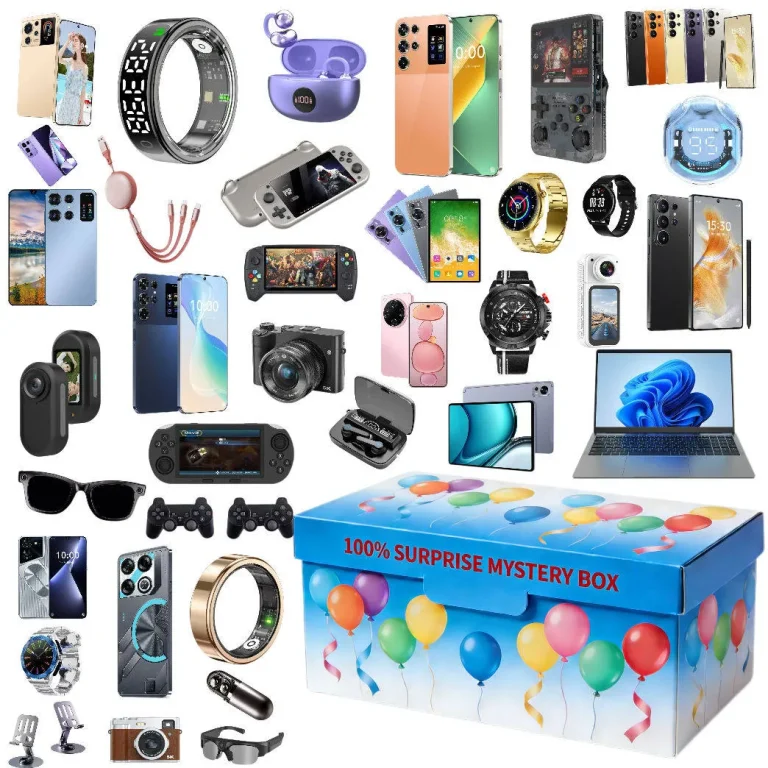
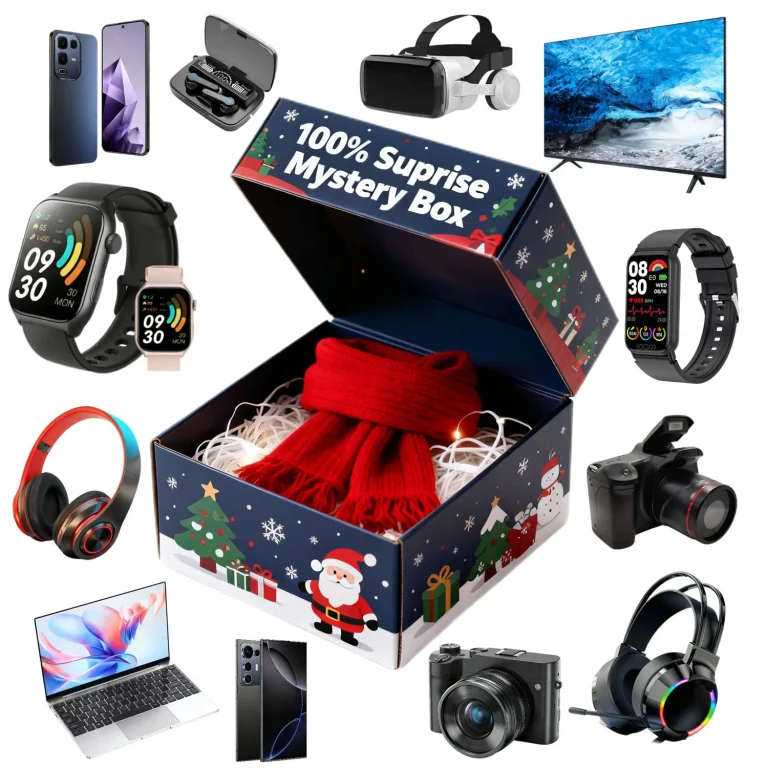
This is worth stating plainly to you, because sellers occasionally imply otherwise. Consumer electronics accessories are produced continuously, in unnamed variants, against demand. There is no fixed roster because the seller buys whatever is available at wholesale that month, and next month's stock differs without anybody announcing a new series. Value also runs the wrong way. A collectible can appreciate because supply stopped while interest continued. An accessory depreciates from the moment it ships, because newer equivalents arrive constantly and nobody is trying to complete a set of chargers. That is not a criticism of the category; it is simply a different purchase. Electronics boxes are bought for use value, and use value is a perfectly good reason for you to buy something. The honest framing is in what "tech" covers on a mystery box listing, and Mewoo's own listings make no collectible claim at all: they state a count, a condition, and a category range, which is what an assortment can honestly promise.
Where Art Toys Sit
Between mass-market figures and true limited runs there is a middle category worth knowing about, usually sold as blind box art toys. These are designer pieces produced in small numbered runs, often signed or credited to a named artist, and they behave more like prints than like toys. The roster is short, the run is genuinely finite, and the artist's later work affects the price of the earlier work, which is a market dynamic ordinary merchandise never has. The practical consequence is that the three tests above resolve very cleanly here. Art toys almost always publish the roster, name the pieces, and state the edition size, because those facts are what you are paying for. When a listing calls something an art toy but supplies none of the three, the word is doing the same decorative work as "collectible". Searches for mystery box collectibles frequently land in this middle ground, which is why the vocabulary matters more here than at either extreme.
Reading a Listing That Says "Collectible"
- Look for the roster. Can you see a list of what exists in the series? No list, no collectible.
- Look for names or numbers. Unnamed items cannot be traded, because buyers cannot specify what they want.
- Look for a stated limit. A number of units or an end date, not the word "limited".
- Check whether a secondary market exists. Search the series name and see whether completed sales appear. This takes you a minute and settles the question.
- Ask what condition means to the seller. If the answer does not mention packaging, they are not selling collectibles.
Point four is the decisive one. A collectible market either exists or it does not, and the evidence is public. Everything else on the listing is a claim; completed sales are a fact.
If You Want Both
Some people want the opening ritual and the useful goods, without the collecting economy. That combination is entirely reasonable and worth naming, because the market rarely does. What you are buying then is the reveal plus items you will actually use, with no expectation of resale and no series to chase. Judged on those terms an electronics assortment does well: the items work, duplicates are mildly annoying rather than costly, and nothing is lost by opening it immediately. The mistake is only ever the mismatch: buying an assortment expecting collectible economics, or buying collectibles expecting daily utility. Deciding which one you want before you shop removes almost every disappointment this category produces, and what an assortment does commit to is set out in what you can expect inside.
FAQ
What makes a blind box actually collectible?
Three tests, all of which have to pass at once. Does the maker publish the full line-up? Can each design be named or numbered precisely enough that a stranger on the other side of a trade knows exactly what you mean? And has production genuinely stopped, or will it stop on a stated date, so that supply cannot be topped up? Fail any one and the word on the box is describing a mood rather than a market.
Does opening a collectible reduce its value?
Frequently, yes, because a sealed box and an opened one are traded as two different things. While it is sealed, the box might still contain the rare figure, and that possibility has a price. Once you open it, the possibility collapses into whichever figure is actually inside, at that figure's price. You have swapped an option for an outcome, and whether that was the right swap depends on what came out, which is why collectors never agree on it.
Are electronics mystery boxes collectible?
No, for reasons that have nothing to do with quality. The seller's stock is whatever wholesale had that month, so there is no series to complete; the items are generic cables and earbuds that nobody catalogues, so there is nothing to trade; and the factories never stop, so nothing becomes scarce. On top of that, an accessory is worth less the day after you buy it, not more, because a newer version is already on its way.
Should I keep the packaging?
It depends entirely on which of the two products you bought. For a genuine collectible, keep everything, because the box, the seal, and the inserts are graded alongside the figure and a crushed corner knocks money off. For an electronics assortment, hold on to the packaging only until you have tested every item and the seller's fault window has closed, then recycle it. One case is about preserving value; the other is about keeping evidence for a fortnight.
How do I check whether a secondary market exists?
Type the series name into a resale site and filter for sold items rather than live ones. Anybody can list anything at any price, so an open listing tells you nothing; a completed sale tells you two real people agreed on a value. A run of completed sales at consistent prices means there is a market. Hopeful listings and no sales means there is not, whatever the box said. The check takes you about a minute.
Does "limited edition" mean it will hold value?
Only when you can find the figure behind it, either a quantity or a cut-off date. "Limited" by itself is one of the cheapest words in retail, and sellers put it on products they will happily run off again the moment demand picks up. Scarcity that can be undone is not scarcity, and it will not hold up a resale price when you come to sell. No figure, no scarcity; treat the word as decoration.
Final Thoughts
"Collectible" is a market fact on some sealed boxes and a mood word on most. Check for a published roster, identifiable units, and a real limit before you treat it as a value claim, and confirm with completed sales rather than listings. On an electronics assortment none of that applies, which is fine, provided you bought it for use rather than resale, and provided the seller told you so rather than borrowing the word.
If you want the reveal and the useful goods without the collecting economy, that is exactly what these are, and they make no other claim: Triple Reveal Electronics Mystery Box (3 items) and Party Electronics Mystery Box (6 items). Compare every tier side by side on the electronics mystery box category page.
See what a stated range commits to →