Surprise Box for a Friend: One Question Tells You Whether to Buy It
Most advice about surprise boxes deals with the two ends: strangers and colleagues at one extreme, partners and family at the other. Your friend sits in the middle, and the middle is where the answer is genuinely uncertain rather than obvious. Whether a surprise box for a friend works depends on which kind of friendship it is, and there is one simple question you can ask yourself that settles it before you spend anything.
The Curve This Sits On
There is a measurable pattern behind gift-giving that decides most of this for you. Joel Waldfogel's study of gift value, published in the American Economic Review, asked recipients to estimate what a gift had cost and then state the minimum cash they would accept instead. The ratio is the gift's "yield". As the American Economic Association's summary of the paper records, yields were highest among gifts from givers very close to their recipients, meaning friends, parents, and significant others, and lower from more distant relatives, who were also far likelier to give cash. Note where friends sit in that finding: in the high-yield group, alongside partners and parents. Your guesses about a friend are already good, which is the argument against outsourcing the choice. But friendship covers an enormous range. The person you speak to daily and the person you see twice a year are both "friends", and only one of them is in that high-yield group in any practical sense.
The Question That Settles It
- Close friends produce high-yield gifts, so if you can choose, choosing beats outsourcing.
- The test is whether you can name something they want without thinking.
- A surprise box is strongest for friends you like but do not know in detail.
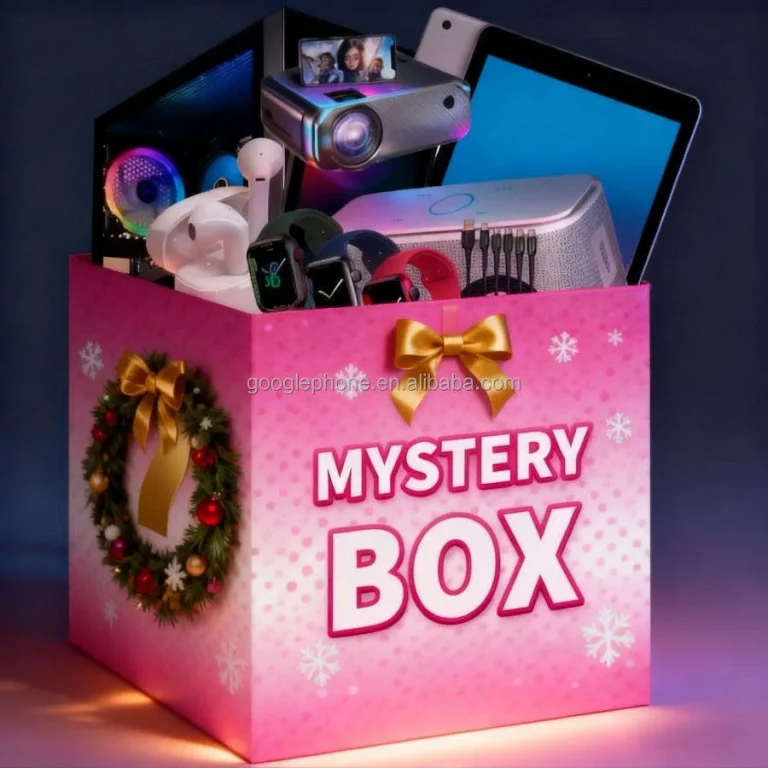
- Say it is a box on the card, size it mid-tier, and in a group the format wins outright.
Ask yourself one thing: can you name something this person wants, right now, without effort? If an answer arrives in under five seconds, buy that. You are in the high-yield group and a random assortment throws away the advantage the research describes. If you find yourself constructing a guess, "they like tech, so maybe...", you are not in that group for this purpose, regardless of how much you like them. That is the exact situation the surprise box format was built for, and there is no shame in it. Plenty of genuine friendships never involve knowing what someone wants to own.
Why this test works better than "how close are we"
Closeness and product knowledge are different things, and people conflate them constantly. You can be extremely close to someone and have no idea what they would like to receive, because your friendship runs on conversation rather than on shopping. You can also know a casual acquaintance's tastes precisely because they talk about one hobby endlessly. Your gift decision runs on the second axis, not the first. Ask yourself about knowledge, not affection.
Three Kinds of Friend
| You know their taste | You like them but do not | New or occasional | |
|---|---|---|---|
| Best option | Something chosen | Surprise box | Surprise box |
| Why | Your guess is the asset | No guess to get wrong | Honest about the distance |
| Risk of a box | Looks like less effort | Low | Very low |
| Say it is a box? | Yes, and add something chosen | Yes | Yes |
| Right size | Small, alongside a gift | Mid tier | Mid tier |
The middle column is the sweet spot for this format, and most of your friends are probably in it. Most adult friendships are warm without being detailed, and a box handles that honestly where a guessed gift exposes it.

Why Friends Are Easier Than Partners
The interpretation problem shrinks dramatically once you step away from a romantic relationship. A partner reads a gift as information about attention, which is why an unchosen box lands badly there; the reasoning is in buying a surprise box for a partner. Friends do not run that calculation. A box from you reads as a friendly gesture, not as a verdict on the friendship. That single difference is why the same format that fails at an anniversary works comfortably for a birthday drink. The stakes attached to the object are lower, so the randomness is entertainment rather than evidence.
Note: Say on the card that it is a surprise box and roughly what is inside. With friends this is not damage control; it is the joke. "I have no idea what is in here either" is a perfectly good thing for you to hand somebody, and it converts ordinary contents into the shared part of the gift.
Group Situations Are the Strongest Case
Where you and several friends are exchanging gifts, the format moves from acceptable to genuinely good. Nobody is compared against a carefully chosen present, because nobody chose anything. Opening happens together, so the reveal is the event. And the awkwardness of mismatched spending disappears when everybody bought the same format at the same price. The mechanics of running that well, meaning labelling, price caps, and item counts, are covered in using a mystery box for Secret Santa and White Elephant. The short version is that a group agreeing on the format beats any individual buying one alone.
Sizing It for a Friend
- Mid tier, not the largest. A very large box between friends can read as an escalation the other person now has to match.
- Fewer, better items. A high count of small accessories looks like filler when one person opens it alone.
- Narrow the category if you know anything at all. Even "they use headphones constantly" is enough to pick a better range.
- Add one small chosen thing if you are in the first column. This converts the box from a substitute into a supplement.
The first point matters more than it sounds. Gift exchanges between you and your friends carry an implicit symmetry, and overspending creates an obligation rather than a pleasure. Matching the occasion is worth more than impressing anybody, and the tier-by-occasion guidance is in choosing an electronics mystery box gift size. On Mewoo's ladder that usually means the 3-item box for one friend, which is enough to feel like a spread without becoming a pile.
When Not To
Two cases where you should not, both narrow. When they asked for something. Same rule as everywhere else: a stated want beats any guess, including an outsourced one. When they are a specialist in the category. Someone deep into audio or photography already owns better versions of anything in a general assortment, and will notice immediately. The reasoning generalises in buying for someone who has everything. Outside those, a surprise box for a friend is one of the easiest applications of the format there is, precisely because friendship tolerates an honest "I picked the category, not the contents" in a way that closer relationships do not.
FAQ
Is a surprise box a good gift for a friend?
Usually, and with less risk than giving one to a partner. A friend takes a box as a bit of fun from you rather than as a measure of how much attention you pay them, so unchosen contents do not sting. The one case where you should skip it is a close friend whose wish list you could recite: there, your own pick will beat anything drawn at random, and the box looks like the lazier route.
How do I know whether to choose something instead?
Give yourself five seconds. If a specific thing they would love comes to mind in that time, go and buy it; the research on gift value says your guess is worth more than a stranger's. If instead you catch yourself reasoning your way toward an answer, "they like gadgets, so perhaps...", you do not actually have a pick, and the box is the more honest gift. Which of the two happens tells you everything.
Does closeness decide it?
Less than you would expect. What matters is whether you know their taste in things, and that is a separate question from how much you like each other. Some of your closest friendships are all conversation and no shopping, so you have no idea what they would want to own. Meanwhile an acquaintance's wish list can be obvious after one evening of hobby talk. Decide on what you know, not on how you feel.
What size box suits a friend?
Go for the middle of the range. Between you and a friend there is an unspoken expectation that gifts roughly match, so a huge box does not read as generous; it reads as a bill the other person now has to settle next birthday. And when one person opens a box alone, three decent items land better than eight small ones, which mostly look like padding. A 3-item tier hits both marks for most friendships.
Should I tell them it is a surprise box?
Yes, and put it on the card in your own words. Among friends, admitting you do not know what is inside either is the fun part, not an apology, and it turns whatever comes out into something you both react to. Keeping it quiet does the opposite: with no framing, a box of ordinary accessories looks like a gift that fell short, when it was never meant to be a chosen present.
Do these work for a group of friends?
Better than one-to-one, in fact. When your whole group buys the same format at an agreed price, nobody's box is measured against a thoughtful hand-picked present, everyone opens at once so the unwrapping is the entertainment, and the usual awkwardness of one person spending twice as much as another simply goes away. Agree a price cap, write the item count on each tag, and let the reveal do the work.
Final Thoughts
Friendship spans the whole closeness curve, so the label decides nothing. Ask yourself whether you can name something they want without effort: if yes, buy that; if you are constructing a guess, buy the box and say so on the card. Mid tier rather than largest, one chosen extra if you know them well, and in a group the format stops being a compromise and becomes the better option outright.
For one friend, the mid tier is the right weight for you: Triple Reveal Electronics Mystery Box (3 items), or Birthday Electronics Mystery Box (3 items) if there is a date on it. Compare every tier side by side on the electronics mystery box category page.
A step up or a step down from those two: Birthday Electronics Mystery Box (6 items) and Surprise Gift Box (2 items).
See how to match the size to the occasion →