Mystery Boxes for Teenagers: What a Parent Should Actually Check

Advice about mystery boxes for children is built on a safety framework that switches off at the thirteenth birthday. Advice for adults assumes a buyer with a credit card and their own money. Your teenager has neither the regulator's protection nor the adult's tools, and sits in a gap the format handles badly. This is what changes between thirteen and eighteen, and what you as the parent buying for that age should actually check.
At Thirteen, the Rulebook Changes
US consumer product law defines a children's product as one "designed or intended primarily for children 12 years of age or younger". That single line does a great deal of work. Below it, for your child, sit mandatory age grading, the small-parts rules, third-party testing, and a children's product certificate. Above it sits none of that. The Consumer Product Safety Commission is explicit about the boundary: if a consumer older than twelve is as likely or more likely to use a product than a younger child, it is probably a general-use product. A box marketed to your teenager is therefore, legally, an adult product. It needs the same general certificate any ordinary consumer good needs, and nothing more. So the judgment the regulator supplies for a ten-year-old has to be supplied by you for a fourteen-year-old. The framework you are leaving behind is set out in mystery boxes for children, and the useful thing to notice is how much of it simply stops applying.
What a Teenager Lacks That an Adult Has
- From thirteen, a box is legally a general-use product: no age grading, no small-parts rule, no children's certificate.
- A minor cannot hold the payment methods that carry dispute rights, so protection runs through your card.
- The purchase pressure at this age comes from creators and peers, not from the product.
- Show them the typical contents before the box arrives, not the video after it.
Three things separate your teenager's position from yours, and none of them are about maturity. No payment protection of their own. Card issuers require applicants to be adults; a minor is at most an authorised user on your account. Every practical protection this category offers, the billing-error dispute, the 60-day window, the ability to withhold a disputed amount, belongs to the cardholder. If your teenager pays with a prepaid card, a gift card, or a wallet balance, there is often no dispute route at all. The mechanics are in which payment methods actually protect you. No contractual standing. A minor generally cannot be held to a purchase contract, which sounds like a protection and is in practice a complication: some sellers will not deal with a dispute raised by anyone under eighteen. You, the parent whose card was used, are the party the seller will deal with. A different source of pressure. An adult buying a mystery box is usually responding to price or curiosity. A teenager is usually responding to a creator, a series, or a peer group, and that changes what "worth it" means to them.
The Product Is Not the Problem, the Marketing Is
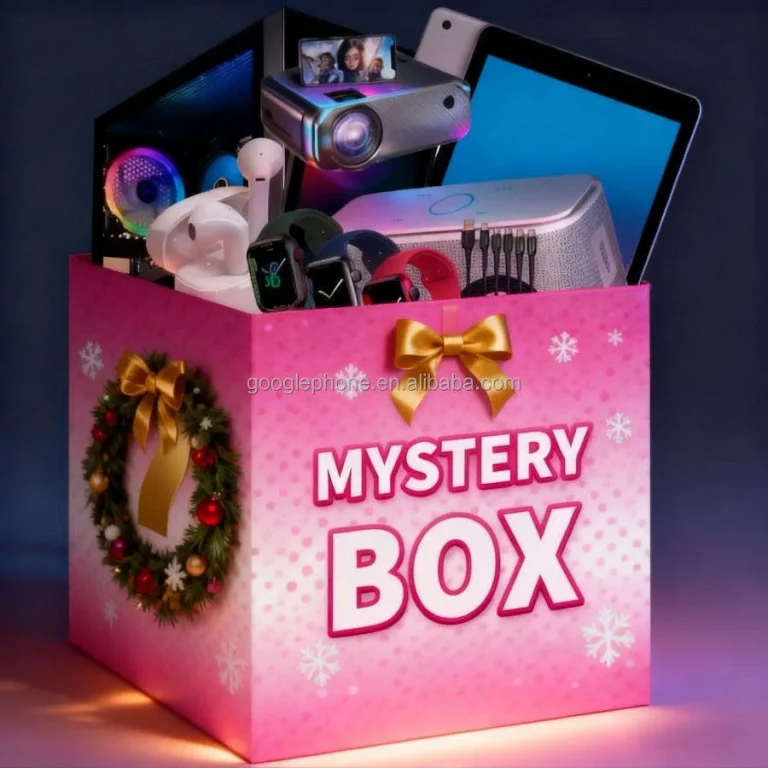
Because a teen box is a general-use product, its contents are rarely a safety issue for you. Phone accessories, earbuds, small gadgets, stationery, and figures are the same objects an adult would receive. What differs is how the box reaches your teenager. Unboxing content is the channel your teenager meets the product through, and it is optimised for reaction rather than for information. The box that produces the best video is the one with a high-value outlier, which is exactly the box whose typical unit is least like the one on screen. A teenager who has watched thirty reveals has a mental model of the product built from thirty best cases. Why those videos look the way they do is set out in are mystery box unboxing videos real. The practical consequence is that expectation management is your entire job. The box will be fine; the gap between the box and the video is where the disappointment lives.

Where the Age Group Actually Splits
"Teenager" covers five years in which almost everything changes, and a single recommendation for the range would not be honest with you.
| 13 to 14 | 15 to 16 | 17 | |
|---|---|---|---|
| Safety framework | None (general-use product) | None | None |
| Who pays | Parent, always | Parent's card or own gift money | Often own money, parent's card |
| Dispute route | Parent only | Parent only | Parent only until 18 |
| Main driver | Series and characters | Creators and peers | Price and use |
| Best format | Collectible blind box, small | Themed assortment | General assortment, chosen by them |
| Your job | Choose it | Vet the seller | Hold the card |
The dispute row does not move, and that is the point of the table for you. Whatever else changes between thirteen and seventeen, the protection stays with you as the adult cardholder, so your involvement in the purchase is a structural requirement rather than a matter of trust.
Note: Some sites that use the phrase "mystery box" are not selling boxes at all. They sell a chance at an item, with a cash-out or "sell back" option, and they gate access at eighteen for a reason. If a site asks for age verification before purchase, that is the product telling you what it is. Those are not the boxes this site covers and are not suitable for your teenager regardless of what you think of them.
Collectible or Assortment?
The two formats suit this age differently, and your choice is clearer than it would be for an adult. Collectible blind boxes suit the younger end. A series with a known roster gives a thirteen-year-old something to complete, trade, and display, and the per-unit price is low enough that a miss is not a crisis. Duplicates get swapped rather than wasted, so your money is rarely lost on a repeat. General assortments suit the older end. A sixteen-year-old with a phone, earbuds, and a laptop has real use for accessories, and an assortment of them is closer to a practical purchase than a collectible is. The relevant question shifts from "which series" to "what condition, what count, what seller", the same questions an adult would ask, covered in mystery boxes for adults. The format you should avoid for either end is the consumable box. It works well for younger children precisely because it does not accumulate, but a teenager has moved past the stage where a slime kit is a treat; the reasons it works for the under-twelves are in slime and craft mystery boxes for kids, and most of them stop applying by thirteen.
What You Should Actually Check
- Whether the site gates at eighteen. If it does, stop. That is a different product.
- The payment method. Use your own credit card, not a prepaid or gift card in the teenager's name. The dispute right lives with the card.
- The seller's returns and faults page. A general-use product still has to work. A missing or vague policy means a fault has nowhere to go.
- The condition stated. New, refurbished, and used carry different expectations, and your teenager will not read the small print.
- Which video sold it. Ask. If the answer is a specific reveal, look at that box's typical contents rather than its best one before you buy.
Item five is the one that saves you most of the disappointment. A teenager who has been shown that the video was an outlier before the box arrives opens it with the right expectation; one who has not opens it comparing it to the video. For the older end, an electronics accessory box with a stated count and stated new condition, such as Mewoo's 3-item tier, is the kind of listing that passes checks three and four without you having to dig.
Letting Them Buy It Themselves
At some point in this range your teenager will buy a box with their own money, and that is a reasonable thing to allow. Two things make it go better. Route the payment through your card even when the money is theirs. They reimburse you; you keep the dispute right. A sixteen-year-old with a debit card attached to their own account has no billing-error process behind them, and a card dispute is the only lever that reliably works on a seller who has stopped answering. And let the first box be a cheap one. The gap between the video and the contents is obvious on first opening, and that lesson is cheaper at fifteen dollars than at eighty.
Why the Gap Exists at All
Sellers face a choice at thirteen, and it explains what you see on the listings. Marketing to under-twelves brings the children's product framework with it, testing, certification, labelling, and most small operators avoid it. Marketing to adults brings none of that. So "teen" boxes are simply adult boxes with different packaging, and the product pages reflect the adult rules while the buyer is a minor. Nobody designed the gap; it is where two regulatory regimes meet, and you are left to bridge it.
FAQ
Are mystery boxes safe for teenagers?
The objects inside almost always are; a box aimed at a fourteen-year-old holds the same earbuds, cables, and gadgets an adult would get. What disappears at thirteen is the oversight. US law files anything for over-twelves under general-use goods, so nobody has to age-grade it, test it for small parts, or certify it for children. That leaves you doing the checking the regulator used to do, mostly on the seller rather than on the contents.
Can a teenager buy a mystery box with their own card?
They can hand over the money, but they give up the safety net. Nobody under eighteen can hold a credit card in their own name, so what they have is a prepaid, debit, or gift card, and none of those come with the billing-error dispute a credit card does. The workable arrangement is that you pay on your credit card and they pay you back. The money is still theirs; the dispute right is yours, where it can be used.
What age are mystery boxes appropriate from?
There is no single number, but there is a legal line at thirteen. Under it, anything marketed to children has to carry age grading and meet the children's product rules; from thirteen onward it is ordinary consumer goods with no such requirements. In practice, small collectible series fit the younger teens, and older teens get more from an accessory assortment that you and they judge the way an adult would: by condition, count, and seller.
Why does my teenager expect so much from a box?
Because everything they know about the product came from unboxing videos, and those are chosen for the reaction they get, not for how typical they are. The clip that goes viral is the one where something expensive falls out, and thirty such clips build a picture no ordinary box can live up to. The fix is timing: show them what a typical box holds before it arrives, and they open it against reality rather than against the highlight reel.
Are the "mystery box" sites with age verification suitable?
No. A site that checks you are over eighteen and offers to "sell back" what you win is selling odds, not a box of goods, and the age gate exists because of what that is. Nothing on this guide applies to them, and no minor should be using one. If the checkout asks for a date of birth before it asks for an address, close the tab.
Collectible series or general assortment for a teenager?
Match it to their age. A thirteen-year-old usually wants a series: a known set to complete, cheap enough that a miss does not matter, and friends to trade duplicates with. A sixteen-year-old with a phone and a laptop will get more actual use from a box of accessories, picked on the seller's stated condition and count. The craft and slime boxes that suit younger children fit neither end; by thirteen they read as a kids' treat.
Final Thoughts
A teenager's mystery box is legally an adult product bought for someone who cannot hold an adult's payment protection. That is the whole shape of the problem. Keep the purchase on your own credit card, avoid anything that asks for age verification, check the seller's faults policy because the safety rules will not, and show them the typical contents before the box arrives rather than the video after it.
For the older end of the range, a stated count and stated new condition are the two things you are looking for: Triple Reveal Electronics Mystery Box (3 items) and Party Electronics Mystery Box (6 items). Compare every tier side by side on the electronics mystery box category page.
For a teenager who already owns the basics, the next counts up are: Quad Pack Electronics Mystery Box (4 items) and High Five Electronics Mystery Box (5 items).
See accessory boxes by price band →