
Why Two Mystery Boxes at the Same Price Differ So Much
Two mystery boxes at $30 can contain three new accessories, six refurbished ones, or a dozen items pulled from a returns lot, and all three are honestly priced. The number on the listing is all you see, but it is set by three variables that trade against each other: where the goods came from, how many there are, and what condition they are in. Knowing which lever a seller pulled tells you more than the price does.
The Price Is Fixed Before the Contents Are
Sellers in this category pick a price band that sells, $15, $30, $50, and work backwards to what can go inside. That is why the same number produces such different boxes for you: the price is the constraint, and the contents are the variable. What has to come out of that price before any goods are bought is fairly rigid. Domestic postage is a real cost even when the listing says free; USPS Ground Advantage starts at $7.90 at a retail counter, less at commercial rates but never nothing. Add the carton, the payment processor's cut, and the seller's margin. At $15 the goods budget is a small fraction of the price. At $50 it is most of it. The mechanics of "free shipping" are in what free shipping really means on a mystery box. So the first thing two same-priced boxes share is a roughly similar goods budget. Everything that differs comes from how that budget is spent.
Three Levers That Trade Against Each Other
- Source, count, and condition share one goods budget; raising one lowers another.
- A high count at a low price is only possible through a cheaper source or a lower condition.
- The listing usually states one lever loudly and leaves you to infer the other two.
- "Tested" on the page means fewer items and a higher condition, and that is usually the box you want.
Source. Goods reach a mystery box seller by several routes, and the cost per item differs by multiples. New stock bought at wholesale costs the most. Overstock and end-of-line stock costs less. Customer returns bought by the lot cost less again, and unsorted liquidation stock least of all. The same "wireless earbuds" can cost the seller $6, $3, or under $1 depending on the route, and you see the same words either way. The routes are described in how a mystery box company actually works. Count. The most visible lever, and the one listings lead with. Given a fixed goods budget, more items means cheaper items. A twelve-item box at $30 has around $1.50 of goods per item after costs, which tells you what kind of item to expect. What high counts actually deliver is in mystery boxes with 20+ items. Condition. New, open-box, refurbished, used, and untested each carry a different cost to the seller and a different expectation for you. Moving one step down the ladder can double the count at the same price, which is why boxes that seem generous on count are often quietly one or two steps down on condition. The ladder is in reading condition in a mystery box.
The Same $30, Three Ways
| Box A | Box B | Box C | |
|---|---|---|---|
| Price | $30 | $30 | $30 |
| Source | New, wholesale | Refurbished / open-box | Returns lot, untested |
| Count | 3 | 6 | 12 |
| Condition | New | Refurbished | As-is |
| Rough goods per item | $5 to 6 | $2.50 to 3 | $1 to 1.50 |
| Dead-item risk | Low | Low to moderate | Real |
| Feels like | A small shop bag | A varied haul | A drawer clear-out |
| Honest? | Yes | Yes | Yes, if stated |
None of these is a bad box. Each is the right box for a different buyer, and each is a poor box for someone expecting one of the others. The complaint "I paid $30 and got twelve cheap things" and the complaint "I paid $30 and only got three things" are both, in the end, complaints about not knowing which column you were in.
Note: A stated "retail value" does not reveal which column a box is in, and often obscures it from you. Column C can carry the highest retail value of the three, because twelve items each notionally worth $15 sums to more than three items genuinely worth $10. Ignore the total and ask where the goods came from. What a "guaranteed value" line can and cannot promise is in "guaranteed value" on a mystery box.
How to Tell Which Lever Was Pulled
The listing states one lever loudly, almost always count, and leaves the others for you to infer. They can be inferred.
- Count high, price low, condition unstated: assume source is returns or liquidation, and condition is at best open-box. Nothing else makes the arithmetic work.
- Count low, price the same: either the source is new wholesale, or the seller's margin is high. The returns and testing policy tells you which; a seller paying for new stock usually says so.
- "Tested" anywhere on the page: the seller is spending part of the budget on labour, which pushes count down and condition up. A tested twelve-item box at $30 is unlikely; a tested five-item box is plausible.
- "May include" language on high-value items: the headline item, if it exists, is consuming most of the budget, and the rest of the box is filler around it.
Where the Spread Is Widest
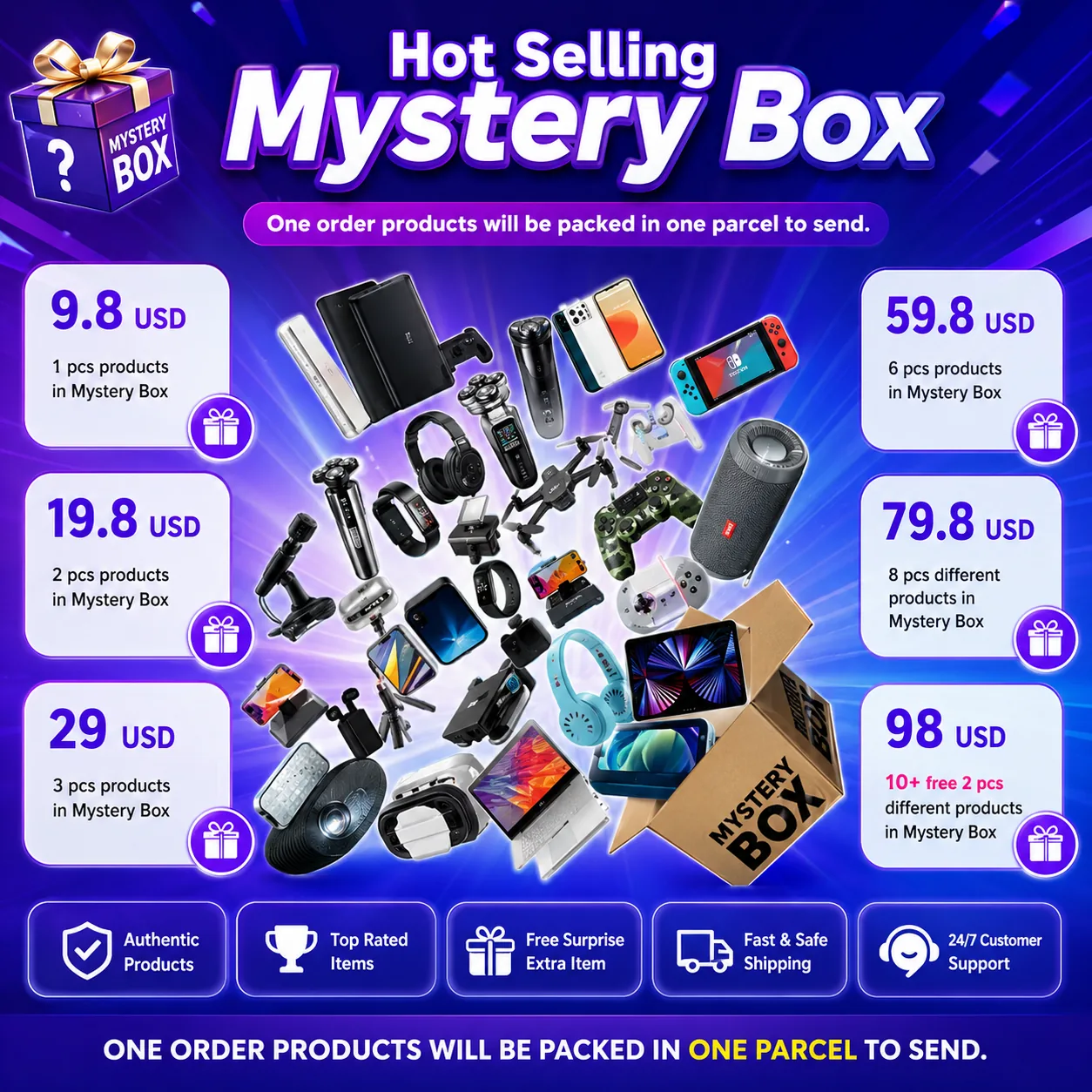
The three levers do not have equal room at every price. At the bottom of the range, after postage and packaging, the goods budget is so small that there is only one way to fill it: many cheap items from the cheapest source, or two or three small new ones. Two $12 boxes tend to resemble each other more than two $35 boxes do, simply because there is less budget to allocate differently. What that floor looks like is in cheap mystery boxes: what to expect under $20. The spread is widest in the middle. Between roughly $25 and $60 a seller can plausibly go new-and-few, refurbished-and-varied, or returns-and-many, and all three sell. This is the band where reading the levers matters most to you and where the same price tells you least. Above $100 the spread narrows again, for a different reason: the budget is now large enough for a single item to dominate, and the question shifts from "which lever" to "is there a headline item, and in what fraction of boxes". What should change at that level is set out in high-priced mystery boxes: what should change above $100.
The Fourth Variable: The Headline Item
Some boxes put one item worth a large share of the budget in a fraction of units, and fill the rest with low-cost items. That changes the shape of the box without changing the price or the average. Two boxes at $50 might each have $30 of goods on average. One puts $30 in every box as five decent items. The other puts $150 in one box in six and $6 in the other five. The second box produces better unboxing videos and worse typical experiences for you, and it is the structure behind most "chance to win" language. Why that structure sells so well, and the question it raises, is set out in why are mystery boxes so popular. If you want the typical box, avoid headline structures. If you want the lottery, know you are buying one, and know the average is unchanged by it.
Why a Fixed-Spec Product Does Not Have This Problem
An electronics project box, a kit with a listed bill of materials, has a price that maps directly to a specification, so two at the same price contain the same things; the comparison is in electronics project boxes vs electronics mystery boxes. A mystery box removes the list deliberately. That is the product. But removing the list does not remove the levers; it hides them, and you have to infer them from the page rather than read them off a spec sheet.
Which Column Should You Want?
Column A if you want things you will use, in a condition that will not need a fault report. You get fewer objects and a quieter unboxing. Column B if you like variety and are comfortable with refurbished goods; for accessories, the practical difference from new is usually nil. Column C if you are sorting for resale, parts, or the fun of the sort itself, and a dead item is a shrug rather than a complaint. The returns-lot version of this is explained in what is actually inside a box of returns. The one column nobody should want is the one they did not know they were in. Identify the lever before you pay, and the price stops being a surprise. Mewoo's tiers are all Column A by design: new stock, checked before packing, with the count in the product name, so the only lever you are choosing between is how many.
FAQ
Why do two mystery boxes at the same price contain such different things?
Because the seller chose the price tag first and then decided what could fit under it. Once postage, packaging, card fees, and margin come out, a fixed pot is left for goods, and it can be spent three ways: on where the items come from, on how many there are, or on what state they are in. Spend more on one and you get less of the others, so $30 honestly buys three new things or twelve untested ones.
Is a box with more items better value?
Only if what you want is quantity. With the price held still, every extra item makes each one cheaper, and cheaper items come from cheaper sources in rougher condition. Twelve things for $30 works out at about a dollar and a half of goods each once the seller's costs are covered. That is a fine box if you enjoy sorting through a pile, and a frustrating one if you were picturing a dozen new, working accessories.
Does the stated retail value tell me which kind of box it is?
No, and it frequently points you the wrong way. Twelve returned items can be labelled at a higher combined "value" than three new ones, because those notional prices get added up with no regard to where the goods came from or whether they work. Skip the headline total. What actually tells you the column is the source, the condition wording, and whether the seller says anything about testing.
How much of the price goes on shipping?
At the cheap end, a surprising share. Ground shipping inside the US starts near $8 at a post office counter and not much less at business rates, and the box, the payment fees, and the seller's margin stack on top. On a $15 listing, a few dollars are left for actual goods; on a $50 listing, the majority. That is why two cheap boxes look alike and two mid-priced ones can look nothing like each other.
What is a headline-item box?
A box built so that one expensive item lands in a small share of units and the rest of every unit is inexpensive filler. On paper the average can match a box that spreads the money evenly, but what you typically open is worse and what you occasionally open is far better. This is the engine behind "chance to win" listings. Buy it if you want a lottery; avoid it if you want a predictable handful of useful things.
Which type of box should I choose?
Start from what you will do with the contents. If you want items you will actually use and never have to complain about, take fewer new ones. If you enjoy a varied haul and do not mind refurbished, which for accessories is rarely different in practice, take the middle option. Take a high-count returns box only when sorting, spares, or resale is the point and a dead unit will not bother you. Just decide it on purpose.
Final Thoughts
Price is the constraint, not the description. Behind every $30 box sit three levers, source, count, and condition, sharing one goods budget, and a listing tells you one of them loudly while leaving the others for you to infer. Infer them before paying: high count at low price means a cheaper source or lower condition, "tested" means fewer items, and a headline item means filler around it. Then the price is simply what you agreed to.
Every Mewoo tier is new stock, checked before packing, with the count in the name, so the only lever left for you is how many: Triple Reveal Electronics Mystery Box (3 items) and Party Electronics Mystery Box (6 items). Compare every tier side by side on the electronics mystery box category page.
Compare boxes by count and condition →