Aesthetic-Led Mystery Boxes: Buying for Display, Not Use

Most advice about mystery boxes assumes you want to use what arrives. A whole segment of buyers does not. They want to look at it, photograph it, shelve it, and keep the packaging. If that is you, a cute mystery box or a kawaii blind box is judged on a different scale, one where a "useless" object can be the best thing in the box and a functional one the worst, and almost none of the usual buying rules apply.
Two Buyers, Two Definitions of a Good Item
Ask a practical buyer what made a box good and you get a use-rate answer: how many items were reached for within a month. Ask an aesthetic buyer and you get a display answer: how many items earned a place where they can be seen. Those answers can point in opposite directions. A well-made cable is a win for one and invisible to the other. A small ceramic figure with no function is a dud for one and the whole point for the other. Neither is wrong; they are buying different products under the same name. Which is why "is this box worth it" has no single answer for you. It has two, and the listing rarely says which buyer it is for; an aesthetic mystery box and a practical one can share a product page.
What Changes When Display Is the Goal
- Packaging is part of the product, so "open with care" replaces "test on arrival".
- Duplicates are judged on design, not function; a repeat colourway is a miss.
- Coherence across items matters more to you than the quality of any single one.
- Judge a seller by real photographs of past boxes, not by the adjective in the title.
Packaging is not disposable
For a practical box, the carton is protection and gets recycled. For you as a display buyer, the box, the inner tray, the printed card, and the sleeve are all things that can be kept, photographed, or shown. That reverses the first piece of standard advice: instead of opening to test, you open to preserve. Slit tape rather than tear it; keep inserts flat; do not discard anything until you know what it was for.
Duplicates are judged on design
In a functional box a duplicate is a second identical cable, dead weight, as covered in toy mystery boxes and electronics boxes follow different rules. In an aesthetic box the question is visual: two items in the same colourway or pattern read as a repeat even when the objects differ, and two different colourways of the same object read as variety. The seller's design range matters more to you than its product range.
Coherence beats quality
A shelf of cute blind boxes works when the items belong together: a palette, a character family, a material. One superb item that clashes with the rest is a worse outcome for you than five modest ones that match. That is the reverse of a practical box, where one substantial item can carry a box of accessories.

Reading a Listing Aesthetically
| Listing element | Practical reading | Aesthetic reading |
|---|---|---|
| Item count | How many usable things | How many shelf spots; often fewer is better |
| Category range | Which functions | Which palette or theme |
| Photos of past boxes | Marketing | Evidence of the seller's eye; the most useful element |
| "Cute" or "kawaii" | Decoration | A genre with its own conventions; check it is the right one |
| Condition | Does it work | Is the packaging intact |
| "Popular blind boxes", "new blind boxes" | Noise | A signal others will recognise the style, and that a series is current |
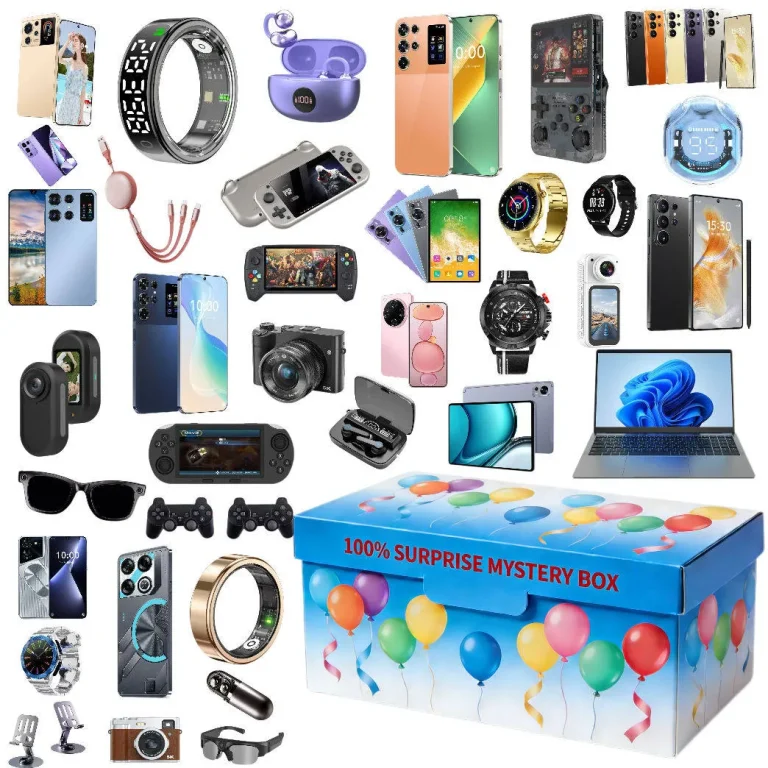
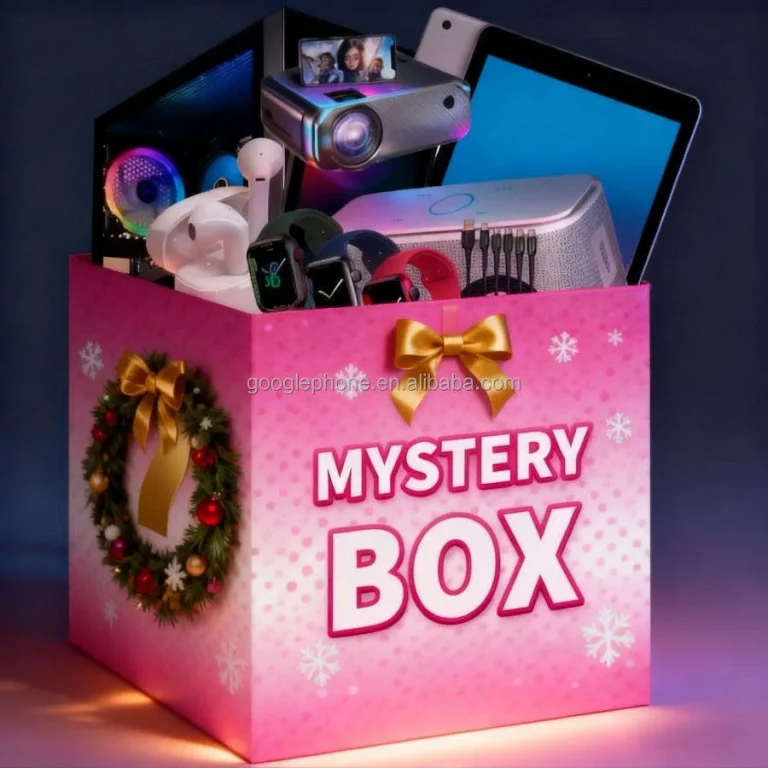
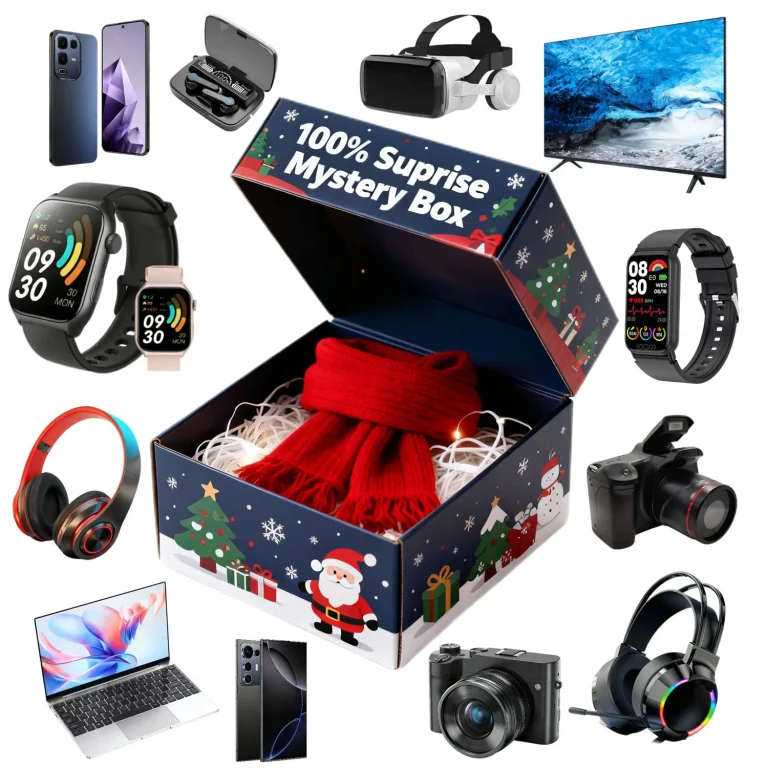
The photos row is the important one for you. For a practical box, pictures of previous boxes are marketing. For a display buyer they are the only reliable evidence of the seller's taste, and taste is what you are buying. A seller who shows real past boxes rather than a rendered collage is showing you the product.
Note: "Cute", "kawaii", "cool", and "aesthetic" are genres rather than compliments, and they do not overlap much. A box that is cute in one tradition, pastel, rounded, character-led, is not what a buyer of "cool blind boxes" wants, and a kawaii mystery box aimed at a collector of one style will miss a collector of another. Check the seller's past photos against your own shelf, not against the adjective.
Where Electronics Fit
An electronics assortment is mostly a practical product, but a slice of it is bought aesthetically: colourway-matched accessories, transparent or pastel cases, small desk objects, anything with a light. If that is what you are after, the questions that decide an electronics box are the ones that decide any display purchase: palette, packaging, and whether the seller's past boxes look like a set. Function still has to be there, because a desk object that stops working is a shelf ornament with a fault. But the ordering of priorities flips: match first, then works, then count. The tiers of what "tech" covers are in what "tech" covers on a mystery box listing, and for an aesthetic buyer the passive tier, stands, cases, cloths, is often the best part rather than the filler. Mewoo's women's 3-item box, weighted toward everyday-use accessories, is the closest thing on this site to that slice, and because every item is new and checked, the "works" half of the test is already done for you.
Presentation Is Doubled
A display buyer opens the box twice: once as a reveal, and again every time it is on the shelf. That makes two things unusually important to you. The reveal itself. Sequence, packaging, the moment the lid comes off. A kawaii surprise box benefits from the layered, deliberate opening described in how to present a mystery box so it reads as a real gift, because the opening is part of what is being enjoyed rather than a step before it. The afterlife. Where it goes, what it sits next to, whether it photographs well. A box whose contents have nowhere to be displayed has failed on its own terms, however good the items, which is the display buyer's version of the drawer problem.
Buying One Well
- Decide which buyer you are, or which the recipient is. The rest of the checklist depends on it.
- Look at past-box photos before anything else. If they look like a set you would keep, the seller has the eye; if not, no count or price fixes it.
- Prefer fewer, coherent items over more. Your shelf space is the constraint, not your budget.
- Ask about design variety. Whether repeat colourways are controlled across a box or across a series.
- Keep everything until you have seen it all. Packaging, inserts, cards. Open to preserve, not to test.
FAQ
What is an aesthetic or cute mystery box?
A box you buy for the shelf rather than the drawer: things to look at, photograph, and keep, with the packaging often part of the appeal. You judge it on colour, how well the pieces sit together, and how it opens, not on whether anything does a job. That is why a tiny figure with no purpose can be the star of the box, and a perfectly good charging cable can be the item you never notice.
Should I keep the packaging from a kawaii blind box?
Yes, and give yourself a week before deciding what to bin. Collectors routinely display figures in the sleeve or on the tray they came in, printed cards get pinned up, and a complete box with its inserts is worth more on the swap market than a loose figure. A pair of scissors and a flat surface are all you need: cut along the seam, lift rather than pull, and stack the flat pieces somewhere they will not curl.
Why do duplicates matter differently in a cute mystery box?
Because your eye, not the item's function, decides what counts as a repeat. Two quite different objects in the same pastel pink read as the same thing on a shelf, while the same object in two colourways reads as a pair. So the question worth asking a seller is not how many items are in the box but how they manage colourways across a box and a series; their design range matters more to you than their product range.
How do I tell if a seller has good taste before buying?
Scroll past the product page and go looking for unboxings: the seller's social feed, customer photos, review videos. What you want is several months of shipped boxes side by side. Do the colours hold together from one month to the next? Do the pieces share a scale? Would you put any two of them on the same shelf? Yes across a run of boxes means a seller with an eye. A single pretty listing image proves nothing.
Is a cool blind box the same as a cute one?
No, and mixing them up is how a lot of gifts go wrong. Think of them as music genres: someone who collects sparse, dark, streetwear-adjacent figures does not want a shelf of round pastel animals, however well made, and the reverse is just as true. Before you buy for someone else, look at what they already own and match the seller to that. Before you buy for yourself, be honest about which shelf the box is going to join.
Can an electronics mystery box be bought aesthetically?
Part of one can: matching-colour accessories, clear or pastel cases, small desk pieces, anything that glows. If that is your aim, reorder your priorities to match first, works second, count third, and treat the stands and cases that a practical buyer calls filler as the best part of the box. The one thing you cannot drop is the second priority, since a lamp that will not switch on decorates nothing, which is why a box checked before dispatch suits you.
Final Thoughts
Display buyers and use buyers are buying different products under one name, and almost every standard rule flips for the first: packaging is kept, duplicates are judged on design, coherence beats quality, and fewer items is often better. Decide which buyer you are, judge the seller by real past-box photos, and open to preserve rather than to test. Bought that way, the shelf fills with things that belong together.
If the slice you want is desk and everyday accessories that match, with the "works" half of the test already done: Women's Electronics Mystery Box (3 items) and Surprise Gift Box (3 items). Compare every tier side by side on the electronics mystery box category page.
See boxes by palette and category →