Blind Bags vs Blind Boxes: What the Packaging Changes for You
Blind bags and blind boxes are usually treated as the same thing in two shapes. They are not. The packaging decides the price band, the item size, whether the contents survive shipping, and, the part almost nobody notices, whether you can feel what is inside before you buy. If you have ever wondered why the cheap ones are always foil pouches, this is why, and it changes which format you should pick.
The Packaging Is the Product Decision
A rigid carton and a sealed foil pouch cost the manufacturer very different amounts, and that single difference cascades into everything you see on the shelf. A printed rigid box needs a die, a print run, and a fold-and-glue process. It arrives flat, gets assembled, and protects whatever goes inside. All of that is worth doing only if the item inside justifies the cost of the container. A foil or paper bag needs a print and a heat seal. It is far cheaper, far lighter, and offers almost no protection. It makes sense when the item inside is small, tough, and inexpensive. So the packaging is not a style choice made after the product. It is a decision that follows from the price point, which is why the two formats sort themselves so consistently across a shelf.
What Follows From the Format
- Bags sit at a lower price band because the container is cheap and unprotective.
- Bags can often be felt through the packaging; rigid boxes cannot.
- Boxes survive shipping; bags are designed for a shelf and a short journey.
- Buy the format that matches how you will open it, not the one that looks more generous.
Price band
Bags cluster at the impulse end: pocket money, checkout displays, party bags. Boxes start higher, because the packaging alone has already spent part of the budget. That has a counter-intuitive consequence for you. Per item, a bag often delivers more of your money into the contents, because less of it went into cardboard. Per unit of enjoyment, the box usually wins, because the item inside is larger and the unboxing is a ritual rather than a tear.
Whether you can feel the contents
This is the difference collectors care about most, and it rarely appears in comparisons. A soft pouch conforms to whatever is inside it. Shapes are detectable through the plastic, and in series where designs differ in silhouette, people sort through the bin before choosing. Manufacturers respond with tricks, uniform inner sleeves, filler, standardised blister trays, precisely because feeling defeats the format. A rigid box defeats it by construction. Every unit is the same size and weight regardless of contents, so there is nothing to feel. If genuine randomness matters to you, the box is the honest container and the bag is the one with a loophole.
Shipping survival
Bags are designed to hang on a hook and travel from shelf to bag to home. They are not designed to be posted alone, and they arrive creased, sometimes split, with the contents pressed flat. Boxes survive the post reasonably well, which is why online sellers favour them and why bags are usually bought in person or bundled inside a larger parcel.

Side by Side
| Blind bag | Blind box | |
|---|---|---|
| Typical price | Impulse, low | Higher, deliberate purchase |
| Item size | Small, tough | Larger, sometimes fragile |
| Can contents be felt? | Often yes | No |
| Survives posting alone | Poorly | Well |
| Packaging as part of value | None; discarded | Can matter to collectors |
| Typical buyer | Children, party bags, impulse | Collectors, gift buyers |
| Waste per item | Low | Higher |
The last row is worth noting because it runs against the usual instinct. A bag is a small amount of plastic; a box is printed board, often with an inner tray and a sleeve. Per item you receive, the bag is the lighter-footprint format by a clear margin.
Note: If you are buying for a party bag or a classroom, bags are the correct format and boxes are a waste of your money; the packaging ritual is lost in a group anyway. Buy the format that matches how the item will be opened, not the one that looks more generous on a shelf.
Why Electronics Never Come in Bags
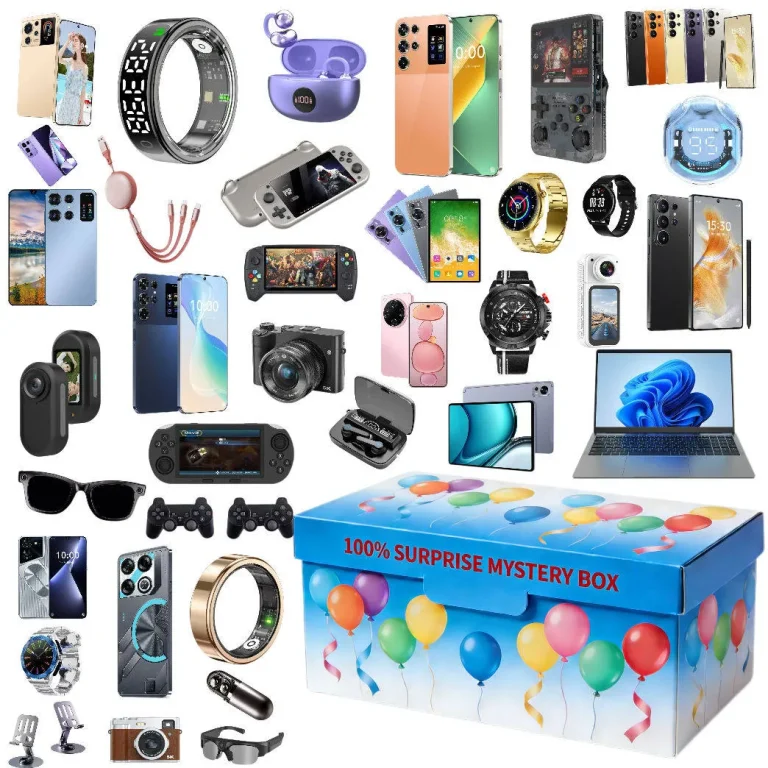
The format sorting explains something about the wider category too. Electronics accessories are bulkier, heavier, and more easily damaged than a small vinyl figure, and they are usually shipped to you rather than bought off a hook. Every one of those pushes toward a rigid carton. You will not find a foil-pouch electronics assortment, and the reason is logistics rather than presentation. It also means the "can you feel it" question never arises for a tech box, because there is a single outer carton holding several items rather than one sealed unit per item. What replaces it is the question of what the seller commits to putting inside, covered for Mewoo's own boxes in what you can expect inside: a stated count, a category range with two exclusions, and new items checked before packing.
Which to Buy
- Bags for children, parties, and small budgets. Cheap, light, and nobody mourns the packaging.
- Boxes for gifts. The container is part of the presentation, and tearing a pouch is not a reveal.
- Boxes if randomness matters to you. Uniform cartons cannot be sorted through by feel.
- Boxes for anything posted on its own. A bag arriving alone in the mail arrives flat.
- Bags if you are buying in quantity to redistribute. Less packaging to dispose of and less to pay for.
Where a series offers both, they usually hold different items rather than the same items in different wrappers; the bag line tends to be a smaller, simpler version of the box line. Check the roster before you assume the cheaper format is the same product.
A Third Format Sits Between Them
Worth naming because it appears constantly and confuses the comparison: the sealed inner bag inside a rigid outer box. Here the figure is wrapped in an opaque foil pouch, and that pouch then sits inside a printed carton. It looks like over-packaging and it is doing a specific job for you: the outer box carries the branding and survives shipping, while the inner bag hides the shape from anyone who opens the carton without buying. This is the format serious collectible series converged on, and it tells you the manufacturer has thought about the sorting problem rather than ignoring it. If you see it, the odds you are being quoted are more likely to be the odds you actually face. The trade is waste. You are now disposing of two layers per item instead of one, which is the cost of making the randomness genuinely hold.
The Sorting Problem Is Worth Understanding
One last point, because it explains a lot of shop behaviour. When contents can be identified through packaging, the units left in the bin are the ones nobody wanted. Someone has already been through, found the rare design, and left the rest. Arriving late to a bag display is measurably worse for you than arriving early, and the display looks identical either way. Rigid boxes remove that entirely, which is why serious series moved toward them. If you are buying bags and care about the odds, buy from a freshly stocked display or buy online where nobody has handled the stock, the same logic that makes a sealed case attractive, explained in completing a blind box set. How the two words themselves differ from "mystery box" is in blind box vs mystery box.
FAQ
What is the difference between a blind bag and a blind box?
The wrapper, and everything the wrapper drags along with it. A bag is a heat-sealed pouch that costs pennies to make, so it holds something small and tough and sells at pocket-money prices. A box is a printed carton that costs real money to produce, so it holds something bigger and sells for more. Manufacturers do not choose the format for looks; the price of the item decides the container, and you can read the price band from the shape.
Can you feel what is inside a blind bag?
Very often, yes, which is the single most useful thing to know before you buy one. A pouch takes the shape of whatever is in it, so in a series where the designs have different outlines, patient fingers can find the rare one before paying. Makers fight back with identical inner sleeves and padding, but only a rigid carton solves it completely, because every box weighs and measures the same no matter what it holds.
Do blind bags survive being posted?
Badly, if a bag travels by itself. It was made to hang on a hook, ride home in a shopping bag, and be torn open the same afternoon, not to sit in a sorting office under heavier parcels. What you tend to receive is a creased pouch, sometimes split, with a squashed item inside. A carton, by contrast, shrugs off the same journey, which is the whole reason it is the format you meet when ordering online.
Which format gives better value?
It depends what you are measuring. If you count only what ends up in your hands, the bag is ahead: hardly any of its price went on the wrapper. If you count the pleasure of opening it, the box is ahead: the item is bigger and a lid is an event where foil is not. There is no overall winner, so decide how it will actually be opened, alone or at a party, and buy the format that suits.
Why do electronics boxes never come in bags?
Weight, bulk, and fragility. A pair of earbuds, a charging cable, and a phone stand together are heavier and more breakable than a small vinyl figure, and they are nearly always shipped to your door rather than sold off a peg, so a foil pouch would never get them there intact. That is why every electronics assortment you will see comes in a rigid outer carton, and why the question of feeling the contents never comes up for them.
Does it matter when I buy from a bag display?
More than the display lets on. If the shapes can be felt through the packaging, somebody has probably already worked through the bin, pulled out the rare design, and put the rest back, and a picked-over display looks exactly like a fresh one. So if the odds matter to you, buy from a display that has just been restocked, or order online from stock nobody has handled, and leave the tempting half-empty bin at the checkout alone.
Final Thoughts
The container is not decoration: it sets the price band, the item size, and whether the format's randomness actually holds. Buy bags for children, parties, and quantity; buy boxes for gifts, for posting, and whenever you want the odds to be real. And if you are buying bags off a shelf, get there before everyone else has felt their way through it.
If what you want is a rigid carton with the contents committed to in writing rather than felt through foil: Triple Reveal Electronics Mystery Box (3 items) and Party Electronics Mystery Box (6 items). Compare every tier side by side on the electronics mystery box category page.
See how the terms differ →