Buying Mystery Boxes in Bulk: What Changes at Quantity
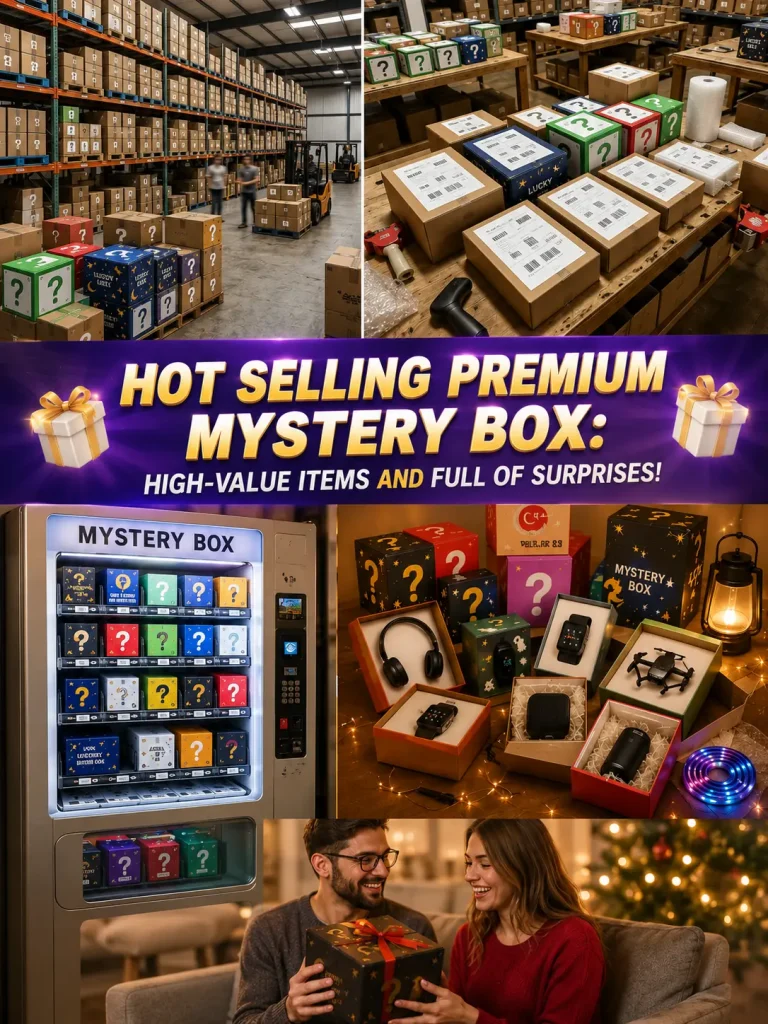
Buying thirty mystery boxes is not buying one box thirty times. Carriage, terms, and, least obviously, the behaviour of randomness itself all change once you order in quantity. Two of those work in your favour. And a 2025 customs rule change removed a trick that used to work and made one consolidated shipment the only sensible shape for a cross-border order. This guide shows you what changes and whether bulk suits your event, team, or shop.
Three Things That Change for You
- Carriage is charged per parcel, so consolidation is where most of your saving is.
- Since 29 August 2025, US imports at or below $800 no longer enter duty-free, so splitting orders no longer helps you.
- Across many boxes the randomness averages out, which changes the question you should ask.
- If you resell, do not buy consumer boxes at retail; ask for a reseller quote and sample first.
Most people ordering in quantity think about one of these and miss the other two. Carriage is the obvious one, and the largest single saving available to you. Terms are the second: at quantity you can ask for things an individual buyer cannot, and sellers will often agree. Variance is the least obvious and the most interesting. For one box, randomness is the product. For thirty, it largely cancels out, which changes the right question entirely.
Carriage Is the Obvious One
Postage is charged per parcel rather than per item, which is the whole basis of bulk pricing in this category. Thirty boxes shipped individually pay carriage thirty times. The same thirty consolidated into one shipment pay it once, plus a weight increment that is far smaller than twenty-nine separate handling charges. This is also why free-shipping thresholds exist at all, and why hitting one is usually the honest version of that offer; the reasoning is in what free shipping really means.
The saving is real enough to change what you can afford per box, and that matters more than it sounds: the money you release by consolidating carriage is best spent on a higher tier rather than on more boxes. You will see why in a moment.
The Rule Change That Killed Splitting Orders
There used to be a counter-strategy for cross-border orders, and it no longer works. If you last bought in bulk before autumn 2025, this is the section to read. US Customs and Border Protection, implementing Executive Order 14324 of 30 July 2025, states that from 29 August 2025 de minimis duty-free treatment is no longer available for shipments entering the United States, including those arriving through international mail. Goods from all countries valued at or below $800 are now subject to all applicable duties, taxes, and fees.
Before that, splitting a large order into parcels each under the threshold could bring goods in duty-free. That advantage is gone. Non-postal shipments must now be filed under an appropriate entry type, which is a job for a broker or the seller rather than for you. Three things follow for your order:
- Consolidate. With the duty advantage of splitting removed, many small parcels now cost you more in every dimension.
- Budget for duty separately. It is assessed on declared value and is yours to pay, whoever arranged the carriage.
- Ask who files the entry. On a bulk order this is a real question with a real cost attached, not a formality.
The general mechanics of a cross-border order are in shipping an electronics mystery box from China.
Randomness Behaves Differently at Quantity
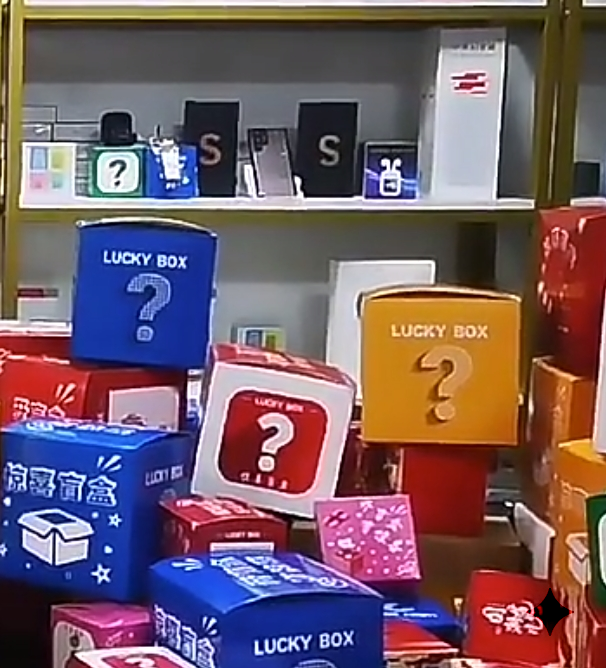
This is the part worth thinking about properly, because it changes which questions are worth your time. Buy one box and you get one draw. The spread between a good outcome and a poor one is the entire experience, and no research narrows it. Buy thirty and you get something close to the seller's average assortment. Individual boxes still vary, but the aggregate converges: you will receive roughly the mix the seller actually packs, including its duplicates and its weak spots.
| One box | Thirty boxes | |
|---|---|---|
| What you are buying | A single draw | The seller's average |
| Duplicates | Unlikely to notice | Certain, and visible |
| A weak box | Ruins the purchase | Absorbed by the rest |
| Right question | "What might I get?" | "What is in a typical box?" |
| Best use of your budget | Whatever suits you | Higher tier, fewer units |
That last row is the practical conclusion. Since variance stops protecting you at quantity, the average box is what you are buying, and a higher tier raises the average. Thirty cheap boxes deliver you thirty samples of the cheap assortment.
Note: Ask for a photograph of a recently packed box rather than the listing image. At quantity this is a reasonable request and sellers often agree, because your order is worth accommodating. It tells you more about the average than any category list will, and it is the single cheapest piece of due diligence you can do.
What You Can Ask For That an Individual Cannot
Sellers treat volume enquiries differently, and you should use that rather than simply asking for a discount.
- Deliberate variety. Ask that duplicates be spread across boxes rather than concentrated. It costs the seller nothing and materially improves a giveaway.
- A stated floor. Not "what could be inside" but the minimum each box will contain. This is the most valuable concession you can get.
- Testing confirmation. Whether every unit is checked, and what happens to the failures.
- Consolidated shipping with the duty position stated. One shipment, with duty set out up front rather than arriving as a surprise.
- Replacement terms in quantity. With thirty boxes, some failures are near-certain. Agree the process before ordering, not after.
Point five is the one people forget. At one box, a fault is an incident. At thirty, it is a statistical certainty, and the seller's answer is part of the price you are paying. Mewoo asks for exactly this kind of brief on its bulk mystery box orders page: destination, quantity, budget, categories, acceptable condition, test needs, and packaging, so that the quote you get back is one you can act on.
Who Bulk Actually Suits
Three situations where it works well for you, and one where you need a different route.
- Events and giveaways. Variety is the feature, duplicates across different recipients are invisible, and nobody compares contents.
- Team or office gifting. Everyone opens the same format at once, which removes the comparison problem that ruins a mixed exchange.
- Countdowns and prize draws. Where the box is an input rather than the gift itself.
- Reselling the contents. This one only works through the reseller route, not the shop. If you buy consumer boxes at the retail price and try to sell the contents, you are buying at retail to sell below it, on goods you did not choose, after fees. That is the trap. A reseller quote is a different pipeline with a different price basis, and it is covered below.
The common thread in the three that work is that per-item resale value is irrelevant. Bulk buying from the shop makes sense when you need quantity and variety, not margin.
If You Are a Reseller
If you run a shop, a marketplace store, or a live-selling channel, you are the buyer Mewoo hears from most, and the honest position is this: no supplier can promise you a margin, and any that does is selling you the promise rather than the goods. What you can do is buy the way a reseller should. Start with the sales channel, because a market stall and a marketplace listing need different boxes. Work out your landed cost per item including shipping, duty, platform fees, testing time, and returns. Decide how much transparency you need, whether a full manifest, a category list, or a true mystery format, since that changes the price. Then place a small first order and measure it before you commit to volume.
That process is set out on mystery boxes for resellers, and the first step is a sample or a quote through request a sample or custom quote. If your channel wants full manifests and pallet volumes, the comparison with buying goods by the pallet is in mystery box vs liquidation pallet.
FAQ
Is buying mystery boxes in bulk cheaper?
Per box, usually, but not for the reason you might expect. The discount on the goods is small; the saving comes from paying one shipping charge instead of thirty. Once you have that saving in hand, resist the urge to turn it into more boxes. Put it into a better tier instead, because at quantity you are going to receive the seller's typical box thirty times over, and a better typical box is what you actually want.
Can I split an order to avoid customs duty?
Not into the US any more. The under-$800 duty-free allowance ended on 29 August 2025 under Executive Order 14324, and it now applies to postal parcels as well as courier shipments. Every parcel you split off pays its own duty and its own carriage, so splitting costs you twice. Ship as one consignment, ask the seller who files the customs entry, and put the duty in your budget from the start.
Will I get duplicates across the boxes?
Yes, and at thirty boxes you will be the one person who sees them all laid out. Individual recipients will not. What you can do is ask the seller to distribute repeats across boxes rather than letting three of the same speaker land in one carton. Most sellers will agree for a volume order because it costs them nothing, and it makes a noticeable difference to how a giveaway feels.
What should I negotiate on a bulk order?
Start with a minimum per box in writing, not a list of possibilities. Then confirm every unit is tested, ask for repeats to be spread out, get the shipping consolidated with the duty position stated, and agree what happens when a unit is dead on arrival. That final point is the one to insist on, because with thirty boxes a failure or two is not bad luck, it is arithmetic, and you want the fix agreed before you pay.
Does buying in bulk make the boxes less of a surprise?
For you, yes, and you should accept that going in. Laying out thirty boxes shows you the pattern behind the randomness in a way no single buyer ever sees. For the people you hand them to, nothing changes. Each of them gets one sealed box with no idea what is inside, which is the experience you bought on their behalf. Your loss of surprise is the price of their keeping it.
Can I buy in bulk and resell the contents?
Not by buying shop boxes at the retail price; the numbers do not work once you add fees and a second round of shipping. If you resell, use the reseller route instead: send a brief with your channel, destination, quantity, and the condition and manifest level you need, get a quote on that basis, and test it with a small first order. No margin is promised there either, but the price basis is one you can build a listing on.
Final Thoughts
Consolidate rather than split, because the duty advantage of small parcels ended in August 2025 and many separate shipments now cost you more in every direction. Spend the carriage saving on a higher tier rather than more units, since at quantity you are buying the seller's average rather than a draw. Agree the replacement process before ordering, because failures stop being hypothetical. And if you resell, go in through the quote route, not the shop.
For a small reseller order, the quote route is the one to use: Bulk Mystery Box for small resellers and Big Reveal Electronics Mystery Box (8 items). Compare every tier side by side on the electronics mystery box category page.
Below the reseller listing, the largest single-buyer counts are: Cloud Nine Electronics Mystery Box (9 items) and Perfect Ten Electronics Mystery Box (10 items).
Request a bulk quote →