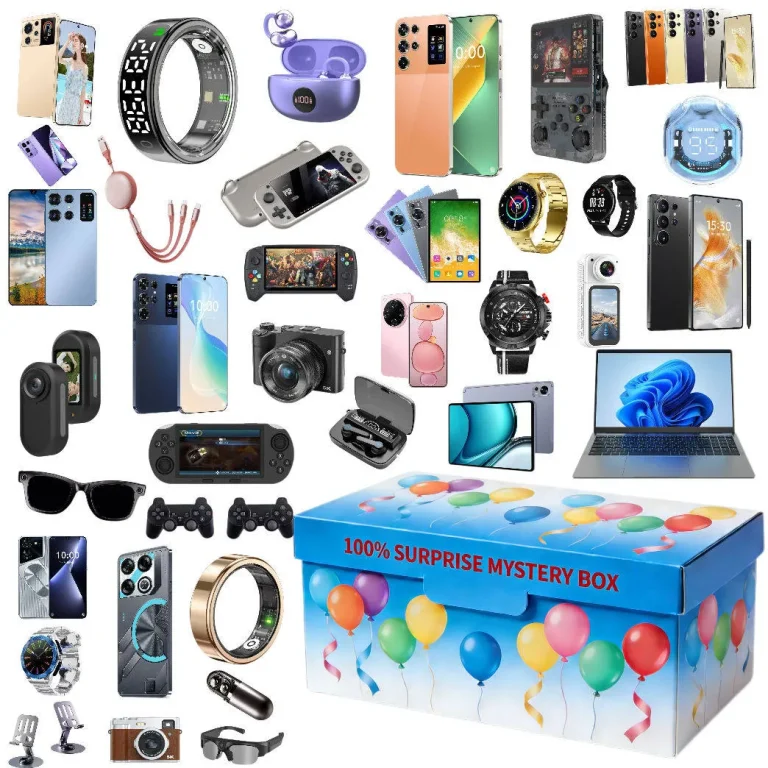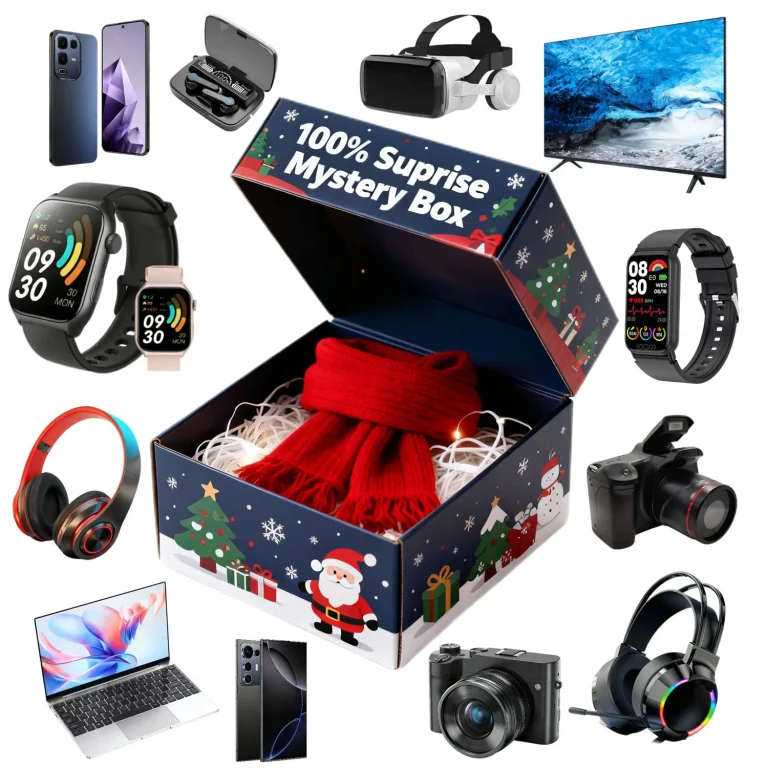
Lucky Box vs Mystery Box: What the Name Actually Changes
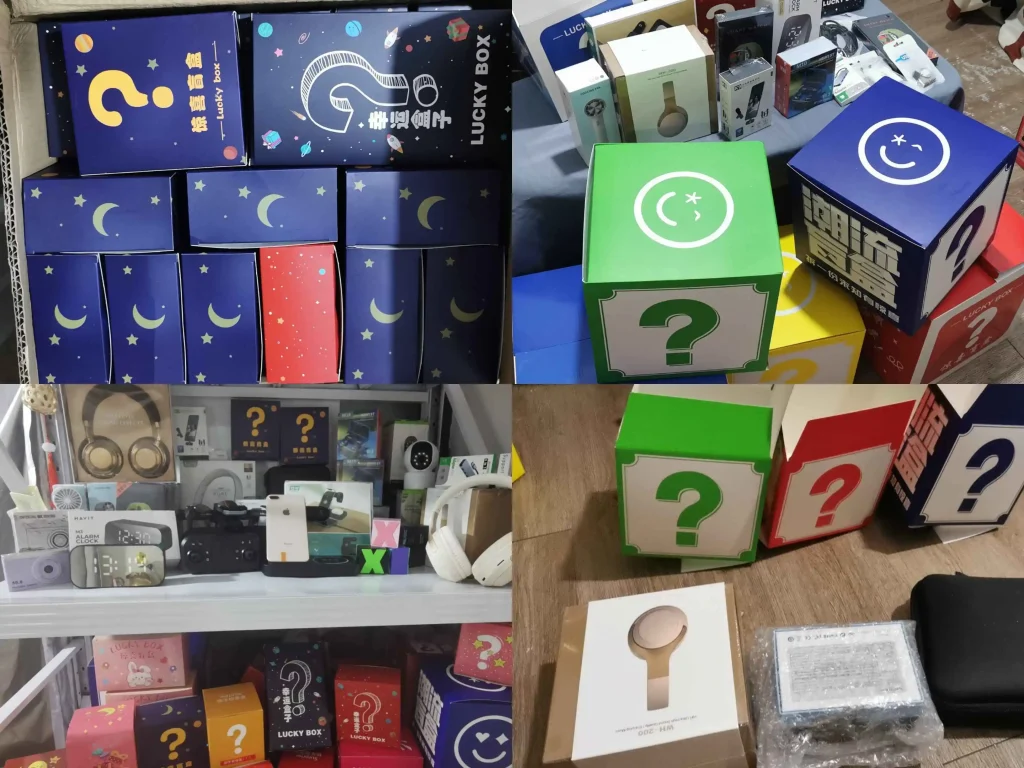
Lucky box, mystery box, surprise box, blind box. Four names for a sealed container of things you have not seen, used more or less interchangeably by sellers who mean slightly different things by them. One of the four has a real history behind it and one has an actual technical meaning. The other two are marketing. Knowing which is which saves you comparing two listings that are not comparable, and tells you what to read instead of the name.
Four Words, One Object
Search any of these terms and you will find the same category: a sealed parcel sold on the promise that the contents are unknown until you open it. Sellers pick between them by instinct rather than by rule. The same warehouse will ship a box labelled "lucky box" to one marketplace and "mystery box" to another, with identical contents inside. That is not deception; it is search behaviour, because different buyers type different words.
So the first thing for you to know is the least satisfying: the label on the outside tells you very little about what is inside. But it does tell you something about where the format came from and what the seller is trying to emphasise, and one of the four words carries a genuine distinction you can act on.
Where "Lucky Box" Actually Comes From
- "Lucky box" descends from the Japanese fukubukuro, a New Year lucky bag.
- The tradition began as stock clearance and inverted into premium curation. Both versions are on sale today under the same words.
- Only "blind box" carries a technical meaning; the other three are positioning.
- Whatever the name, read the item count, condition, category range, and fault process.
The lineage runs through Japan. Fukubukuro, from fuku, luck, and bukuro, bag, are New Year lucky bags, and they are the direct ancestor of everything sold to you today as a lucky box. The BBC's account of the tradition is blunt about the origin: lucky bags started as a way for Japanese department stores to get rid of old stock at the start of the year, with one version placing the beginning in the 1900s. The mechanism was simple and is still the mechanism. Concealment lets a retailer sell surplus at a discount without publishing that discount, and you accept uncertainty in exchange for a lower price.
Here is the part that matters for you shopping today. The same reporting notes that lucky bags are no longer filled with random leftovers; they are typically stacked with premium items that would cost significantly more bought separately. So the tradition ran in both directions within a century: it started as a way to dispose of what would not sell, and became a way to sell desirable goods at a deliberately generous ratio, because the format itself became the draw. That inversion is the single most useful thing to know about this category, because both versions are on sale right now, under the same words. Some sealed boxes are clearance. Some are curated at a genuine discount. The label cannot tell them apart for you.
The One Thing the Tradition Genuinely Carries
A fukubukuro is not a product line. It is an event. Sales open on 1 January, run for roughly the first week or until stock is gone, and quantities are limited, which is why people queue for hours. Scarcity and a fixed date are not decoration on top of the format; they are the format. That gives you a small but real test. A seller offering "lucky boxes" continuously, all year, in unlimited quantity, has borrowed the word and not the thing. There is nothing wrong with that; a permanently available assortment is a perfectly reasonable product. But it is a different purchase from a limited seasonal drop, and you should not price or judge it as if scarcity applied.
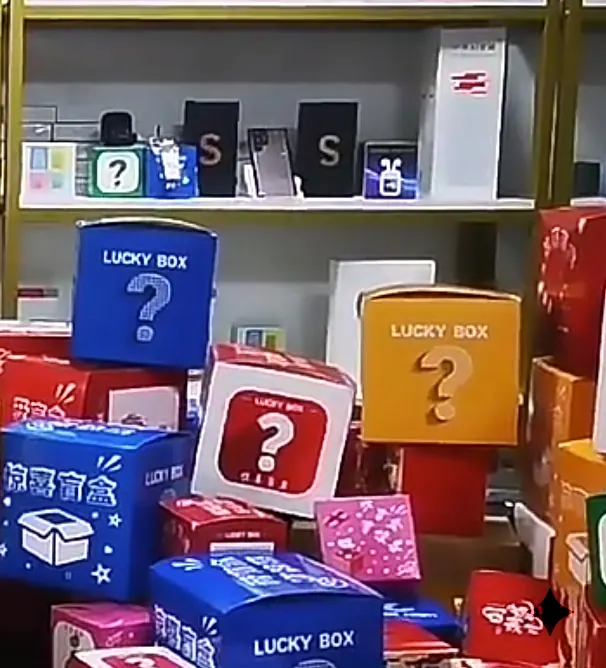
What Each Word Is Emphasising
| Term | What it points you at | Origin | Technical meaning? |
|---|---|---|---|
| Lucky box | Your chance of doing well out of it | Japanese fukubukuro, New Year | No |
| Mystery box | The concealment itself | General English retail usage | No |
| Surprise box | The moment of opening | Gifting language | No |
| Blind box | Buying without seeing, from a defined series | Collectible toy retail | Yes |
"Lucky" points at outcome, which is why it sits most naturally on boxes sold as a bargain. "Mystery" points at the seller's withholding of information. "Surprise" points at the recipient's experience, which is why it dominates gift listings. Each is doing marketing work on you, and none of them constrains the contents.
Only One of the Four Means Something Specific
Blind box is the exception, and it is worth separating out properly. In collectible toy retail, a blind box is one sealed unit drawn from a defined series, usually with published or implied ratios and often a rare variant. You know the full list of what could be inside; you do not know which one you have. That structure supports collecting, trading, and chasing a specific figure. A mystery box makes no such promise. There is no fixed series, no published list, and no defined draw. Two boxes from the same seller can contain entirely different things without either being wrong. The distinction changes what a duplicate means to you, what "odds" could possibly refer to, and whether trading is a sensible plan. It is set out in full in blind box vs mystery box.
Note: Because "lucky box" carries the strongest suggestion of winning, it attracts the loosest claims. Treat any implied jackpot the same way you would treat a retail-value figure: as a marketing statement rather than a commitment. What a seller actually owes you is the item count, the condition, and the category range, and a "lucky" box that states none of the three is asking you to buy the adjective.
What to Read Instead of the Label
Whatever the box is called, four facts decide whether it is a reasonable purchase for you, and all four are usually available before you pay. Item count: how many things, stated as a number rather than as "several". Condition: new, used, refurbished, or untested are four different products at four different prices. Category range: which shelves the contents can come from, and, just as usefully, which they cannot. What happens if something is faulty: the process, and the window it runs in.
A listing that gives you all four is being straightforward regardless of what word is printed on the carton. One that gives you none of them is asking you to buy the word. Mewoo's own answers to the first three sit in what you can expect inside, and the category itself is defined in what an electronics mystery box is. You will notice Mewoo uses "blind box" and "mystery box" on different tiers for search reasons; the count and condition are stated on every one.
Where the Naming Does Matter to You
Two practical places, both about search rather than about product. Finding things. If you only search one term you will see a fraction of the market. Sellers optimise for one word and not the others, so the same price band can look very different depending on which one you typed. Searching two or three of them is a ten-second habit that widens your comparison set considerably. Comparing prices. Because the words attract different sellers, they also attract different price expectations. "Lucky box" listings skew cheaper and lean on the bargain framing inherited from the clearance era. "Premium" and "luxury" listings avoid the word entirely. If you compare across terms rather than within one, you will see that spread rather than assuming your first search showed you the whole range. Neither is a reason to prefer one word. They are reasons not to treat a single search as the market.
FAQ
Is a lucky box the same thing as a mystery box?
For your purposes, yes. The two names are chosen for who is searching, not for what is packed, and one supplier will happily print both on identical boxes. "Lucky" nudges you to think about winning; "mystery" nudges you to think about the secret. Neither word tells you how many items you get, what state they are in, or which shelves they came from, so go straight past the name to those three facts.
Where does the term "lucky box" come from?
From the Japanese New Year lucky bag, the fukubukuro, which department stores began selling in the early 1900s to shift leftover stock before the new year. The BBC's history of the custom traces it from that clearance origin to the queues that form outside stores every 1 January today. Everything sold to you online as a lucky box is borrowing that name and, usually, only the name.
Does a lucky box mean better value than a mystery box?
No, however much the word implies it. The bargain association is a hangover from the days when lucky bags were clearance stock, and it binds today's seller to nothing. The odd twist is that the Japanese original went the other way over time and became a premium bundle worth more than its price. You will meet both the clearance kind and the curated kind under the same label, so judge the listing, never the word.
Is a blind box different from a lucky box?
Yes, and it is the only real distinction in this whole vocabulary. A true blind box gives you one sealed item from a published series with known possibilities and often a rare chase variant, which is why collectors trade and swap. A lucky box or mystery box gives you an assortment with no series and no list behind it. That difference decides whether a repeat item is a spare or a tradeable, and whether "odds" mean anything at all.
Should I search for all four terms?
Yes, whenever you are comparing prices. Each seller picks one word to build their listing around, so one search shows you one slice of the market. Running the same query with "lucky", "mystery", "surprise", and "blind" takes you half a minute and usually turns up a wider spread of prices and sellers, particularly at the top end, where nobody wants the word "lucky" on their packaging.
Are lucky boxes only sold at New Year?
The originals were and still are: they go on sale on 1 January, run about a week, and are made in fixed quantities, which is where the queues come from. An online shop offering lucky boxes every day of the year has taken the name and left the scarcity behind. That is a perfectly good product to buy, but you should judge it as an always-available assortment, not as a limited drop worth rushing for.
Final Thoughts
Lucky, mystery, and surprise are three ways of pointing at the same sealed carton, and only blind box means something specific. The word tells you what the seller wants you to notice, not what you will receive. Read the item count, the condition, the category range, and the fault process instead, and search more than one term before deciding what the market costs you.
Whatever the name on the listing, these are sold with the item count stated: Electronics Blind Box (1 item) and Electronics Blind Box (3 items). Compare every tier side by side on the electronics mystery box category page.
The same format is listed at higher counts as well: Electronics Blind Box (6 items) and Electronics Blind Box (8 items).
See box sizes and counts →