Provably Fair and Other Fairness Claims: What They Mean for a Physical Box
"Provably fair" sounds like the strongest guarantee you can get in this category, and on a virtual unboxing site it genuinely means something specific. On a physical box it usually means nothing at all, not because the seller is lying, but because it answers a question a physical box never asks. This guide shows you what each fairness claim proves, which one applies to your product, and what to check instead.
Three Different Claims, Often Confused
Fairness language in this market comes in three forms, and they are not interchangeable. Published odds are a stated probability of receiving each outcome, such as one in seventy-two. Provably fair is a cryptographic method that lets you verify a specific draw was not manipulated after you committed to it. Stated terms are a written commitment about item count, condition, and category range, with no probability involved.
The first two belong to products built around rarity. The third belongs to products built around quantity. Applying the wrong one is how you end up reassured by a claim that does not cover what you were worried about.
What "Provably Fair" Actually Proves
- Provably fair verifies the draw, not the prize pool. The shuffle can be honest and the deck can still be poor.
- It requires a published pool, published odds, and a verifiable random algorithm, none of which exist for a box packed before shipping.
- Odds matter only where some buyers get materially better outcomes than others.
- For a multi-item physical box, fairness is whether the count, condition, and category promise is written down and honoured. You can check that yourself.
The mechanism
Virtual unboxing platforms that use the term publish their prize pool, the probability attached to each item, and the algorithm that produces the result. The verification works by committing to a random value before your draw and letting you check afterwards that the outcome matched that commitment. That is a real protection against one specific risk: the operator changing the result after seeing what you would have won.
What it does not cover
It says nothing about whether the pool was worth entering. A pool can be verifiably drawn and still be composed almost entirely of low-value items. The maths proves the shuffle was honest; it does not comment on the deck. So on a virtual platform, provably fair is necessary but not sufficient, and you still have to read the pool and the odds.
Why it does not transfer to a physical box
A physical box is packed before it ships. There is no live draw, no commitment value, and no moment at which an operator could alter your outcome after seeing it. There is nothing for the cryptography to verify. If a physical seller advertises provably fair, treat it as borrowed vocabulary rather than a claim with content behind it. The honest equivalents are elsewhere, and they are the ones you can check.
When Odds Are the Right Question for You
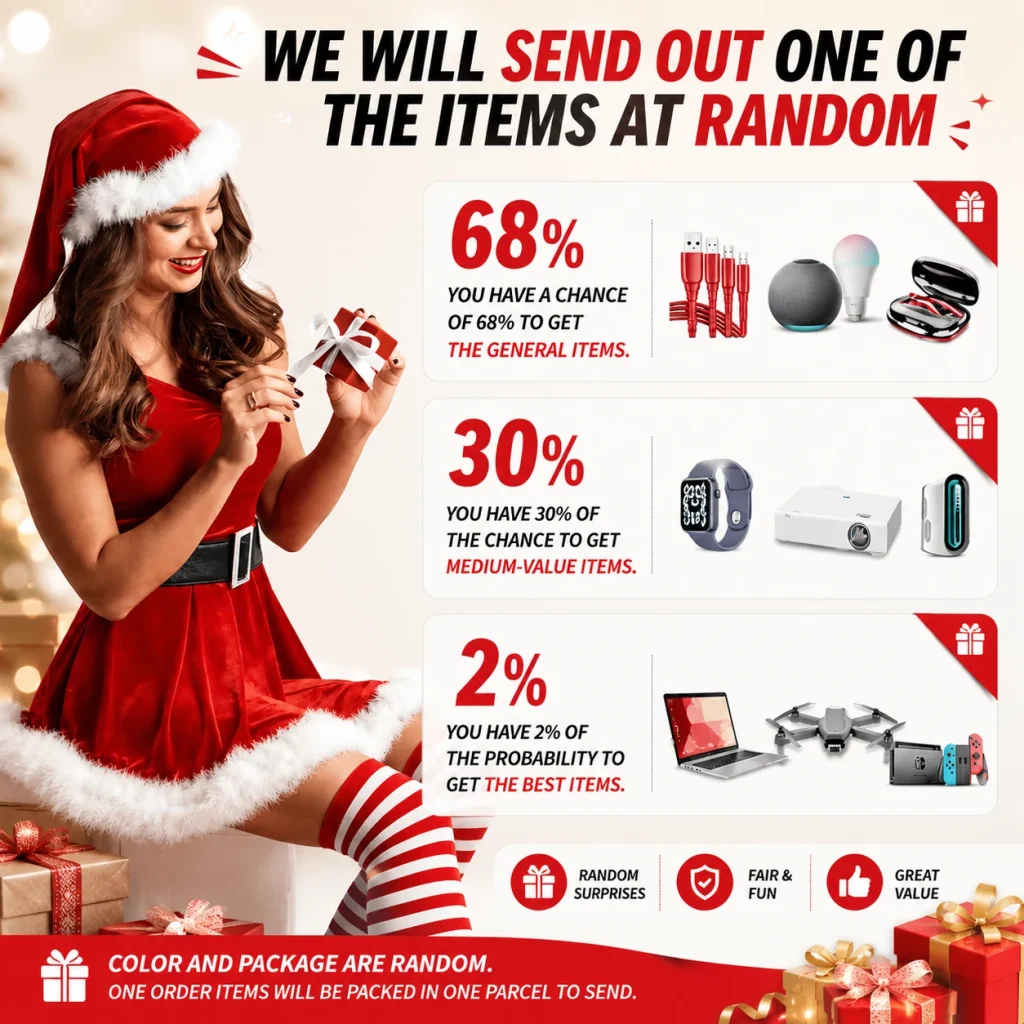
Odds matter when a product is deliberately built so that some buyers get materially better outcomes than others. That is the structure of collectible blind boxes, where a series has regular designs plus a rarer secret one, and the published ratio for that secret is the number doing the work.
The regulatory conversation has followed exactly that structure. The US Federal Trade Commission's loot box workshop recorded criticism of paid randomised items that fail to disclose the chances of rewards of differing value, and the industry has since moved toward stating those odds at the point of purchase. Singapore's Ministry of Home Affairs said in February 2026 that it would regulate the conditions under which blind boxes may be offered, with standardised odds disclosure among the points under consideration.
Note: A rarity claim without a denominator is marketing, not odds. "Chance at a premium item" tells you nothing; "one in seventy-two" tells you something you can act on. If a seller names a rare outcome but not its frequency, the number they left out is the one that matters to you, and you should ask for it before you pay.
What Fairness Means for a Quantity-Based Box
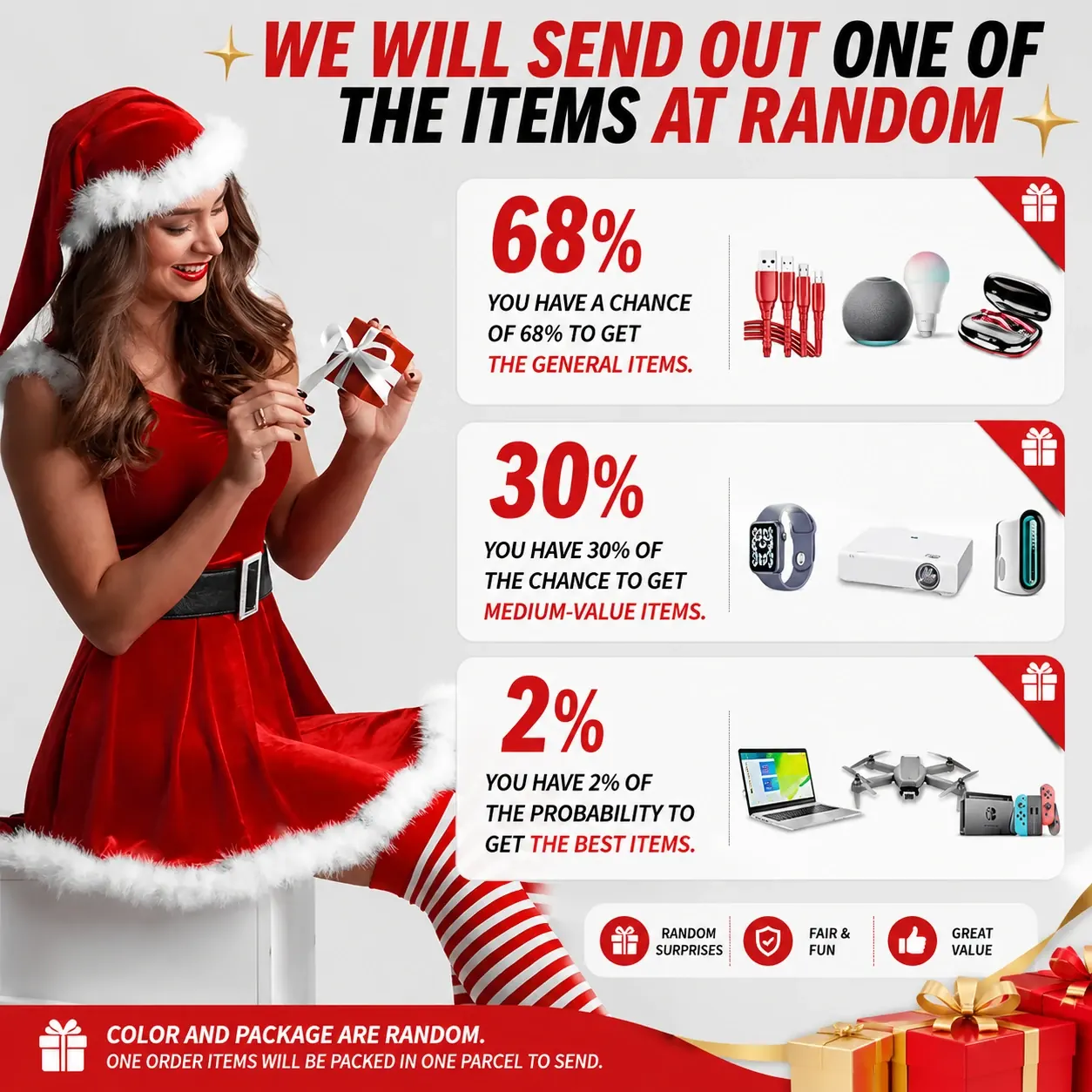
Now the useful part for most electronics buyers. If a box contains several items and no rarity tiers, then every buyer at a given tier receives a comparable set. There is no better outcome for you to miss, which means there is no probability to disclose. Fairness in that structure is a different thing entirely: it is whether the fixed part of the promise is written down and honoured.
| Product structure | Your fairness question | Evidence to ask for |
|---|---|---|
| Virtual draw platform | Was my draw manipulated? | Published pool, published odds, verification method |
| Collectible blind box | How rare is the item I want? | Series lineup and printed ratio |
| Multi-item physical box | Will I get what was promised? | Item count, condition, category range, exclusions |
That last row is where most physical electronics boxes sit, including the one you are probably looking at. Mewoo publishes its range and limits in what you can expect inside, and describes how contents are assembled in box curation and value control.
How to Read a Fairness Claim
Match the claim to the structure
Ask first what kind of product you are looking at, then check whether the claim fits it. A provably fair badge on a shipped box, or a published odds table for a product with no rarity tiers, both signal that the language was chosen to reassure you rather than to inform you.
Look for the denominator
Where odds are claimed, they should be numbers. Ranges are acceptable; adjectives are not. Independent commentary on the collectible market notes that manufacturers' labelling of probabilities is inconsistent and largely unregulated, so the presence of a printed ratio is itself a signal about the seller.
Watch for odds that describe the wrong thing
Even where a probability is published, check what it is a probability of. A ratio attached to one headline item tells you how often that item appears, and nothing about the other outcomes. A series that names a secret at one in a hundred has told you about roughly one per cent of its output and left the other ninety-nine unexplained. The more useful disclosure is the full lineup, because it bounds every outcome. When a seller publishes only the rare figure's ratio, they have answered the exciting question instead of the important one.
Check what is fixed, not what is possible
For a quantity-based box, the entire fairness question reduces to whether the seller committed to something checkable and then met it. Count the items when your parcel arrives. Compare the condition against the wording. That is a verification you can actually perform, unlike any cryptographic claim on a sealed carton. The broader seller checks in are mystery boxes legit apply here too, and how we prepare your mystery box sets out one seller's process end to end so you can see what a checkable promise looks like.
FAQ
Does "provably fair" mean a mystery box is trustworthy?
Only in one narrow way, and only on a virtual site: it lets you confirm after the fact that your particular draw was not rigged. It tells you nothing about whether the prizes were worth playing for, and it has no meaning on a box that was packed and taped before you ever ordered. Read it as a note about process, then go and judge the prize pool on its own.
Should a physical mystery box publish odds?
Only when the box is built so that a lucky buyer gets something much better than an unlucky one, as with a collectible series and its hidden figure. If everyone at your price tier receives a comparable set, there is no lottery and therefore nothing to put a percentage on. What you want from that kind of seller is a written count, a condition line, and a category list with exclusions.
What does a rarity claim without a number mean?
It means the seller wants you to feel the possibility without being able to measure it. "You could win a laptop" gives you no way to work out whether it is one box in ten or one in ten thousand, and the seller knows which. A real claim pairs the prize with its frequency. When only the prize is named, the missing number is the whole story, and you should treat the claim as decoration.
Are mystery box odds regulated?
Patchily, and it depends where you are and what you are buying. US regulators have looked hard at odds disclosure for randomised items in games, and Singapore said in early 2026 it would set conditions for selling blind boxes, likely including standard odds labels. Physical mystery boxes sold by quantity mostly fall outside these rules because there are no odds to disclose. Check your own country's position if it matters to you.
How do I verify fairness on a box I already received?
Do the only check that exists for a physical product: line up what arrived against what the listing committed to. Count the items, look at whether their condition matches the wording, and see whether anything falls outside the stated categories. Take a photo of the parcel before you unwrap it, because if there is a discrepancy your claim rests on evidence and on reporting it inside the seller's window.
Is a box with no published odds worse than one with them?
Not on its own, because the two boxes may simply be different kinds of product. Odds are essential where one lucky item drives the value and pointless where every buyer at a tier gets a similar set. The fair comparison for you is whether each seller has disclosed the thing that governs their own product, not whether both have printed the same kind of number on the page.
Final Thoughts
Match the fairness claim to the product structure. Ask a draw platform for its pool and its verification, ask a collectible series for its printed ratio, and ask a multi-item physical box for its count, condition, and category limits. A claim borrowed from the wrong structure is decoration, and the disclosure you can personally check when your parcel arrives is worth more to you than any badge on the listing.
The part you can actually verify before paying is the stated item count and condition on the product page itself: Triple Reveal Electronics Mystery Box (3 items) and Party Electronics Mystery Box (6 items). Compare every tier side by side on the electronics mystery box category page.
The same fixed-count rule applies to: Quad Pack Electronics Mystery Box (4 items) and High Five Electronics Mystery Box (5 items).
See what each box includes →