
“Mystery Box Gaming” Sites vs Gaming Mystery Boxes: Not the Same Product

"Mystery box gaming" is searched far more than "gaming mystery box", and the word order matters to you. The first usually means a website where you open a virtual box on screen, see an item, and choose between shipping it and selling it back for credit. The second means a physical box of controllers, headsets, and accessories. They share two words and nothing else: not the product, not the risk, not the age you must be to buy one.
Two Products, Two Word Orders
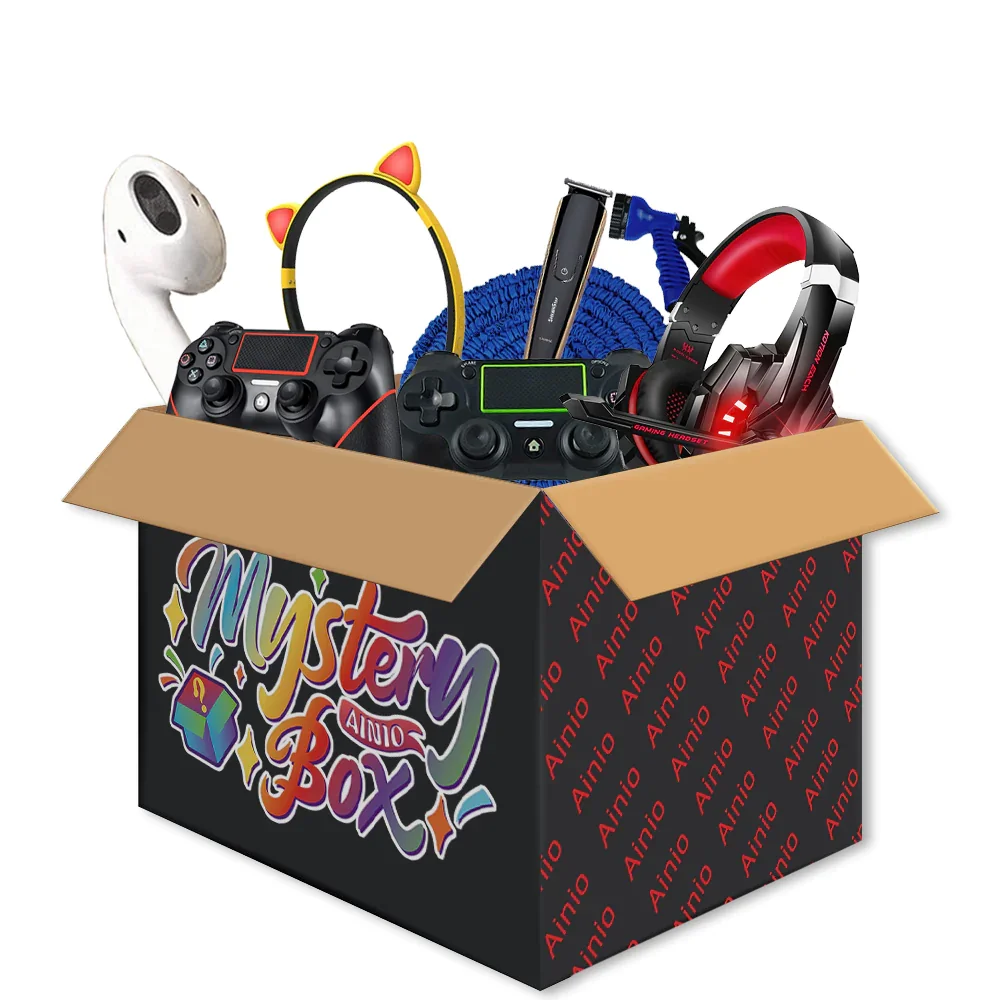
A gaming mystery box is an assortment. A seller packs physical goods from the gaming accessory category, a controller, a headset, a mousepad, cables, a keycap set, into a carton with a stated count and condition, and ships it to you. You receive objects. What is inside is unknown; that you will receive a box is not. A "mystery box gaming" site is a platform. You deposit money, pick a themed box from a menu, and click open. An animation reveals an item from a published list with published odds. You can then have the item shipped, sometimes, or, far more commonly, sell it back to the site for a percentage of its listed value as balance to open more boxes. Nothing physical exists until you choose shipping, and most users never do. The first is retail with a surprise. The second is a game of chance with a retail option attached. The rest of this article is about telling them apart and knowing what each one is asking of you.
How the Platform Version Actually Works
- A physical gaming box is retail; a "mystery box gaming" site is a game of chance with an optional shipping step.
- The sell-back button is the product on those sites; most items are never shipped, and the site's margin sits in the cash-out percentage.
- Age gates, deposits, and "provably fair" language are the tells; a physical box has none of them.
- If a listing asks your platform, it is selling goods. If it asks your age, it is selling chances.
Four mechanics define the platform model, and each one has no equivalent in a physical box. The deposit. You fund a balance first. Boxes are priced against the balance, not paid for individually, which makes the cost of each open feel smaller to you than it is. The published odds. Each box lists its possible items and the percentage chance of each: a large chance of a low-value item, a small chance of a headline item. This is more transparent than any physical box, and it is also what makes the expected value calculable. Multiply each item's listed value by its odds and the total is almost always well below the box price. The sell-back. After an open, the item can be exchanged for balance at a percentage of its listed value, often well under 100%. Selling back and opening again is the loop the platform is built around. The site's margin sits partly in the box price and partly in that percentage. The shipping option. Some sites will ship a won item, sometimes for an extra fee, sometimes only above a value threshold, sometimes from a fulfilment partner rather than their own stock. Shipping is the exception path. The default path is the loop.
Why the Age Gate Is the Clearest Tell
A shop selling controllers does not ask how old you are. A platform selling chances at controllers does, because the deposit-open-sell-back loop is structurally a wager: money in, random outcome, cash-equivalent out. Whether a given site is regulated as gambling depends on the jurisdiction and on details like whether the balance can be withdrawn, but the sites themselves gate at eighteen almost universally, and often require identity verification before a withdrawal or a shipment. For you the rule is simple. If it asks your age before you can buy, it is not selling you a box. The physical product does not need to know. This matters most where the buyer is a minor, which is set out in mystery boxes for teenagers, and it is the reason "gaming" boxes you buy for a teenager should be physical ones from a retailer.
Side by Side
| Gaming mystery box (physical) | "Mystery box gaming" site | |
|---|---|---|
| What you buy | A box of goods, shipped | A chance at an item, shown on screen |
| Payment | Per box, card or platform | Deposit to a balance first |
| Contents known | Count and condition; items random | Item list and odds published |
| Expected value | Not calculable; no odds | Calculable, and usually below price |
| What happens after | You own objects | Sell back for balance, or request shipping |
| Age gate | None | 18+, often with ID for withdrawal |
| Dispute route | Seller policy, card dispute | Site terms; card disputes contested as "services rendered" |
| "Provably fair" | Meaningless for a packed box | A cryptographic claim about the draw |
The dispute row is worth a pause. A physical box that never arrives is a clean non-delivery claim for you. A platform open that produced a low-value item is not a dispute at all; you received what you paid for, which was the chance. Card issuers generally treat a completed open as a service rendered, and the site's terms will say so. The protection that exists for physical purchases, described in which payment methods actually protect you, mostly does not reach the platform model.
Note: "Provably fair" belongs to the platform world. It is a cryptographic method for showing that a specific digital draw was not altered after the fact, and it says nothing to you about the odds being favourable or the listed item values being real. On a physical box the phrase is decoration, because there is no draw to prove. What the term can and cannot mean is set out in fairness claims and "provably fair".
Reading the Listed Values on a Platform
Two things distort the published odds even when the draw itself is honest. Listed values are set by the site. A headline item shown at $600 may be listed elsewhere at $450, and the sell-back is a percentage of the site's figure, not the market's. Expected value calculated against inflated listings looks better to you than expected value calculated against what the item would actually fetch. The loop compounds the margin. Selling back at, say, 80% and opening again means every cycle through the loop loses that 20% plus the box margin. A single open is a bet; ten opens with sell-backs in between is the same bet ten times with a fee each time. None of that makes the sites fraudulent. It makes them what they are, entertainment priced as entertainment, and the honest way for you to use one is with money you would spend on an evening's amusement and no expectation of coming out ahead.
What a Physical Gaming Box Should Be Judged On
Having separated the two, the physical product has its own questions, and they are ordinary mystery box questions with one addition. Count, condition, and price, as for any assortment. Whether the seller states what the box cannot contain. And, specifically for gaming, platform: a controller for one console is dead weight for another, and a "gaming" label does not fix which. That compatibility question is the one that decides whether a physical gaming box is usable by you, and it is covered in gaming mystery boxes and compatibility: what to check first. If a "gaming mystery box" listing asks your platform, it is selling goods. If it asks your age, it is selling chances. That single question, asked before you pay, sorts the entire search. Mewoo sits firmly on the physical side: a stated count, new and checked condition, no deposit, no odds, and no age gate, with gaming, audio, and desk accessories weighted into the men's 3-item box.
FAQ
What is a mystery box gaming site?
A website where you top up a balance, choose a themed box from a menu, and press open to watch an animation reveal one item from a list with percentages beside it. Afterwards you can ask for the item to be shipped, or, as nearly everyone does, trade it back for credit at a slice of its listed value and open again. The trade-back loop is what the site actually sells; the shipping option is the rarely used exit.
Is a gaming mystery box the same thing?
No. A gaming mystery box is a real carton of controllers, headsets, mousepads, and similar accessories, packed with a stated number of items in a stated condition and posted to your door. There are no odds to read, no balance to fund, no trade-back button, and nobody asks your age. You judge it the way you would any assortment, on count, condition, and price, plus the one gaming-specific question of which console or PC the contents fit.
Why do those sites ask for my age?
Because money in, a random result, and a cash-equivalent out is the shape of a wager, whatever label a particular country puts on it. Nearly every such site gates at eighteen and many demand ID before they will pay out or ship. A shop that sells physical boxes has no reason to care how old you are. So an age check is the quickest way for you to tell which of the two products a page is offering.
Are the published odds on a platform trustworthy?
The draw may well be honest and the numbers still flatter the site, because the site decides what each prize is "worth" and pays trade-backs as a percentage of that figure, not of the going price. "Provably fair" only proves a specific digital draw was not tampered with afterwards; it says nothing about whether the odds favour you. If you want a real expected value, price the items at what they would actually sell for and redo the sum.
Can I dispute a platform open with my card issuer?
Almost never successfully. What you bought was a chance, and the chance was delivered the moment the animation finished, so a poor result is not a case of goods not arriving. Your bank will see a completed service, and the small print you agreed to was written to make sure of it. The non-delivery protection that works when a physical box goes missing does not carry over. Treat money deposited on a platform as spent.
Which should I buy for a teenager who games?
The physical box, from a retailer, picked to match their console. The platform version is age-gated at eighteen for structural reasons and is off limits for a minor however it is dressed up. Before you order the physical one, confirm what they play on, because a controller or headset built for the wrong platform is the single most common reason a gaming box lands flat. Get that right and the rest is ordinary mystery box judgement.
Final Thoughts
"Mystery box gaming" is a platform where you buy chances, sell back for balance, and rarely ship; "gaming mystery box" is a carton of goods judged by count, condition, and platform. The age gate, the deposit, and the sell-back button are the tells for the first; the compatibility question is the one that matters for the second. Ask whether the listing wants your age or your console, and you have already sorted the search.
If what you want is the physical product with a stated count and condition and no age gate: Men's Electronics Mystery Box (3 items), weighted toward gaming, audio, and desk accessories, or Party Electronics Mystery Box (6 items). Compare every tier side by side on the electronics mystery box category page.
See physical boxes with stated count and condition →