Reselling Mystery Box Items: When the Tax Forms Start
If you buy mystery boxes to resell the contents, at some point a marketplace will send you a tax form, and at some point before that you owed tax anyway. The two moments are not the same, and confusing them is how small resellers get a surprise in April. Here is when the forms start, what counts as income, what you can deduct, and the one habit that makes all of it painless. General information, not advice for your return.
The Form Threshold Is Not the Tax Threshold
Start with the distinction that matters. Income from selling goods is taxable from the first dollar of profit, whether or not anyone sends you a form. The form, a 1099-K, is what a payment platform or marketplace issues when your sales through it pass a threshold, and it exists so the IRS can match what you report against what the platform saw. Not receiving one does not mean you owe nothing; it means nobody reported you.
The threshold has moved. In 2021 Congress lowered it to $600 with no transaction minimum, the change was delayed year after year, and in July 2025 new legislation restored the original figure: a platform issues a 1099-K when your gross payments through it exceed $20,000 and you have more than 200 transactions in the year, applied retroactively to 2025. For most small resellers of mystery box items, that means no form. It does not mean no tax. Whether you are allowed to resell what arrives, and what the listing lets you say about it, is in can you resell what comes in a mystery box; this article picks up from the first sale.
Hobby, Business, or Personal Sale
- Profit from resale is taxable from the first dollar; the 1099-K form only arrives above $20,000 and 200 transactions, a threshold restored in 2025.
- Your cost basis is what you paid for the box, shipping and duty included, split across the items; only the profit above it is income.
- Regular resale is a business, which means a Schedule C, self-employment tax above $400 of net profit, and records for every box.
The IRS sorts what you are doing into three boxes, and which one you land in decides the paperwork.
Personal sales. You bought a mystery box for yourself, you did not want the third item, you sold it. If you sold it for less than its share of what you paid, there is no income and nothing to report; a loss on a personal item is not deductible. If you sold it for more, the gain is income. Most people who sell one or two unwanted items are here.
Hobby. You buy boxes now and then and sell what you do not keep, without trying to run it as a business. Income is reported, but you cannot deduct expenses against it. This is the least favourable box, and the reason regular resellers should treat what they do as a business.
Business. You buy boxes to resell, regularly, with the intention of making a profit. You report income and expenses on Schedule C, you can deduct the cost of the boxes, shipping, fees and supplies, and if your net profit is $400 or more you also pay self-employment tax. A small reseller who buys a carton a month is here, and should keep the records that go with it. What changes when you buy at that quantity is in buying mystery boxes in bulk.
Working Out Profit on a Random Box
| Item from a 6-item box that cost $60 delivered | Cost basis (equal split) | Sold for | Fees and postage | Profit or loss |
|---|---|---|---|---|
| Wireless earbuds | $10 | $22 | $5 | +$7 |
| Bluetooth speaker | $10 | $18 | $6 | +$2 |
| Smartwatch | $10 | $25 | $5 | +$10 |
| USB cable | $10 | $4 | $2 | −$8 |
| Phone stand | $10 | $6 | $3 | −$7 |
| Kept for yourself | $10 | Not sold | Not deductible | |
| Box total | $60 | $75 | $21 | +$4 on the five sold; item kept is personal |
Read the table as a method rather than a forecast. Because the box is random, you cannot know an item's cost until you decide how to split the box price across it, and an equal split is the simplest defensible method; a split by resale value is also accepted if you apply it consistently. Either way, the profit is the total sold minus the basis of what was sold minus fees and postage, and the item you kept is a personal purchase, not a business expense. On the box above, a business reseller reports about $4 of profit, not $75 of sales.
Note: Duty and sales tax you paid on the box are part of its cost. Since 2025 a box shipped from overseas into the United States can carry import duty, and if the seller charged it or the carrier collected it, that amount belongs in your basis alongside the price and the shipping. Sales tax you collect from your own buyers is not your income; it is your state's, and on a marketplace the platform usually collects and remits it for you. The buying side of both charges is in will you pay sales tax on a mystery box.

The One Habit: A Row Per Box
- When the box arrives, open a row: date, seller, order number, price, shipping, duty, total cost.
- List the items beneath it with the basis split, and mark which you keep.
- When an item sells, add the sale price, the platform fee, the postage, and the date.
- Keep the order email and the sale receipts in a folder named for the box.
- At year end, total the columns. Sales, basis of items sold, fees, postage. The difference is your profit, and the sheet is your record if anyone asks.
That is the whole system, and it takes two minutes a box. Resellers who skip it end the year with a marketplace total that looks like income and no way to show what it cost them, which is the worst position to be in whether or not a form arrives.
What About Sales Tax on What You Sell?
If you sell through a marketplace, the platform almost always collects sales tax from your buyer and remits it, under the marketplace facilitator laws every sales-tax state now has, and you do nothing. If you sell through your own site or in person, you may need to register with your state once your sales pass its threshold, and you may be able to buy inventory tax-free with a resale certificate. That is a state question with fifty answers; your state's revenue department page has yours. Whether a mystery box is even the right sourcing model for regular resale, against a liquidation pallet with a manifest, is in mystery box vs liquidation pallet.
What This Means When You Order
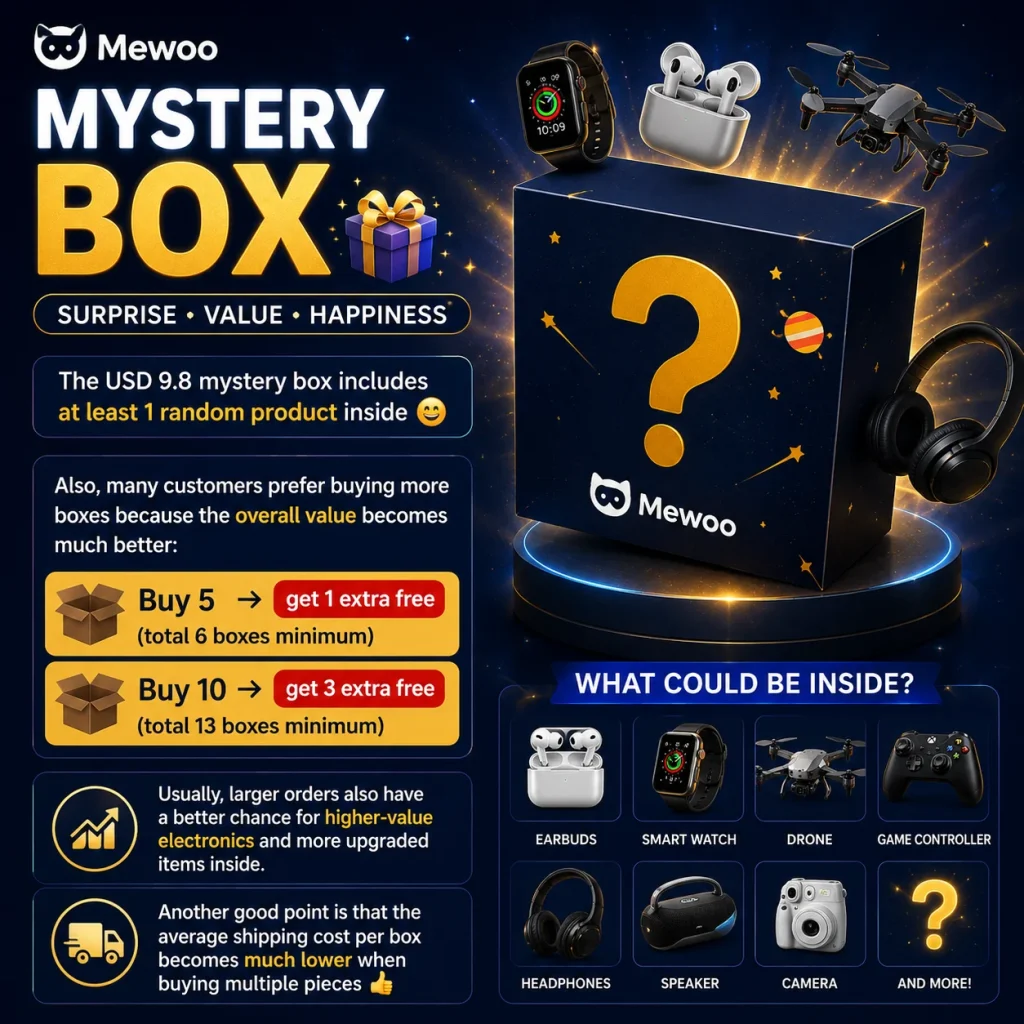
You should decide before the first box which of the three boxes you are in, because it changes what you keep. A personal buyer keeps the order email. A regular reseller keeps the row-per-box sheet from day one, buys with the invoice itemised, and asks the seller for a receipt that shows price, shipping and any duty separately. Mewoo's order confirmation lists the box and the shipping as separate lines, and its country and import page says to confirm who pays duty before you order; ask any seller for the same. The form may never come, but the records are what make the profit yours rather than the whole sale.
FAQ
Do I have to pay tax on items I resell from a mystery box?
Yes, on whatever you clear above cost, and no form is needed to trigger it. Give every item its slice of the landed price, take away that slice and the selling fees from the sale, and what remains is reportable. An unwanted item sold below its slice is simply a personal loss, neither taxed nor deductible. Do it regularly for profit and the activity becomes a business with its own schedule.
When will I get a 1099-K from a marketplace?
Under the threshold restored by 2025 legislation, only when your gross sales through that platform exceed $20,000 and your transactions exceed 200 in a calendar year, applied from the 2025 tax year. A small reseller moving a few boxes a month will not reach it. The absence of the form changes nothing about what you owe; it only changes whether the platform told the IRS.
How do I work out the cost of one item from a random box?
Divide the box's full landed cost, meaning price, shipping and any duty, across its items. An even split is the simplest and is defensible; a split weighted by each item's resale value is also fine if you use it every time. Record the method and the figures the day the box arrives, before anything sells. That per-item number is the basis you subtract from each sale.
Is reselling mystery box items a hobby or a business?
It depends on regularity and intent. Buying boxes specifically to sell the contents, doing it repeatedly, and trying to make money is a business, which lets you deduct the boxes, fees and postage against sales. Occasional selling of things you did not want is hobby or personal, where expenses are not deductible. If you are buying a carton a month, treat it as a business and keep records accordingly.
Can I deduct the items I kept for myself?
No. Anything from the box that you use rather than sell is a personal purchase, and its share of the box cost is not a business expense. Mark it on your sheet the day you decide to keep it so the basis of the sold items stays accurate. The same applies to items you give away as gifts; only items sold, or held as inventory for sale, belong on the business side.
Do I need to collect sales tax from my buyers?
Rarely, if you sell on a big platform: the marketplace adds the tax at checkout and sends it to the state itself, and none of it passes through your hands. Selling from your own storefront or at a market is different, because registration may become compulsory once your volume crosses your state's line, and a resale certificate may then let you buy stock without tax. Fifty states, fifty rules; read yours.
Final Thoughts
The 1099-K threshold went back to $20,000 and 200 transactions in 2025, so most small resellers will never see the form, but profit on resold items was taxable all along. Decide whether you are a personal seller, a hobbyist or a business, split each box's landed cost across its items on the day it arrives, keep a row per box, and count only the sold items as business. Then the tax is on your profit, not your turnover.
If you buy to resell and want an itemised invoice with shipping and duty shown separately, start from the bulk mystery box page or the Party Electronics Mystery Box (6 items). Compare every tier side by side on the electronics mystery box category page.
See how bulk orders work →