Toy Mystery Boxes vs Electronics Mystery Boxes: Different Rules

Toy mystery boxes and electronics mystery boxes look like the same product with different contents. They are not. One is a regulated children's product with a defined roster and a working resale market; the other is an assortment of adult goods with none of those things. Those differences change what a duplicate costs you, what "quality" means, and who you can safely buy each one for. This guide walks you through the rules.
The Same Format, Two Different Markets
Both sell you a sealed container and the pleasure of not knowing. Underneath, they run on separate rules: legal, commercial, and practical. This article is about those rules rather than about the words. If you are trying to work out what "blind box" and "mystery box" mean as terms, that is covered in blind box vs mystery box. What follows assumes you know which format you are looking at and want to know how the two markets behave when you are the one paying.
The Regulatory Line Is the Big One
- Toys for under-threes with small parts are banned hazardous substances in the US.
- Electronics assortments are not children's products, so none of that framework applies to them.
- No warning on a tech box does not mean it is safe for a small child. It means nobody assessed it for one.
- Duplicates are currency in a toy series and dead weight in an electronics box, so demand more variety from the second.
A toy sold for children sits inside a body of safety law. An assortment of tech accessories sold to adults does not, and the gap is wider than you might assume. The US Consumer Product Safety Commission states the position plainly: children's products intended for use by children under three that present a choking, aspiration, or ingestion hazard because of small parts are banned hazardous substances, codified at 16 C.F.R. part 1501.
The definition is mechanical rather than a matter of judgement. A small part is any object that fits, without compressing and in any orientation, entirely into the small parts cylinder in the rules, which approximates the throat of a child under three. It can be a whole toy, a separate part, or a piece that breaks off during testing that simulates use and abuse. Separately, certain children's products that contain small parts, balloons, small balls, or marbles must carry a choking hazard warning telling you not to buy them for children under a stated age.
Why this matters to you when comparing the two
A toy blind box aimed at children has been through that framework. Someone decided an age band, tested to it, and labelled accordingly. An electronics assortment has not, because it is not a children's product. Nobody assigned it an age band, nothing was tested against the cylinder, and no warning was required. That is not the seller cutting a corner; the rules were never engaged.
So the thing you should take away is this: the absence of a warning on a tech box is not a statement that it is safe for a small child. It is a statement that the box was never assessed for one. Loose cables, earbud tips, and small clips are exactly the shapes the cylinder exists to catch, so if you have young children at home, unpack an electronics box away from them.
Duplicates Cost You Different Amounts
This is the commercial difference, and it is genuinely large. A toy series has a published roster and an active trading community. When you receive a duplicate, it is not waste; it is currency. People swap, sell, and complete sets, and a second copy of a common figure has a real, if small, market price.
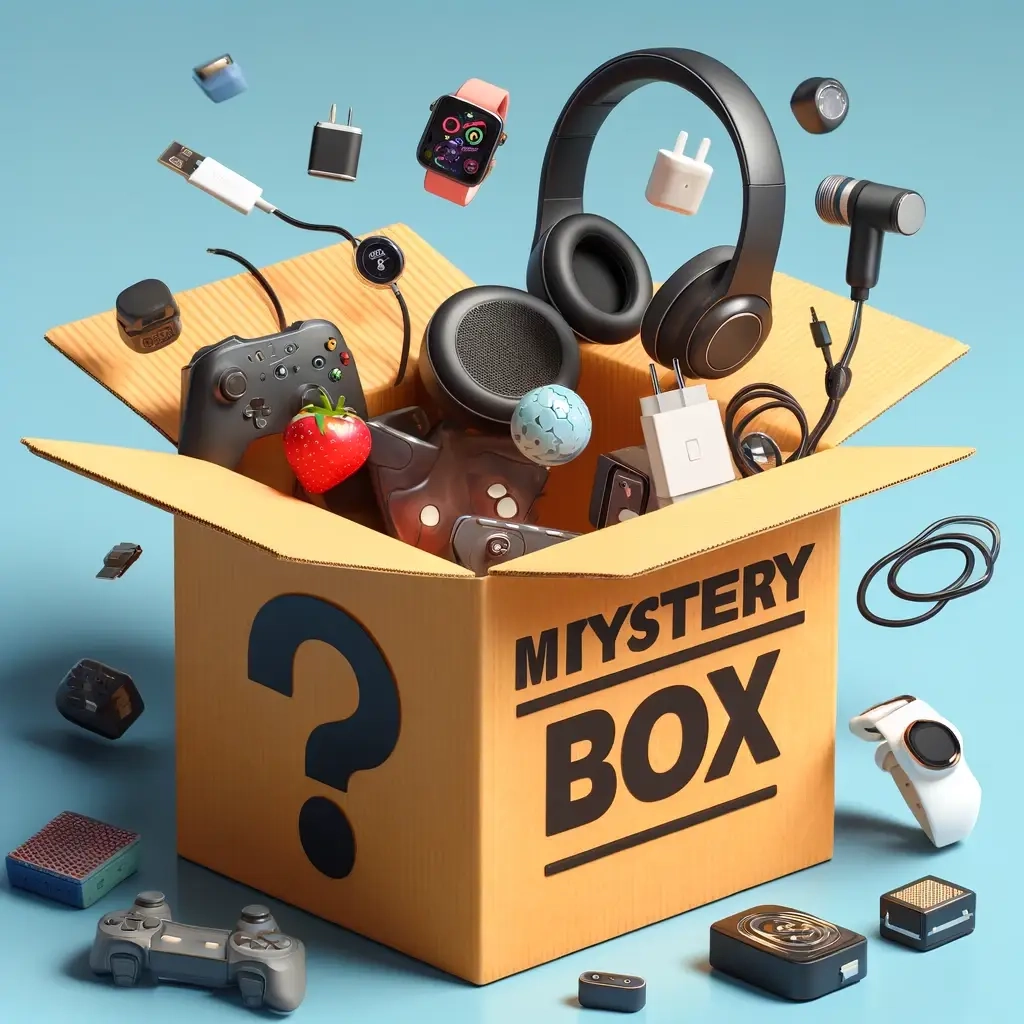
An electronics assortment has neither. There is no roster to complete, so a second identical cable is not a trade good; it is a spare. It has almost no resale market, for reasons set out in can you resell what comes in a mystery box. So the same event, receiving two of something, is a minor inconvenience in one market and a dead loss in the other. That should change how much variety you insist on before you buy an electronics box, and it is a fair question to put to the seller.
Side by Side
| Toy blind box | Electronics mystery box | |
|---|---|---|
| Possible contents | A published roster | A category range |
| Safety framework | Children's product rules, age marking | None; not a children's product |
| What quality means | Compliance and finish | Does it power on and work |
| Duplicates | Tradeable | Dead weight |
| Resale market | Active, sometimes above retail | Thin, always below retail |
| Value type | Collectible and social | Use value only |
| Repeat buying | Chasing a specific figure | Usually a mistake |
Note: If you are buying for a child, buy the toy format and read the age marking on it. If you want an electronics box for a household with young children, treat it as an adult product: unpack it away from them and sort the contents before anything reaches a child. If you are buying for a teenager, either format works, and mystery boxes for teenagers covers that middle ground.
"Quality" Means Two Different Things
Ask about quality in each market and you are asking about different properties entirely. For a toy, quality is compliance and finish: paint application, moulding, whether the correct age band was assigned, whether the packaging carries the required warnings. Nobody switches a figure on.
For electronics, quality is function. Does it power on, does it pair, does it hold charge, are the accessories present. Compliance sits in the background as electrical and radio approvals rather than as age labelling. That is why testing before dispatch matters enormously to you in one market and barely exists as a concept in the other. A seller who tests every electronic item is doing something a toy seller has no equivalent for, as described in how Mewoo tests electronics before dispatch.
Repeat Buying Behaves Differently Too
Toy blind boxes are designed to be bought repeatedly. A roster you cannot complete in one purchase is the entire commercial model, and the pleasure of chasing is a real part of what you are paying for.
Electronics assortments have no roster, which removes your reason to buy again. Repeat purchases from the same seller draw from the same pool, so your second box tends to resemble the first, weak spots included. Across many boxes the randomness averages out rather than compounding, which is the effect described in buying mystery boxes in bulk. If you enjoyed one electronics box, the sensible repeat for you is a different tier or a narrower category, not the same box again.
Which One Should You Buy?
- For a child: the toy format, with the age marking read and respected.
- For a collector: the toy format, and check whether the series is one they are actually collecting.
- For an adult who wants usable things: the electronics format, judged on item count, condition, and category range.
- For an office exchange or event: either, but electronics travel better across mixed tastes because usefulness is more universal than a specific franchise.
- For resale: depends on your channel. Collectible toys have a secondary market; electronics accessories sell on usefulness and price, and a first small order will tell you which your customers want.
FAQ
Are toy and electronics mystery boxes regulated the same way?
No. A toy aimed at children has to satisfy children's product law, which in the US includes the small-parts ban for under-threes and mandatory choking labels. An electronics assortment is sold to adults, so those rules never come into play for it. When you compare the two, remember that one has been checked against a standard for children and the other has simply never been looked at that way.
Does no warning label mean an electronics box is child-safe?
It means the opposite of what you might hope: nobody ever asked the question. Warnings appear on products that were tested as children's items and found to need one. A box of adult tech accessories never went through that process at all. If there is a toddler in your house, assume every loose tip, clip, and cable could end up in a mouth, and do the unboxing somewhere else.
Why do duplicates matter more in an electronics box?
Because you have nobody to trade with. A collector who pulls a repeat figure can swap it or sell it to someone completing the set. If you pull a second identical charging cable, there is no set, no swap group, and barely any buyer, so it goes in a drawer. That is why you should ask an electronics seller how they limit repeated product types before you order a large tier.
Which format holds its value better?
Toys, by a wide margin. Popular figures trade on an active second-hand market and rare variants can go for more than they cost new. Electronics accessories are worth what they are useful for, which starts below the shop price and only drops. If you are thinking about resale value at all, only the toy format offers it; buy the electronics format for use, not for investment.
Is it worth buying the same electronics box twice?
Rarely, unless you are buying to resell and the first box sold well. With no roster to complete, your second parcel comes from the same pool as the first and will feel familiar, including the parts you liked least. If you want to repeat the experience, move up or down a tier, or try a narrower theme, so the second reveal has something new in it.
What does "quality" mean in each market?
For a toy, it is how well the figure is made and labelled: clean paint, solid moulding, the right age band on the pack. For electronics, it is whether the thing does its job when you switch it on, pair it, and charge it. That is why a testing statement matters so much when you buy tech and is meaningless when you buy figures, and why you should read for it on an electronics listing.
Final Thoughts
The two formats share a shape and almost nothing else. Toys carry a safety framework, a roster, and a trading market that makes duplicates worth something. Electronics carry none of the three, which means you should insist on more variety, expect less resale value, and read the missing choking warning as an absence of assessment rather than a clean bill of health. Match the format to the person, and both work well.
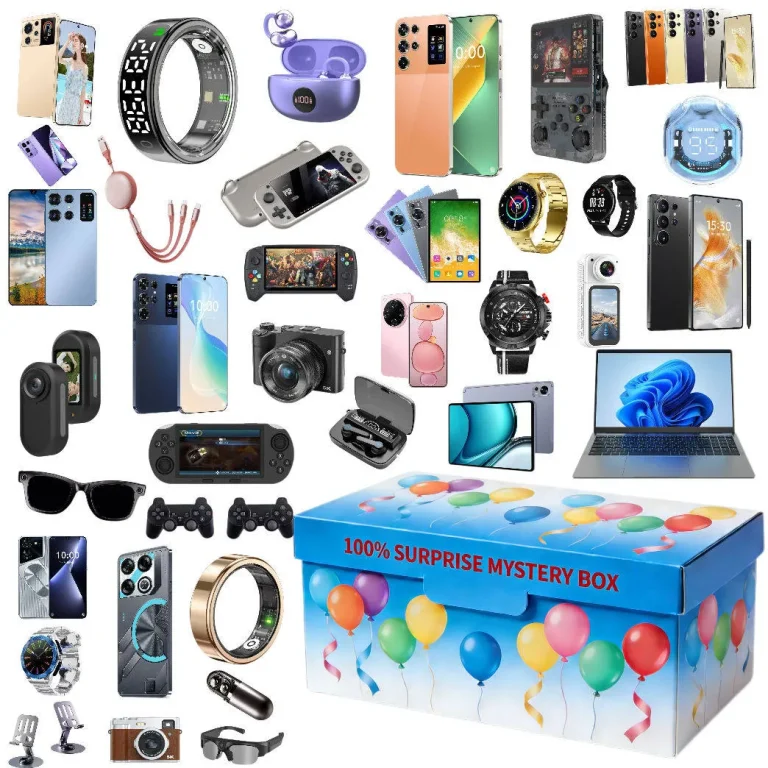
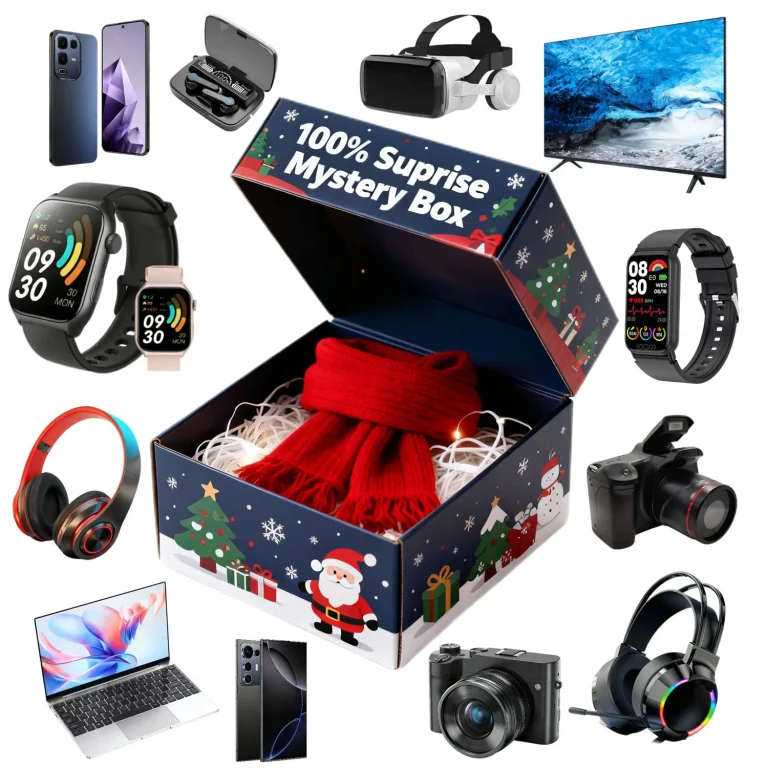
For the electronics side of that comparison: Electronics Blind Box (3 items) and Party Electronics Mystery Box (6 items). Compare every tier side by side on the electronics mystery box category page.
The electronics blind box line also has: Electronics Blind Box (2 items) and Electronics Blind Box (6 items).
See the electronics category range →