
Splitting a Case: How Mystery Box Group Buys Work
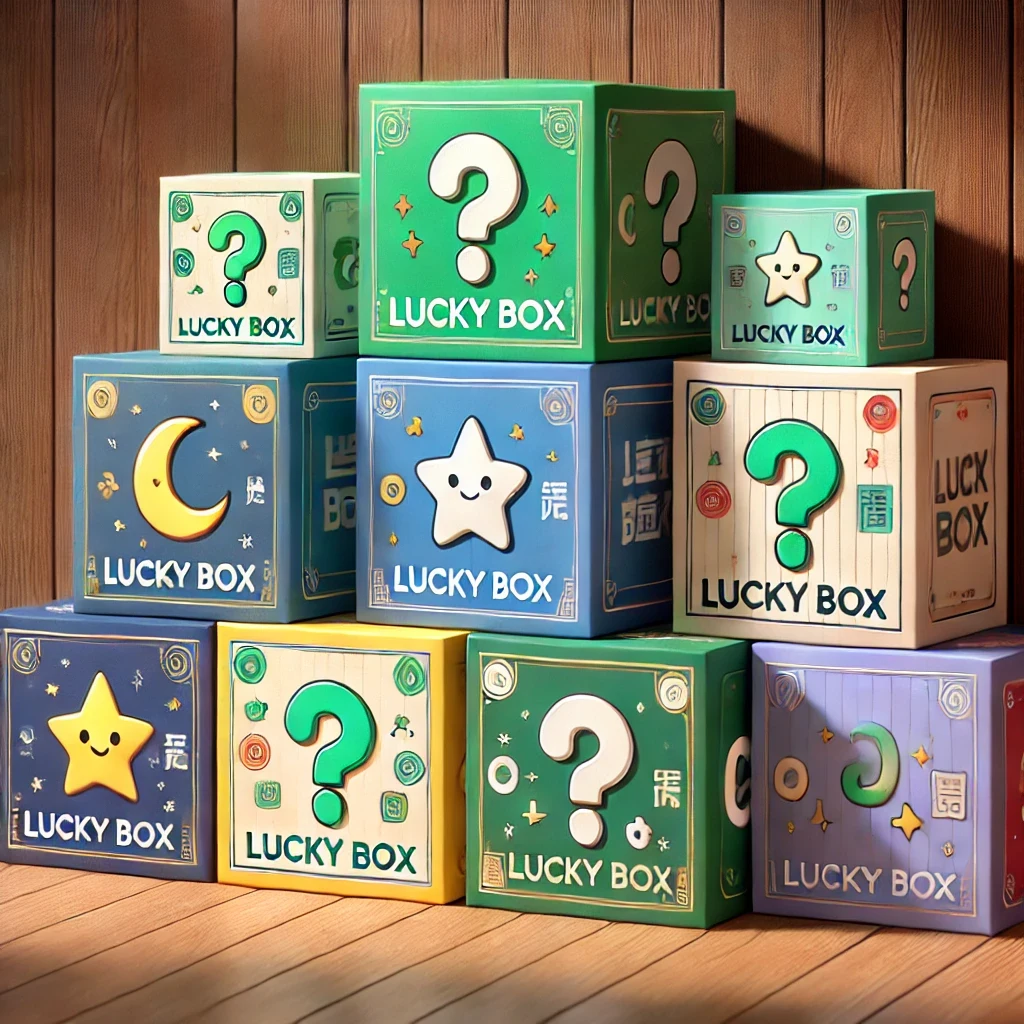
Buying a case between friends looks like the obvious way for you to get case pricing without a case's worth of boxes. It works, but it moves three problems onto your group: how to split units of unequal value, who carries the risk between payment and handover, and what happens when one box is damaged or one person drops out. Groups that settle those rules before ordering stay friends; groups that settle them after opening the case often do not.
Why the Split Is Harder Than It Looks
Twelve identical sealed boxes, four people, three each. The arithmetic is not your problem. The problem is that the boxes are identical in appearance, not in value. A collectible series has a chase variant that is worth many times the others, and if the case contains one, it lands in exactly one person's three. A general assortment case has variance between units too: one box gets the item everyone wanted, another gets the filler. An equal split by count is an unequal split by value, and all of you know it the moment the boxes are opened. So a group buy is really two decisions for you: how to divide the cost, which is easy, and how to divide the outcome, which is where the rules have to be written down first.
Three Ways to Split, and What Each One Costs You
- A sealed random draw is fair in expectation and unequal in outcome; agree to that explicitly or use a different method.
- The organiser holds all the risk and all the dispute rights; everyone else is relying on them, not on the seller.
- Settle the chase rule, the damage rule, and the dropout rule before anyone pays.
- Inspect the case on arrival before a single box leaves the room.
1. Sealed random draw
Boxes are handed out unopened, by lot. You do not know what you got until you open it at home. This is the closest thing to buying loose boxes at case price, and it is the only method that preserves the surprise for everyone. The cost is variance. One person may get the chase and another may get three duplicates, and your group has to be genuinely comfortable with that in advance, not "of course, whatever" comfortable, but comfortable enough that nobody asks for a trade afterwards. It suits you if each of you wanted a few boxes anyway and treat the case as a discount, not as a joint project.
2. Open everything, then draft
All boxes are opened together, everything is laid out, and you choose in turns, typically snake order, so whoever picks last in round one picks first in round two. Nobody is surprised at home, but nobody gets stuck with duplicates they did not choose either, and you can see exactly what you are trading. The cost is the surprise itself, which is most of the reason for buying blind boxes. It suits set-completers: agree who is collecting which designs and you can draft straight toward complete sets. The maths of getting a full set from a case is in completing a blind box set: case vs loose box math.
3. Random draw with a chase rule
Boxes go out sealed and random, but you and your group agree beforehand what happens if a chase variant turns up: it is sold and the proceeds split, or it is auctioned among the members with the winning bid split among the rest, or it simply belongs to whoever drew it. Any of those is fine. The one that causes trouble is having no rule and discovering the chase. This hybrid keeps the surprise while removing the largest source of resentment, and it is the method most groups should default to.
Where the Money Sits
One of you places the order. That person's card is charged, that person's address receives the case, and that person is the seller's customer. Everyone else has transferred money to a friend. Three consequences follow, and all of them fall on the organiser, which may be you. Dispute rights belong to the organiser alone. If the case never arrives, only the cardholder can raise a billing-error dispute, and only within the 60-day window that runs from their statement date. The others have no route to the seller or the card issuer at all; their claim is against the organiser. The mechanics are in which payment methods actually protect you. The organiser is holding everyone's money in the gap. Between collecting contributions and the case arriving, which can be weeks, or months on a preorder, the organiser has the group's cash and nothing to show for it. Fine among friends; worth naming among acquaintances. The organiser pays the second shipping leg. A case delivered to one address still has to reach four people. Local handover is free; posting three parcels is not, and it is routinely forgotten when you calculate the per-box price.

The Rules to Write Down First
| Rule | Decide before ordering | What goes wrong without it |
|---|---|---|
| Split method | Sealed draw, open-and-draft, or draw with chase rule | Argument at the table |
| Chase variant | Keeper's, sold and split, or auctioned within the group | One person's windfall, everyone else's grievance |
| Damaged or dead unit | Whose box, or shared across all | The unlucky drawer eats the loss |
| Dropout before delivery | Organiser keeps their share, or others absorb it | Organiser out of pocket |
| Second-leg shipping | Included in the per-box price or paid separately | Organiser out of pocket, quietly |
| Duplicates | Trade within group first, then keep | Same design in three hands, nobody swaps |
Two of these deserve your attention. On damage: a case shipped to one address is inspected by one person, and any transit damage has to be reported by them, inside the seller's window, before the boxes are distributed. Handing out sealed units and asking people to report faults a week later does not work; the window has closed and the evidence chain is broken. On dropout: the fairest default is that a person who withdraws after the order is placed forfeits their contribution unless someone else takes their share. The organiser has already spent it on your behalf.
Note: A case shipped from overseas may arrive with duty or fees attached, payable by the organiser at the door before the case is released. That charge is part of the case price and should be divided like any other cost, but it lands unpredictably, on one person, after everyone else has already paid. Agree in advance that you will split it, and how.
Where Group Buys Work Best
Stocking fillers and party favours. A case of small blind boxes split across your family, or across the parents organising a party, is the most natural version of this. Each unit is cheap, nobody is chasing a variant, and the split is by count with no argument. The reasoning is in Christmas blind boxes as stocking fillers. Occasions where several people want a small surprise each. Birthdays in the same month, a shared office, a group holiday. One case, a sealed draw, and your per-box price drops without anyone having to buy twelve. Which occasions the format actually suits is in mystery boxes for occasions other than Christmas. Collectors who have already divided the roster. If two or three of you each collect different designs from the same series, you can draft directly and hand each other the units they do not want. This is the only situation where a group buy is strictly better for you than buying loose, rather than merely cheaper.
Where It Does Not Work
Popular series with a valuable chase. The chase rule solves the value problem only if your group actually follows it, and the more the chase is worth, the more pressure there is on whoever draws it to argue the rule did not mean this. For a series where the secret trades at many times retail, buy loose or buy alone. Groups larger than the case. Twelve boxes among fifteen people is not a group buy, it is a raffle, and you need raffle rules rather than the ones above. Anything with a deadline. A group buy adds a second shipping leg and a coordination step to a purchase that already has a dispatch window and a transit window. If the boxes are needed on a date, you need the case at least a week earlier than you would if buying for yourself.
The Two-Person Version Is Different
If it is just you and one other person sharing a single box or a small case, the problem is closer to a shared unboxing than a distribution, and the rules that matter are about opening together. That case is covered in buying one mystery box for two people. And if you are a single buyer who wants quantity rather than a split, the questions are the seller's bulk terms and whether case pricing is genuinely lower per unit, covered in buying mystery boxes in bulk. For electronics rather than a collectible series, the simplest group buy is one larger tier opened together: Mewoo's 12-item box shared across four people gives each of you three new accessories from one parcel, with no chase variant to write a rule for.
FAQ
How do you fairly split a case of blind boxes between friends?
Pick the method before the order goes in, not after the tape comes off. Handing out sealed boxes by lot keeps the surprise but means someone wins and someone does not. Opening the lot and choosing in snake order kills the surprise but lets collectors go straight for the designs they want. For most groups the best fit is sealed boxes plus one written sentence about what happens if a chase figure appears.
Who gets the chase variant in a group buy?
Whoever your group said would, back when nobody knew if there was one. The three workable answers are: it stays with the person who drew it; it gets sold and the money is shared; or members bid for it and the winning bid is divided among the others. All three are fine. What is not fine is opening the case, finding the secret figure, and only then starting the conversation, when one person already feels it is theirs.
What happens if the case never arrives?
Only the organiser can do anything about it. Their name is on the order and their card took the charge, so the refund request and any chargeback are theirs to file, inside 60 days of their statement. If you merely chipped in, the shop and the card company do not know you exist; the person you can chase is your friend. That is worth understanding before you send money: you are trusting the organiser, not the shop.
Who pays if a box in the case is damaged?
Whichever way you agreed up front, either the person who drew it or everyone in equal shares. The bigger issue is timing. The organiser must open and inspect the case the day it arrives and report any transit damage to the seller inside the seller's window, before anything is handed out. If members find damage a week later and report it separately, the window has usually closed and there is no clean evidence trail.
Is a group buy actually cheaper?
Only after you count everything. The case discount is real if the per-unit price genuinely sits below the loose price and the boxes can be handed over in person. Posting three parcels onward can wipe out the saving on cheap boxes, and import duty on an overseas case turns up at the organiser's door after everyone else has paid. Add redistribution and duty to the per-box figure before you decide the case is the bargain.
What if someone drops out after the order is placed?
The fair default is that their money stays in the pot unless another member takes their share, because the organiser has already paid the seller and cannot un-order three boxes. Say that out loud before anyone contributes. A group that never agreed a dropout rule ends with the organiser holding boxes nobody wanted and covering a shortfall that was not theirs to cover.
Final Thoughts
A case split between friends is cheaper per box and more complicated per person. Write down the split method, the chase rule, the damage rule, the dropout rule, and who pays the second shipping leg before anyone sends money. Remember that the organiser holds all the risk and all the dispute rights, and inspect the case on arrival before a single box leaves the room. Done that way, it is one of the better ways for you to buy.
For a group that wants electronics rather than figures, one large tier opened together is the simplest split: Ultimate Electronics Mystery Box (12 items) or Party Electronics Mystery Box (6 items). Compare every tier side by side on the electronics mystery box category page.
For a split between several people, the higher counts divide more evenly: Cloud Nine Electronics Mystery Box (9 items), Perfect Ten Electronics Mystery Box (10 items) and Electronics Blind Box (8 items).
See case and multi-box options →