Buying From a Blind Box Store vs Online: When Each Wins
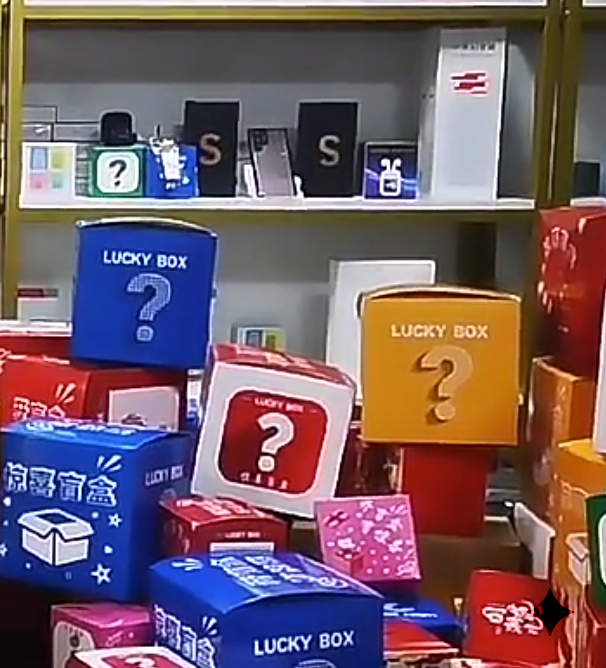
A blind box store lets you do something no website can: pick up the box, weigh it, compare it with the one beside it. If you are the first person at the shelf that is an advantage. For everyone after them it is the opposite, because every box left on a tray has already been rejected by somebody with the same idea. Here is how the two channels differ, and when each wins for you.
What a Store Gives You
Four things, and only one of them is what people think. You can see stock depth. A full case on the shelf tells you the series is current and untouched. A tray with three boxes left tells you the opposite. You can handle the box. Weight and rattle sometimes hint at contents. Sellers know this, which is why many series now ship at uniform weight or with counterweights that flatten the differences. No shipping. No carriage, no transit damage, no customs, no waiting. You leave with the thing. Impulse. The store is designed for it. That is not a benefit to you, but it is real, and it is the reason most in-store purchases happen.
The Tray Problem
- An open store tray is an adverse-selection environment: what remains has been passed over.
- Online random draws carry no such bias, because nobody handled the box before you.
- Buying a sealed case removes the problem in either channel.
- Electronics assortments are an online product; the real choice there is marketplace versus direct.
This is the part that turns the store's biggest apparent advantage into its biggest weakness for you. Suppose weight really does hint at which box holds the item everyone wants. The first buyer weighs the tray and takes the best candidate. The second does the same with what is left. By the time you arrive, the tray is whatever a sequence of people with the same trick chose not to take. That is adverse selection, and it does not require anyone to cheat. It is simply what happens when boxes are individually selectable and the selection criterion is shared. A sealed online order has none of it: the box was never on a tray, and nobody handled it with intent before it reached you. The fix in a store is to buy from an unopened case rather than a tray, or to ask for one. Collectors report that some shops will not honour a full-case purchase and instead hand over loose random boxes, which is the tray problem in a different wrapper, and worth asking about before you pay.
Store vs Online, Side by Side
| Blind box store | Online | |
|---|---|---|
| See stock depth | Yes | Rarely |
| Handle the box | Yes, and so did everyone before you | No |
| Selection bias | High on open trays | None on random draws |
| Sealed full case | Sometimes, ask first | Usually available |
| Price | Higher per box | Lower, plus carriage |
| Returns | Typically final sale | A fault process usually exists |
| Shipping risk | None | Transit, customs, delay |
| Fakes | Lower risk at a real retailer | Depends entirely on the seller |
Two rows deserve a closer look. Returns: a store sale of a sealed box is almost always final, because opening it is the product, whereas online sellers generally publish some fault process you can use. And fakes: a physical retailer carrying an official series is a lower-risk source than an unknown online listing, which is one of the few places where the store wins on certainty rather than convenience.
Price Is Not the Whole Comparison
Store prices run higher per box, and the gap is rent and staff rather than greed. But the online figure is not complete until you add carriage, and for a single cheap box the postage can be a third of the total. For one or two boxes the store is often competitive on delivered cost; for a sealed case it rarely is. There is also the question of what a "blind box sale" actually is. In a store it is usually end-of-series clearance: the boxes nobody chose, discounted. Online, listings for mystery boxes for sale more often mean a seasonal price cut on current stock. Same words, different goods.
Note: If you are buying for a child, a store has one genuine advantage: you can read the age marking and choking warning on the physical box before you pay. Online, that warning is required to appear in the advertising for toys subject to it, but it is easier to miss. The rules are set out in mystery boxes for children.
Where This Leaves Electronics Boxes
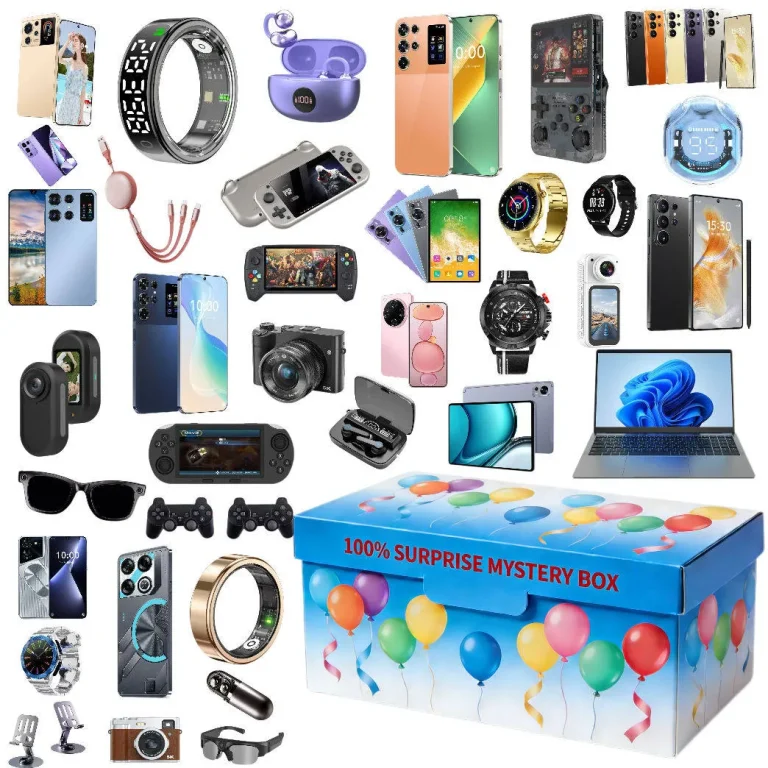
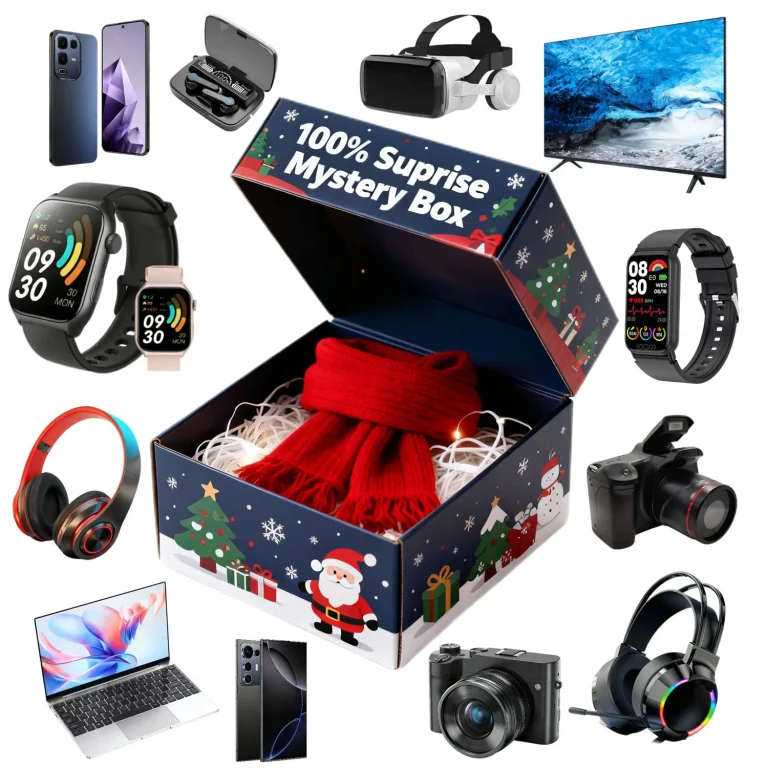
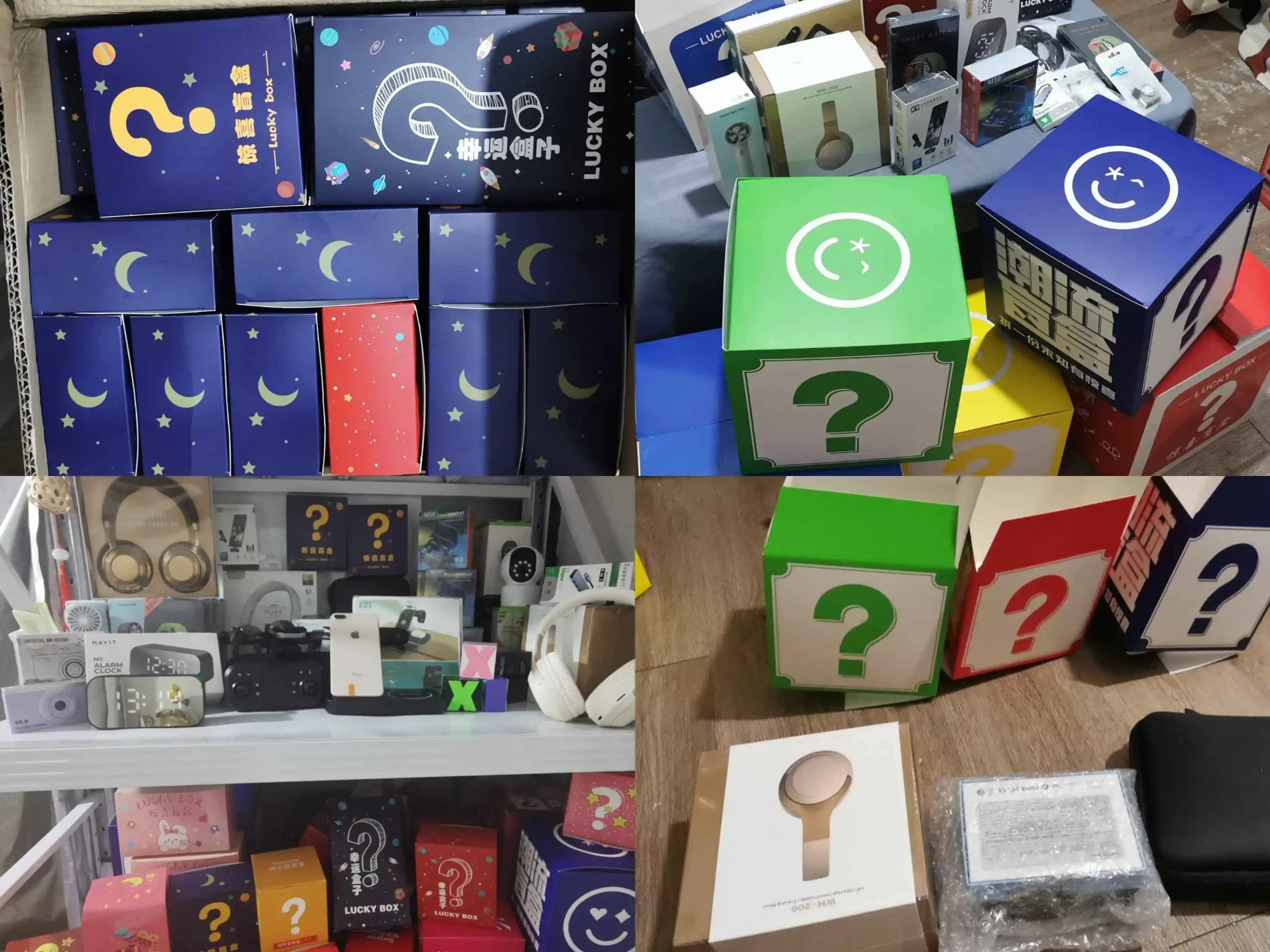
Almost everything above is about collectible toy series, because that is what a physical blind box store stocks. Electronics assortments are a different product with different rules, and they are barely sold in shops at all, the occasional vending machine or pop-up aside. For an electronics mystery box the real channel question for you is not store versus online. It is marketplace versus the seller's own site, which changes what you can dispute and what you can read before buying. That comparison is in buying a mystery box on a marketplace vs direct from a seller, and the reasons toy boxes and electronics boxes behave so differently are in toy mystery boxes and electronics boxes follow different rules. Mewoo sells direct, which means the count, the condition, the dispatch window, and the fault process are all on the product page for you to read before you order, and there is no tray to be picked over.
When to Use Each
- Go to a store when you want one or two boxes now, when you want to check a real retailer carries the series, or when you are buying for a child and want to read the box.
- Ask for a sealed case in store if you are completing a set. If the shop will not sell one, the tray you are offered is the leftovers.
- Buy online for a full sealed case, for a series no local shop stocks, or when price per box matters more to you than immediacy.
- Buy online for any electronics assortment, because that is where the product exists and where the terms are published.
Three Questions in a Shop
"Is this from an unopened case, or a tray?" The only question that addresses selection bias. "Will you sell a sealed case?" A yes removes the problem; a no tells you what the tray is. "Is this sale final?" Almost always yes, and it is better for you to hear it before opening than after. The vocabulary, blind box, mystery box, lucky box, is used loosely in shops as it is online, and the one term that carries a real technical meaning is explained in blind box vs mystery box.
FAQ
Is it better to buy blind boxes in a store or online?
It depends on how many you want and how soon. If it is one or two boxes this afternoon, the shop is fine and, once you add postage to the online price, often no dearer. If it is a whole sealed case, a series nobody near you stocks, or the cheapest possible price per box, order online. Just remember that the shop's big selling point, being able to handle the box, only helps the first person to reach the shelf.
Can you tell what is inside a blind box by its weight?
Occasionally, and that is precisely what makes it a trap for you. Any time weight really does give the contents away, the buyers ahead of you have already used the same trick and walked off with the heavy or light ones, leaving a tray of rejects that looks exactly like a fresh one. Makers have caught on too, and a counterweight in the box is now common enough that the trick fails more often than it works.
What is the tray problem?
A polite name for being left with everyone else's discards. When boxes sit loose on a tray and each buyer can pick, the first person takes the most promising box, the next does the same with what is left, and so on, so by the time you get there the tray is a collection of boxes that several people decided against. Nobody cheated; the shelf simply filters against you. A box ordered online was never on a tray at all.
Should I ask for a sealed case in a blind box shop?
Always, if a full set is your goal, because an unopened case is the only thing in the shop that has not been picked through. Ask before you get your card out, though. Collectors report shops that agree to a "case" and then count out loose boxes from the tray, which gives you the tray problem with a bigger receipt. If the shop will not hand over a factory-sealed carton, you now know what the loose boxes are.
Are blind boxes cheaper online?
Per box, nearly always, because a website does not pay for a shop floor and staff. But the number on the listing is not what you pay; the postage line at checkout can add a third on a single cheap box. For a single box or two, work out what actually lands on your doormat before deciding the shop is expensive. For a full case, the online total wins almost every time, because the postage is spread across twelve boxes.
Are electronics mystery boxes sold in stores?
Hardly ever; a vending machine or a pop-up stand is about the limit. Electronics assortments are an online product, so the question you face is not shop versus website but marketplace versus the seller's own site, which decides what you can read before you buy and who you can raise a dispute with afterwards. The tray problem, the weighing trick, and the case question all belong to toy series and do not arise for a box of accessories.
Final Thoughts
A store lets you handle the box and read the packaging; it also hands you a tray that everyone before you has already picked through. Buy from a sealed case in either channel, treat a store sale as final, and remember that the whole comparison is about toy series. Electronics assortments are an online product, where your real choice is marketplace versus direct.
If what you want is an electronics assortment with the terms published where you can read them before you order: Triple Reveal Electronics Mystery Box (3 items) and Party Electronics Mystery Box (6 items). Compare every tier side by side on the electronics mystery box category page.
See stated counts and categories →