Buying Your First Mystery Box: A Step-by-Step Guide

Most guides to mystery boxes assume you have already bought one and want to buy a better one. This one assumes you have not. It walks your first purchase in order, what you are actually buying, which format, how much, from whom, how to pay, and what to do when it lands, and points you to the detailed article at each step. The single most useful rule is at the top: make your first one cheap.
Start Here: Make the First One Cheap
The format has a lesson it teaches you on first opening, and it is the same lesson every time: the box is fine, and it is not the box in the video. That lesson costs you fifteen dollars or eighty depending on what you buy first, and it is exactly as instructive either way. So your first decision is not which box. It is a spending cap, low enough that a disappointing outcome is a shrug, and everything below happens inside it. What you can realistically expect at the bottom of the price range is set out in cheap mystery boxes: what to expect under $20.
Step 1: Know What You Are Actually Buying
- A mystery box is a count and a condition at a price, not a promise about which items you get.
- Blind boxes and general assortments are different products with different rules.
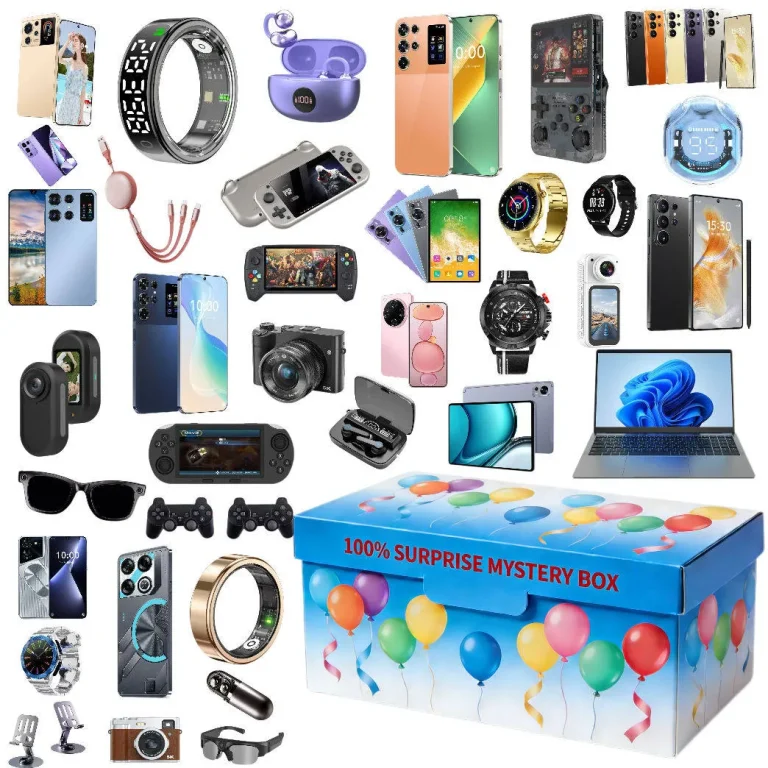
- The listing image is a category illustration, never a photo of your box.
- Pay by credit card and test everything inside the seller's window.
Strip away the packaging and a mystery box is a commitment to you on three things: a number of items, a stated condition, and a category. It is not a commitment to any particular item, and reading it as one is the root of nearly every complaint. The full checklist of what a seller does and does not owe you is in what makes a mystery box good. There are two quite different products under the name. A blind box is one item from a known roster, a collectible series where you know the possibilities and not the outcome. A general assortment is several items from a category with no roster at all. They are bought for different reasons and go wrong in different ways, as set out in blind box vs mystery box. Decide which you want before you look at a single listing.
Step 2: Pick a Category You Can Judge
Your first box should be in a category where you can tell good from bad without expertise. Phone and computer accessories qualify; you know whether a cable works. Beauty, clothing, and collectibles require taste or knowledge you may not have yet, and a first box in those categories tells you less about the format than about your own preferences. The differences between categories are in clothing, beauty, or electronics. Two traps are worth naming. "Tech" on a listing runs from earbuds down to cable ties; see what "tech" covers on a mystery box listing. And a "gaming" box is a category statement, not a compatibility guarantee, so your first question is which platform you own, covered in gaming mystery boxes and compatibility, with the general point in what a theme actually constrains.
Step 3: Read the Listing for the Three Numbers
Ignore the hero image entirely. It is a category illustration assembled from the best things the category can contain, and no box you receive will look like it. Then find three things in the text. Item count. A number, not "up to" or "may include". Condition. New, refurbished, used, or untested; each carries a different expectation, explained in reading condition in a mystery box. Stated value. Treat any "worth $X" figure as marketing. What matters is whether the count and condition are worth the price to you. A listing missing any of the three is telling you something. A listing that leads with "chance to win" language is describing a different product from the one this guide covers.
Step 4: Check the Seller, Not the Reviews
Reviews are the least useful thing on a mystery box page, because a random product produces random reviews. What you can check is whether the seller has built the pages a real operation needs: a returns and faults policy, a shipping page with stated windows, a way to contact them, and a description of what they do when something arrives dead. The list is in the pages a mystery box site should have. Where you buy matters too. A marketplace gives you the platform's dispute process on top of the seller's; buying direct gives you the seller's process and your card's, and usually a better price. The trade-off is set out in buying on a marketplace vs direct. Either is fine for a first purchase; a seller with no process on either route is not.
Step 5: Pay With the Method That Carries a Process
This is the step first-time buyers skip, and it is the one that decides what happens to you if the box never comes. In the US, a credit card carries a statutory billing-error dispute with a 60-day window; a bank transfer, gift card, or crypto payment carries nothing. The differences, and a timing trap specific to this category, are in which payment methods actually protect you. Note three dates when you order: the order date, the stated dispatch window, and the date of the card statement the charge appears on. Each starts a different clock.
| Step | The one thing you check | The trap |
|---|---|---|
| Budget | A cap you would shrug at | Buying the box from the video first |
| Format | Blind box or assortment | Expecting a roster from an assortment |
| Category | One you can judge | "Tech" meaning cables |
| Listing | Count, condition, price | Reading the hero image as contents |
| Seller | Faults and shipping pages | Trusting reviews of a random product |
| Payment | Credit card | Gift card or transfer, no dispute route |
| Arrival | Test inside the window | Leaving it sealed for a week |
Note: Buy one box, not a case, and not a subscription. A case is a bet on a series you have not opened yet, and a subscription commits you to month four before you have seen month one. Both are reasonable purchases later. Neither is a first purchase.
Step 6: Set Your Expectation Before It Arrives
If the box was sold to you by an unboxing video, look up what the typical unit contains before it lands, not after. Videos are selected for reaction, and the box that makes the best video is the one whose ordinary unit is least like what was shown. How to read them is in are mystery box unboxing videos real. The honest expectation for a first cheap box: several small, functional accessories in the stated condition, one of which you will use, one of which you will give away, and none of which was the thing in the thumbnail. If that sounds acceptable at the price, buy it. If it does not, the format is not for you, and you have learned that for free.
Step 7: Open It Properly
The first hour after delivery is when problems are cheap to fix and after which they become arguments. Photograph the sealed parcel, open it in one take if you intend to report anything, test every powered item, and report faults inside the seller's window. The routine is in what to do when your mystery box arrives. If it does not arrive at all, the process depends on whether it never shipped, stalled in transit, or was marked delivered, three different problems handled in when a mystery box never arrives.
Buy One for Yourself Before You Buy One as a Gift
A large share of first purchases are gifts, and that is the hardest possible first purchase. A gift adds a deadline and a second person's expectations, and if the box under-delivers it does so in front of someone else, on a day that mattered. The fix is cheap: buy the first one for yourself, a few weeks earlier, from the seller you intend to use. You see the typical unit and how long dispatch actually took, and the gift becomes an informed repeat rather than a gamble. If the calendar does not allow that, at least work the order date back from the stated dispatch and transit windows, as set out in when to order a holiday mystery box so it arrives in time.
What the First Box Tells You
After one box you know three things you could not have known before: whether the randomness is fun or irritating to you personally, whether the category you chose produces things you use, and whether this seller's typical unit matches their listing. That is enough to make your second purchase a real decision rather than a guess. If the format suited you and you want more, how to choose a mystery box covers the finer comparisons between sellers. If the first box was fine but the category was wrong, change the category rather than the format. And if you want a first box that already passes steps three and four on the page, Mewoo's 1-item tier states the count, the new condition, and the faults window in one place at the lowest price on the ladder.
FAQ
What should my first mystery box be?
One box, low priced, in a category where you already know what good looks like; for most people that means phone or computer accessories. Its job is to show you whether you enjoy not choosing, and it does that job just as well at fifteen dollars as at eighty. Skip the case of twelve, skip the subscription, and skip the exact box a creator opened on camera; all three are second purchases, not first ones.
How much should I spend on a first box?
Whatever you could lose without a second thought, which for most buyers lands somewhere under twenty dollars. At that price you are getting small working accessories rather than anything with a brand on it, and that is fine, because what you are really paying for is a look at how the format behaves. If you enjoy the first one, the second is where the budget can go up.
Blind box or mystery box for a beginner?
Ask yourself what you are hoping to feel. If there is a character series you already like, a blind box gives you one figure from a published list and the fun of not knowing which. If you would rather end up with a handful of useful things at a discount, a general assortment is the one to try. Settle that before you open a listing, because you will judge the two by completely different standards.
Can I trust the picture on the listing?
Only as a hint about the category. Those images are a collage of the most photogenic things in the category, and nobody's parcel resembles them. Scroll past it and read for three facts: how many items, in what condition, at what price. If the words are vague where the picture is specific, the seller has told you which of the two they would rather you looked at.
How should I pay for a mystery box?
Credit card, every time. In the US that gives you a legal dispute process with a 60-day window the card issuer has to honour, which is your safety net if the parcel never shows. A gift card, bank transfer, or crypto payment gives you no such route; if the box does not come, the money is gone. Write down the date of the statement the charge lands on, because your 60 days count from there.
What if my first box is disappointing?
Work out whether you have a fault or a preference. A dead device or fewer items than promised is a fault; photograph it and tell the seller inside their window, and there is a process for it. Not liking what turned up is a preference, and no seller owes you for that. If everything matched the listing and you still felt flat, you have learned cheaply that the format is not for you, which was the point of buying cheap.
Final Thoughts
Cap the spend, choose blind box or assortment deliberately, pick a category you can judge, read the listing for count and condition rather than its picture, check the seller's pages rather than its reviews, pay by credit card, and test everything inside the window. Do that once with a cheap box and every later purchase you make is a decision made on evidence rather than on a thumbnail.
If you want a first box that already states its count, condition, and faults window on the page, start at the bottom of the ladder: Discovery Electronics Mystery Box (1 item) or Double Surprise Electronics Mystery Box (2 items). Compare every tier side by side on the electronics mystery box category page.
Two more low-count formats that suit a first order: Electronics Blind Box (2 items) and Surprise Gift Box (2 items).
Browse the cheapest tiers →