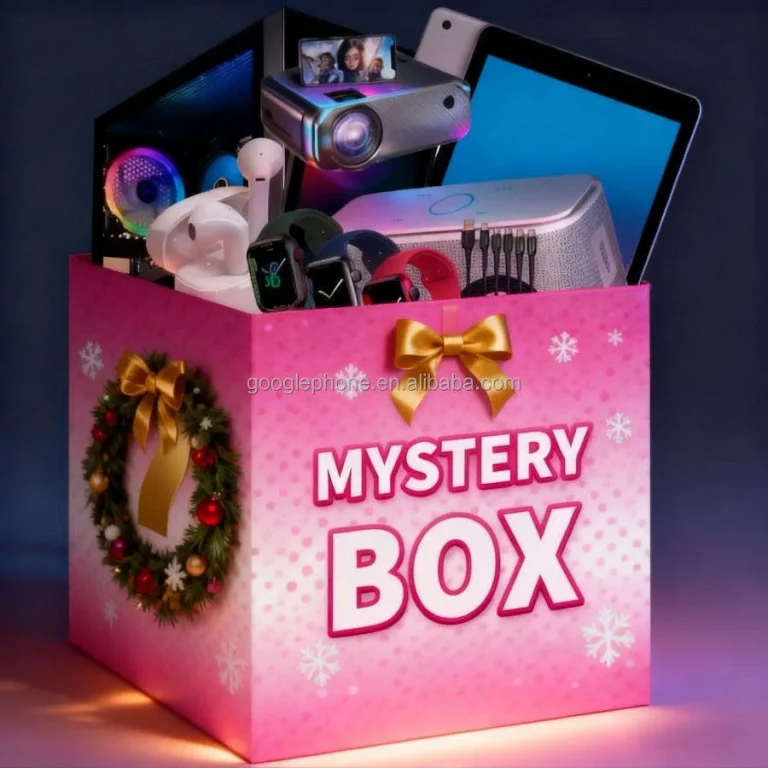
Murder Mystery Box vs Mystery Box: Same Name, Different Product
"Murder mystery box" is one of the most-searched phrases in this category, and if you typed it you are probably not looking for a mystery box at all. A murder mystery box is a game: a case file of clues, documents, and props that a group solves over an evening or a season. A mystery box is a random assortment of goods. They share a name and nothing else, and three quick tests tell you which one you meant.
Two Products, One Phrase
Put the two side by side and the difference is total. A murder mystery box is a tabletop game in a box. Inside are the materials for a fictional case: witness statements, coroner's reports, maps, photographs, ciphers, small physical props such as a matchbook or a torn letter. You and your fellow players read, cross-reference, and deduce. The contents are fixed, every copy of a given case contains the same documents, and the box exists to deliver a story. Many are sold as subscriptions, one episode a month, with a case that resolves after several boxes. A mystery box is a random assortment. Inside are goods, accessories, figures, gadgets, chosen by the seller from a category, and the only thing fixed is the count and the condition. The box exists to deliver you a surprise, and the contents differ from one unit to the next by design. One is a puzzle with a solution. The other is a lottery with a floor. Everything below follows from that.
Which One Did You Mean?
- A murder mystery box is a fixed-content game; a mystery box is a random-content assortment.
- "Not knowing what is inside" means different things: one is a plot, the other is a product.
- Subscriptions for the two fail in opposite ways: a game runs out of story, an assortment runs out of novelty.
- Decide whether you want an evening or a parcel, and the right one is obvious.
Three quick tests sort most searches. Do you want to do something or to get something? A murder mystery box is an activity, usually for a group, usually taking two to four hours per episode. A mystery box is a delivery. If the appeal is the evening, you want the game. If the appeal is the parcel, you want the assortment. Do you want the contents to be the same for everyone? A game only works if every player has the same clues, so the contents are identical across copies. An assortment only works if the contents vary, so no two are identical. If you would be annoyed to find that a friend got the same thing, you want an assortment. If you would be annoyed to find they got different clues, you want the game. Are you shopping for a gift for two or more people? The game is built for that. An assortment can be shared, but it needs rules to do it well; the mechanics are in buying one mystery box for two people.
What "Mystery" Means in Each
The word is doing opposite jobs, and it explains why the phrase confuses you. In a murder mystery box, the mystery is the story. You know exactly what you are buying, a case, a difficulty level, a player count, a running time, and the unknown is who did it. The seller is not hiding the product from you; the product is a hidden answer that you pay to uncover. In a mystery box, the mystery is the product. You know the category, the count, and the condition, and the unknown is which items. Nothing is uncovered by deduction; it is revealed by opening. What the seller does and does not promise you in that arrangement is set out in blind box vs mystery box. That is why reviews of the two read so differently. A game is reviewed on plot, difficulty, and production quality, like a book. An assortment is reviewed on value, condition, and whether the seller delivered the count, and on nothing else, because the individual items were never the promise.
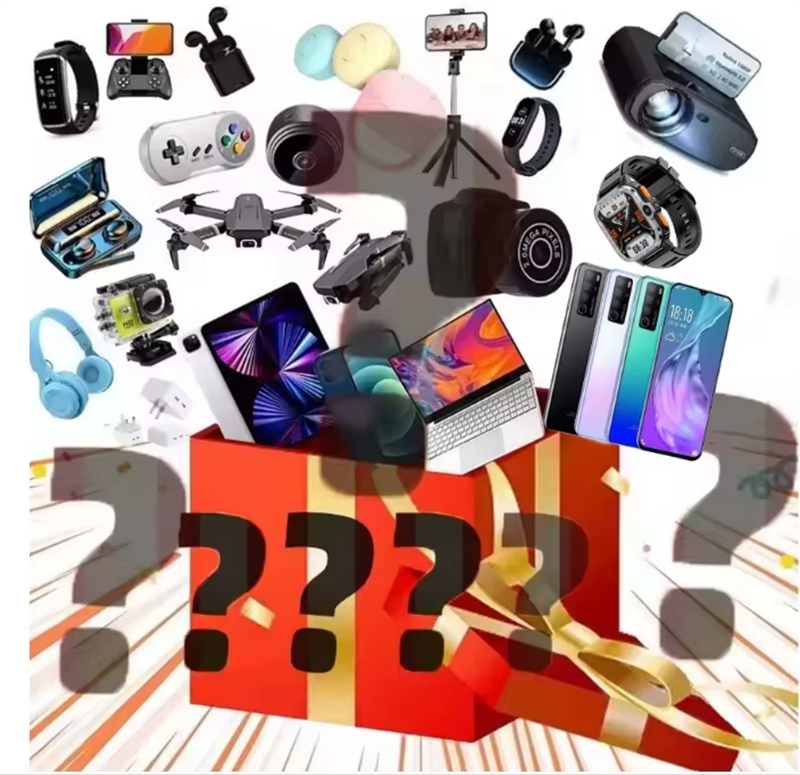
Side by Side
| Murder mystery box | Mystery box | |
|---|---|---|
| What it is | A tabletop deduction game | A random assortment of goods |
| Contents | Fixed; identical across copies | Random; different in every unit |
| The unknown | Who did it | Which items |
| Best for | A group, an evening | One person, a parcel |
| Reusable | No; once solved, it is solved | Not applicable |
| Subscription model | Episodic; a case over several boxes | Monthly; a new assortment each time |
| Judged on | Plot, difficulty, production | Count, condition, price |
| Returns | Usually only if unopened | Faults and short counts; not preference |
The "reusable" row is the one you can miss when buying a gift. A solved case is a spent case; nobody can play it again without knowing the answer. That makes a murder mystery box closer to a ticket than to an object, and it is why second-hand copies are worth little even in perfect condition.
Note: Some sellers combine the two: a themed assortment of goods sold under a "murder mystery" or "detective" label, with props and objects rather than a case to solve. That is a themed mystery box, judged by mystery-box rules, and the theme constrains less than the name suggests to you. What a theme actually does and does not promise is in what a theme actually constrains in a mystery box.
Subscriptions Fail in Opposite Directions
Both products are sold monthly, and "murder mystery box subscription" is a common search in its own right. The two subscriptions go wrong for opposite reasons, which is worth you knowing before committing to either. A game subscription runs out of story. A case resolves after a fixed number of episodes, and the next case starts from nothing; if your group's enthusiasm was for that particular story, month seven is a harder sell than month one. The natural term is one case, and subscriptions that let you stop at the end of a case suit the product far better than open-ended ones. An assortment subscription runs out of novelty. Every box is a fresh random draw, but by the fourth month the range is familiar and the surprise does less work, while unwanted items have started to accumulate in your drawer. The pattern is described in month four of a mystery box subscription, and the general choice between subscribing and buying once is in subscription box vs one-time mystery box. The practical version for both: prefer a fixed term to an open one. For the game, that term is one case. For the assortment, it is three months.
If You Wanted the Game
This site does not sell them, and the honest thing is to tell you what to look for elsewhere. Check the player count; most run two to six, and some are designed for one. Check the running time per episode, because a three-hour case on a weeknight is a different commitment from a ninety-minute one. Check the difficulty, which sellers usually grade. And check whether the box is standalone or episodic, since an episode-two box bought on its own is unplayable. Physical props, quality of printing, and whether solutions are gated online or included in the box are the secondary questions. None of them has any equivalent in an assortment.
If You Wanted the Assortment
Then the rest of this site applies to you, and the two things to take from this comparison are these. First, nothing in an assortment is fixed except count and condition, so judge listings on those two numbers and ignore the story on the packaging. Second, "mystery" on an assortment is a description of the product, not a promise of a puzzle, and there is nothing to work out; the reveal is the whole event. Where to start, and how to make your first purchase a cheap one, is in buying your first mystery box. If the category you want is electronics, Mewoo's tiers are the plain version of the assortment: a stated count from 1 to 12 items, new and checked before dispatch, with no theme on the packaging doing work the contents do not.
FAQ
Is a murder mystery box the same as a mystery box?
No, and the two are not even close. One is a game you sit down and play: a folder of clues, statements, and props that leads a group to a culprit, with every copy holding the same clues. The other is a parcel of goods you did not choose, with the count and condition fixed and everything else varying from box to box. If you want an evening, buy the first. If you want a delivery, buy the second.
What comes in a murder mystery box?
A dossier for an invented crime. Expect interview transcripts, an autopsy summary, a floor plan, snapshots, something in code, and one or two objects you can hold, a torn note, a train ticket. You work through them together to name the killer. Every copy of a case holds the same material so all players start from the same evidence, and many sellers release one episode a month until the case closes.
Can you play a murder mystery box more than once?
Not with the same people. The moment you know who did it, the deduction is gone, and the papers become souvenirs of an evening rather than a game. Think of it as a ticket rather than a possession, which is also why a used copy in perfect condition sells for very little. Buy it for the night it gives you, and pass it to friends who have not played it if you want it to have a second life.
Which is better as a gift?
Decide whether you are giving an activity or an object. For a group who will actually sit down together, the game is the better present, provided the player count and running time suit them. For one person who enjoys unwrapping something unexpected, the assortment is the better present, provided it is in a category they can use. Neither wins in general; they are answers to two different questions about the person you are buying for.
How do the subscriptions differ?
They wear out for opposite reasons. A game subscription delivers one case across a few episodes and then has nothing left to say until a new case begins, so the sensible commitment is a single case. An assortment subscription sends a fresh random draw every month, and by about the fourth the range feels familiar and the unwanted items have started piling up, so the sensible commitment is roughly three months. Either way, choose a fixed term.
What is a "detective" themed mystery box?
A collection of goods, props, objects, maybe stationery, sold under a detective or murder-mystery label without any case to solve. It is a themed assortment, nothing more, and you should judge it the way you judge any assortment: how many items, in what condition, at what price. The theme narrows the kind of items you get but does not turn the box into a game, so do not buy one expecting a puzzle at the bottom.
Final Thoughts
A murder mystery box is a game with fixed contents and a hidden answer; a mystery box is an assortment with random contents and a stated count. Decide whether you want an evening or a parcel, whether the contents should match your friend's or differ from it, and whether the unknown you are paying for is a plot or a product. Then the right one is obvious to you, and the wrong one is easy to avoid.
If it was the parcel you meant, the plain electronics assortment with a stated count and condition is here: Triple Reveal Electronics Mystery Box (3 items) and Party Electronics Mystery Box (6 items). Compare every tier side by side on the electronics mystery box category page.
See what an assortment actually contains →